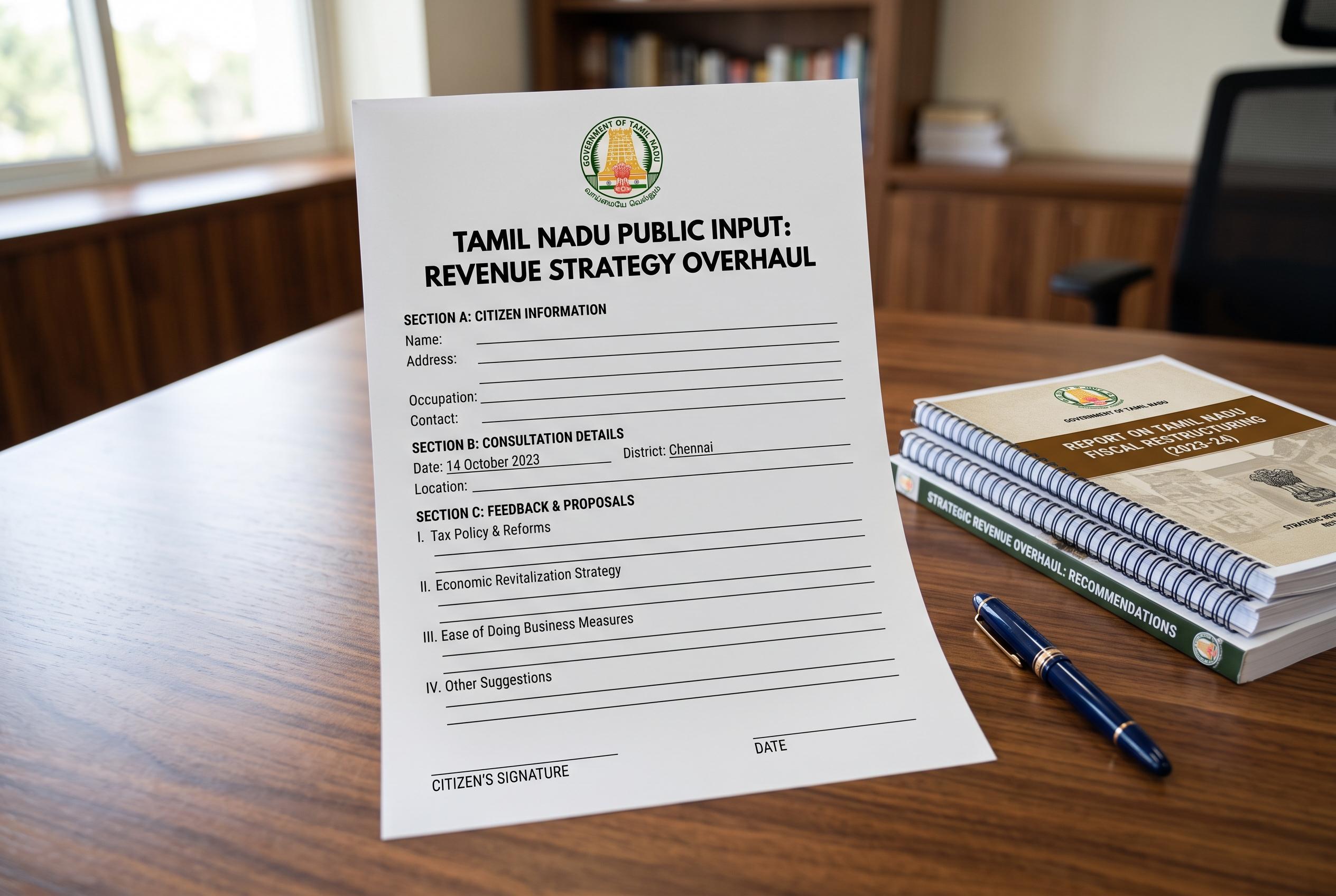

The Tamil Nadu government has launched a public consultation to explore innovative avenues for boosting the state’s finances, involving experts and citizens in shaping a more self-reliant fiscal future.
The Tamil Nadu government has opened a public consultation on ways to strengthen the state’s finances, asking for proposals that could widen both tax and non-tax receipts and improve what officials describe as revenue buoyancy, efficiency and self-reliance.
According to the Finance Department, the move follows a July 31 meeting of the state’s new Revenue Augmentation Committee, after which members agreed to invite input from the public, trade bodies, academics, research scholars and institutions working in public finance. The committee is chaired by economist Montek Singh Ahluwalia, the former deputy chairman of India’s Planning Commission, and the state has asked that submissions be sent by email by August 11, 2026, preferably in English or Tamil.
The consultation comes as the panel begins its work on a broad mandate. Local reports have said the six-member committee also includes K.P. Krishnan, Arbind Modi, Najib Shah, M.A. Siddique and M. Suresh Babu. Its brief covers not only tax collection but also non-tax avenues such as dividends from public sector undertakings, land monetisation and higher user charges, alongside measures to reduce leakages and curb evasion.
In its notice, the department asked contributors to identify the broad area their suggestions relate to, including GST, stamp duty and registration, state excise, motor vehicle tax, mining, non-tax revenue or broader fiscal issues. The exercise suggests Tamil Nadu is looking beyond incremental fixes and towards a more durable expansion of its own revenue base as states face pressure to finance spending with greater independence from transfers.
Disclaimer: This article is intended to inform and educate, not to recommend or endorse any financial product, investment or strategy. Please consider your own financial circumstances and seek professional advice where appropriate before making financial decisions.