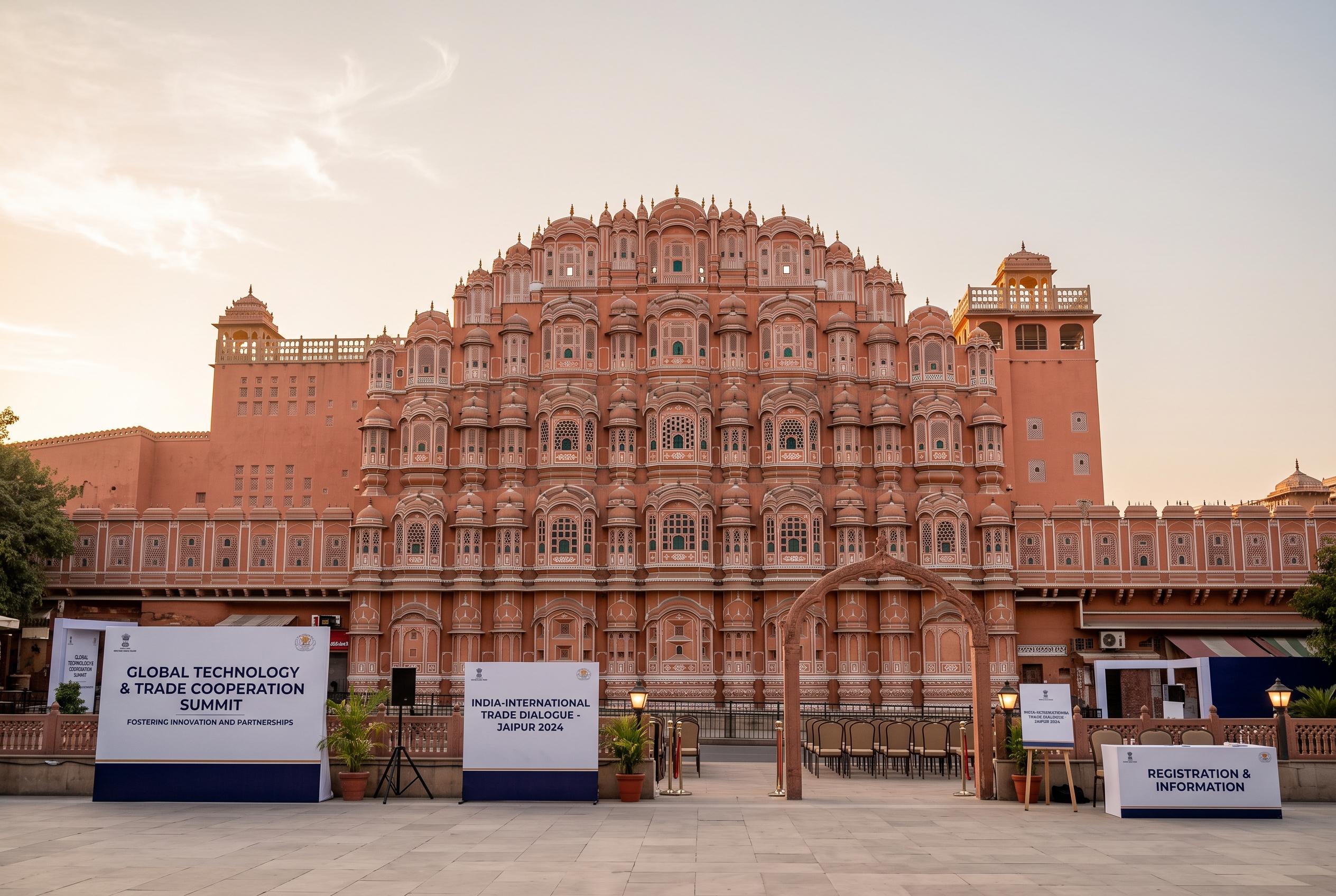

India uses Jaipur’s cultural and historic backdrop to centre trade, industry, and technology cooperation at key BRICS ministerial meetings, signalling its leadership ambitions ahead of the upcoming leaders’ summit.
Jaipur has become an unlikely but fitting backdrop for one of the year’s most closely watched BRICS gatherings, with India using its chairmanship to put trade, industry and technology cooperation at the centre of the bloc’s agenda. The city’s ministerial meetings come as India prepares to host the BRICS leaders’ summit later this year, and officials in Rajasthan have dressed the Pink City for visiting delegations with cultural events and tours of its historic landmarks.
At the 10th BRICS industry ministers’ meeting, representatives from member states and senior officials focused on making manufacturing more resilient, encouraging innovation and deepening industrial cooperation. According to India’s commerce and industry ministry, the talks also produced a joint declaration that backs stronger support for small and medium-sized enterprises, greater collaboration in the photovoltaic sector, wider use of start-up and innovation networks and improvements to logistics systems. The declaration reflects a broader BRICS effort to link industrial policy with sustainable development and technology-led growth.
Piyush Goyal, India’s commerce and industry minister, used the meeting to argue that BRICS countries have an opportunity to work together more effectively as global economic conditions shift. He said India is moving towards its 2047 goal of becoming a developed nation, and that the grouping can help members expand manufacturing and strengthen supply chains. The minister also backed proposals for a BRICS incubator network and a BRICS start-up innovation fund, suggesting India wants the bloc to move beyond declarations and towards practical support for emerging firms and new technologies.
The focus now turns to August 7, when Jaipur is due to host the 16th BRICS trade ministers’ meeting under Goyal’s chairmanship. That session is expected to cover trade partnerships, digital commerce, supply chain resilience, multilateral trading rules and the role of MSMEs in cross-border business. The build-up underscores how India is using its chair year to advance both economic diplomacy and a wider narrative about the country’s place in global trade and industrial policy, while also showcasing Rajasthan’s heritage to the visiting delegations.
Disclaimer: This article is intended to inform and educate, not to recommend or endorse any financial product, investment or strategy. Please consider your own financial circumstances and seek professional advice where appropriate before making financial decisions.