

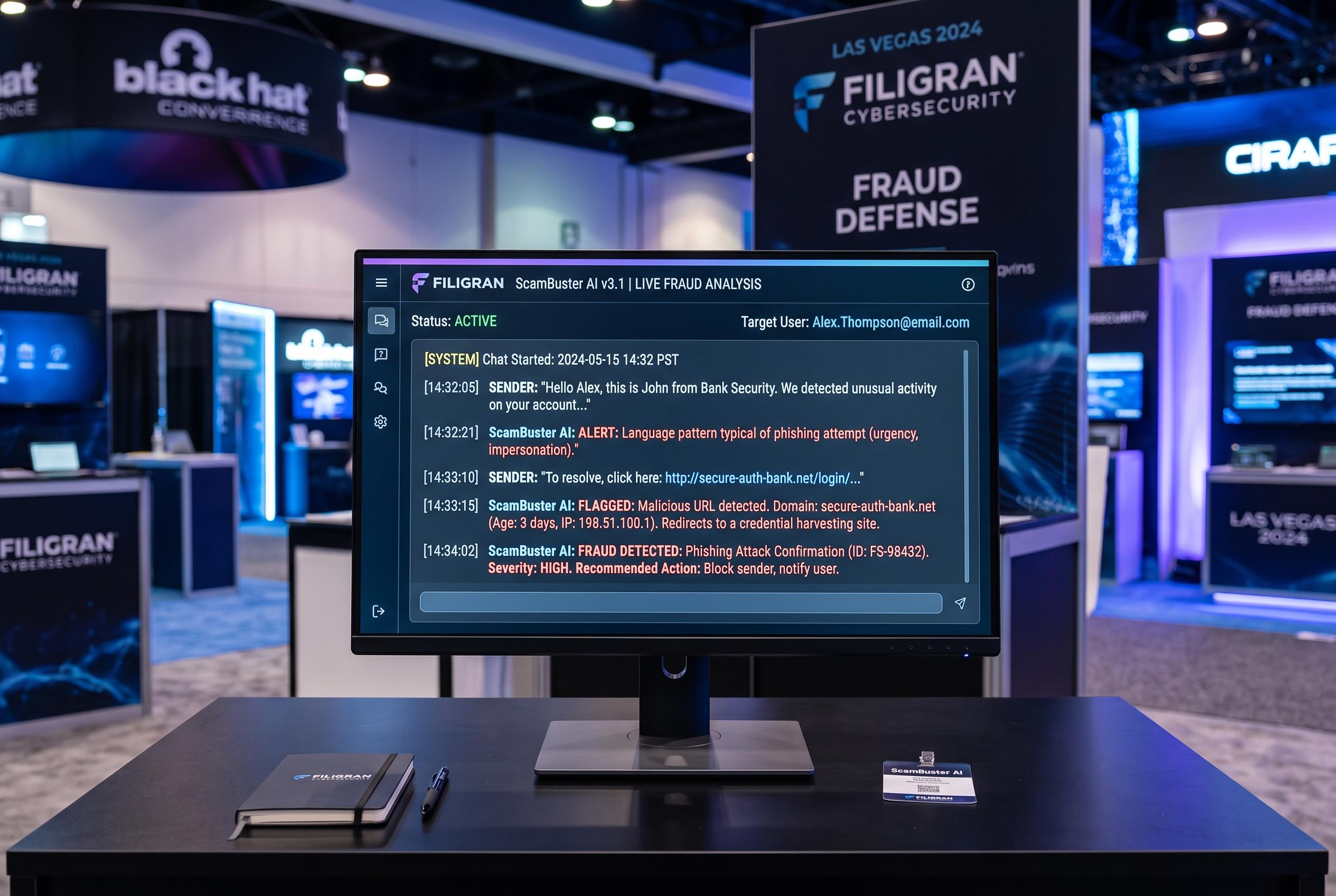

At Black Hat in Las Vegas, Filigran’s ScamBuster AI system reveals a novel approach to combatting email scams by convincing fraudsters to disclose their operational details through simulated conversations, potentially transforming anti-fraud strategies.
At Black Hat in Las Vegas, Filigran principal software engineer Laurent Giovannoni showcased ScamBuster, a free open-source AI tool designed to do more than simply block fraudulent messages. Rather than deleting a suspicious email and moving on, the system is built to reply in a convincing persona, keep the conversation going and encourage the scammer to reveal the details they are using to carry out the fraud.
Giovannoni’s pitch is that conventional reporting often leaves little behind beyond a deleted message and a warning to the IT department. That may protect one inbox, but it does not always preserve evidence for investigators or stop the same criminal from targeting other people. ScamBuster is meant to change that by engaging the fraudster long enough to collect useful clues, including banking information and other operational details, before the exchange is shut down.
The tool works by generating responses tailored to the type of scam being attempted. In one example described at the conference, an aggressive fraudster demanded an urgent payment, and the AI persona answered with exaggerated compliance, asking where to send the money. The scammer then supplied a bank account number, followed by a second account and a phone number when prompted again. Giovannoni said the idea is to create enough doubt to slow scammers down, and PCMag reported that he claimed the system has been effective against more than half of the scammers who have contacted him.
According to the ScamBuster website, the system is intended to identify and neutralise fraudulent activity by simulating a victim until the scammer exposes the infrastructure behind the attempt, after which the information can be passed to authorities. The project is currently limited to email, though Giovannoni says text and voice versions are planned. It also avoids using real personal data or generating fake attachments, and he says it can be set up in about an hour with an inbox, an API key and Docker. As with other anti-scam products on the market, including tools that scan inboxes or track suspicious wallets and websites, the broader aim is to reduce the damage caused by social engineering before money or data changes hands.
Disclaimer: This article is intended to inform and educate, not to recommend or endorse any financial product, investment or strategy. Please consider your own financial circumstances and seek professional advice where appropriate before making financial decisions.



