

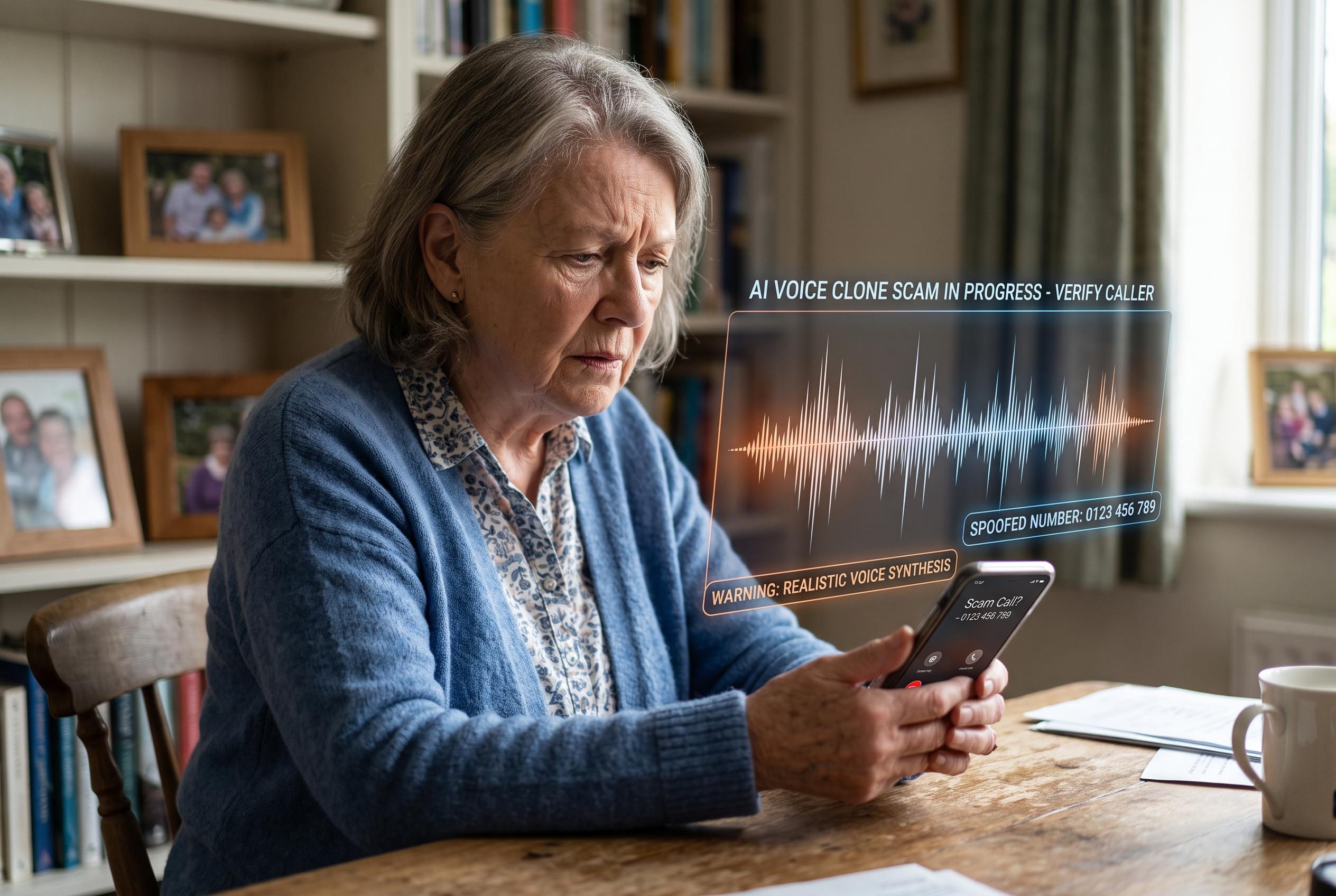

Criminals are increasingly using AI-generated voices and spoofed phone numbers to deceive older adults with scams such as the grandchild and police officer schemes, prompting calls for greater vigilance and family preparedness.
Older people are often singled out by fraudsters because they may be more trusting, less familiar with digital trickery and more willing to help someone they believe is in trouble. That combination has helped make the so-called grandchild scam and police officer scam enduring threats, with criminals increasingly using spoofed phone numbers and even AI-generated voices to make their lies sound convincing. According to guidance from the FBI, the aim is usually to provoke panic quickly so the victim acts before checking the facts.
In the police officer version, a caller may pose as a law enforcement official and claim a bank account is compromised, or say they are investigating a criminal gang that has already identified the victim. In both cases, the proposed solution is often the same: move money into a supposed safe account, which in reality belongs to the fraudsters. Suffolk Constabulary has also warned about courier fraud, in which criminals impersonate police officers or bank staff and pressure older people to hand over cash or valuables.
The grandchild scam works by exploiting family loyalty. The fraudster pretends to be a child or grandchild in urgent need of money because of an accident, illness or fine, then presses for an immediate transfer. The DC Department of Insurance, Securities and Banking says the scam has become more convincing as criminals use voice-cloning technology, while Central Bank advises people to slow the conversation down and confirm the request through a trusted number already in their contacts.
The simplest protection is preparation. Families can agree in advance that no one will ask for emergency loans by phone, and they can use a shared security question that only close relatives would know. If an older person receives an unexpected call, experts say they should not volunteer the supposed grandchild’s name first, because scammers often lack those details. Guthier Cyber Safety says structured education and practical support can help families reduce the risk, but the key remains the same: pause, verify and do not send money under pressure.
Disclaimer: This article is intended to inform and educate, not to recommend or endorse any financial product, investment or strategy. Please consider your own financial circumstances and seek professional advice where appropriate before making financial decisions.



