

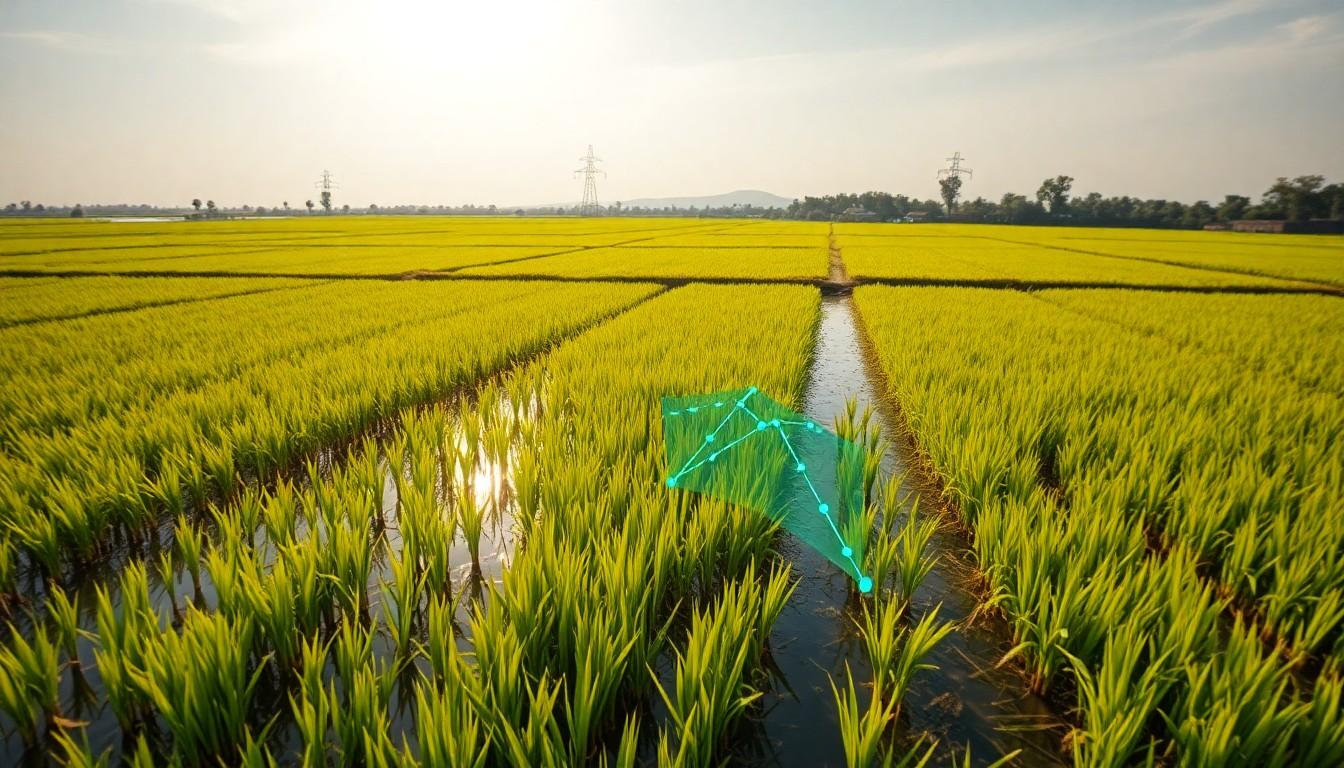

Mitti Labs, backed by Aramco Ventures and others, is leveraging AI and satellite data to reduce methane emissions and water use in rice cultivation across Asia, expansion plans include India, the Philippines and Indonesia.
Mitti Labs has raised $9.5 million in a Series A round led by Aramco Ventures, taking its total funding to $12.5 million, according to a company statement reported by YourStory. The round also drew support from Lightspeed India, Godrej Industries Group, Cisco Foundation, Francis Family Fund and Volta Circle.
The climate technology company is targeting rice farming, one of the biggest sources of methane emissions in agriculture and also one of the most water-intensive crops. Mitti Labs said the new capital will help it expand in India and begin greenfield projects in the Philippines and Indonesia.
Founded in 2023 by Devdut Dalal, Xavier Laguarta and Nathan Torbick, the company works with farmers to promote Alternate Wetting and Drying, a cultivation method that can reduce methane emissions and water use. Mitti Labs said it combines satellite imagery, artificial intelligence, agronomy and field operations to measure emissions reductions and help smallholder farmers earn income through carbon credits.
The company is also building out what it calls a GeoAI platform, which uses synthetic aperture radar satellite data, field measurements and physical models to create digital twins of rice plots across Asia. On its website, Mitti Labs says its digital monitoring, reporting and verification system is designed to track farming practices and quantify greenhouse gas reductions with scientific rigor, including Tier 3 methodology and certification from Gold Standard.
Zayed AlAmri, executive managing director at Aramco Ventures, said in a statement that rice occupies a large share of Asia’s cultivated land and remains a major source of methane and water demand. Xavier Laguarta said the wider challenge is producing more rice with less water as heat and rainfall patterns become more erratic, arguing that better data and scalable operations can make farming more resilient for millions of smallholders.
Disclaimer: This article is intended to inform and educate, not to recommend or endorse any financial product, investment or strategy. Please consider your own financial circumstances and seek professional advice where appropriate before making financial decisions.



