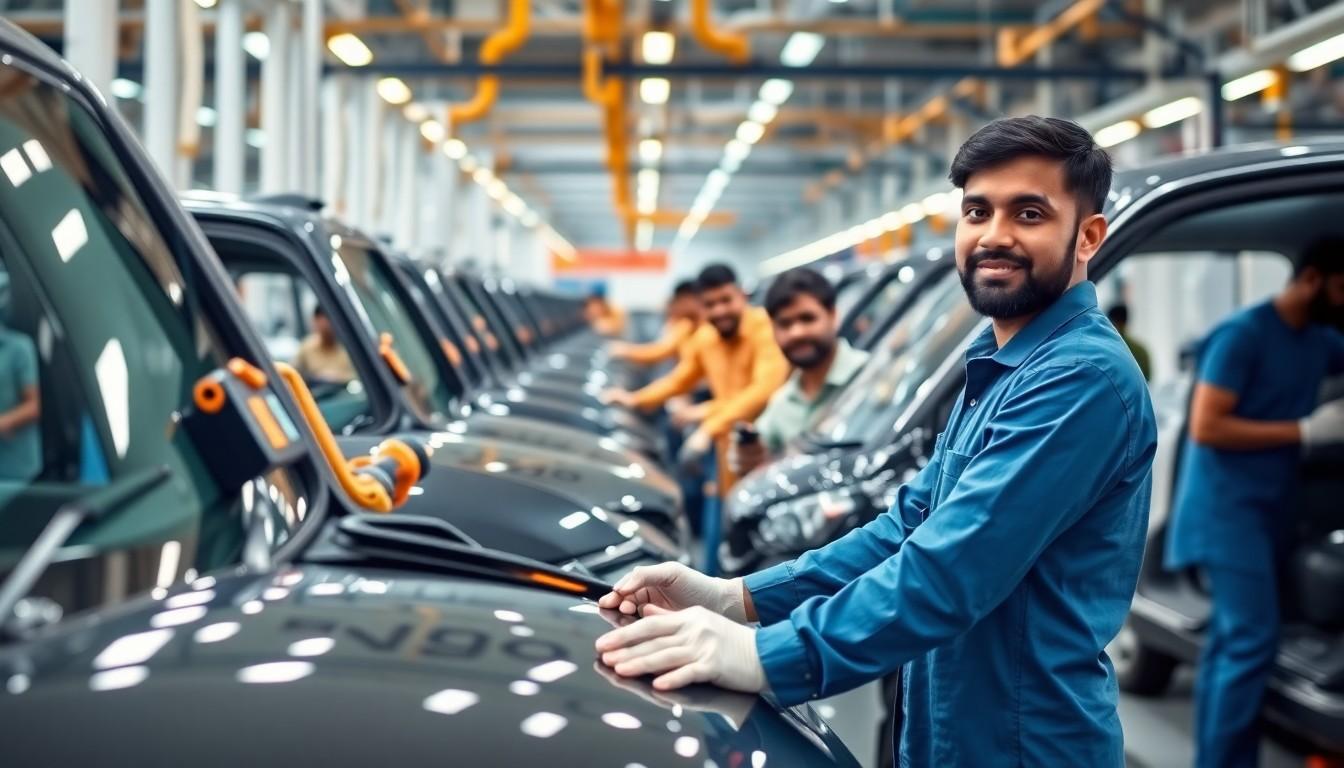

India’s burgeoning electric vehicle sector is projected to generate up to 50 million jobs by 2030, signalling a major industrial transformation driven by government policies, increased investment, and a widening skills gap in the country’s green mobility revolution.
India’s electric vehicle sector could emerge as one of the country’s biggest job engines by 2030, with industry estimates pointing to 30 million to 40 million new roles over the next five years. The bulk of those positions would sit outside direct vehicle assembly, with most expected to come from the wider ecosystem that supports manufacturing, logistics, retail, financing, maintenance and recycling, according to the industry note behind the projection and related reporting. The direct jobs would be concentrated in vehicle production, battery cell manufacturing, electronics, research and development, engineering, quality control and charging infrastructure deployment. According to Business Standard, Union Minister Nitin Gadkari has put the market’s potential even higher, saying it could reach ₹20 trillion by 2030 and generate about 50 million jobs across the full EV value chain.
The expected hiring surge reflects a broader policy push to localise clean mobility manufacturing. Industry summaries point to government support through the PM E-DRIVE scheme, production-linked incentives for automobiles and advanced chemistry cell batteries, and the wider Atmanirbhar Bharat drive to build domestic capacity. The Economic Survey, as reported by The Times of India, has also projected that the EV industry could support 50 million direct and indirect jobs by 2030, alongside annual sales of 10 million vehicles by the end of the decade. Together, those estimates suggest that the sector’s growth is no longer being framed only as an environmental transition, but also as a major industrial and labour-market shift.
That optimism is feeding investment across the country. Manufacturers from India and overseas are expanding facilities and increasing output as demand rises and supply chains deepen, according to the summaries. An analysis cited by IBEF from IVCA, EY and IndusLaw went further, estimating that the sector could create more than 10 million direct jobs and 50 million indirect ones by 2030. But the boom is also exposing a skills shortage. Fortune India reported that the industry may need as many as 200,000 trained professionals by the end of the decade, highlighting the need for workers with expertise in battery systems, electronics, software and advanced manufacturing.
Even so, the scale of the projected employment uplift suggests the EV transition could become one of India’s most important sources of economic growth over the rest of the decade. The balance of jobs is expected to remain heavily skewed towards indirect employment, but that broader footprint may prove just as significant in spreading benefits through suppliers, service providers and financiers. If the forecasts prove accurate, India’s shift to electric mobility will do more than change what people drive; it could reshape where jobs are created and which industries capture the gains.
Disclaimer: This article is intended to inform and educate, not to recommend or endorse any financial product, investment or strategy. Please consider your own financial circumstances and seek professional advice where appropriate before making financial decisions.