

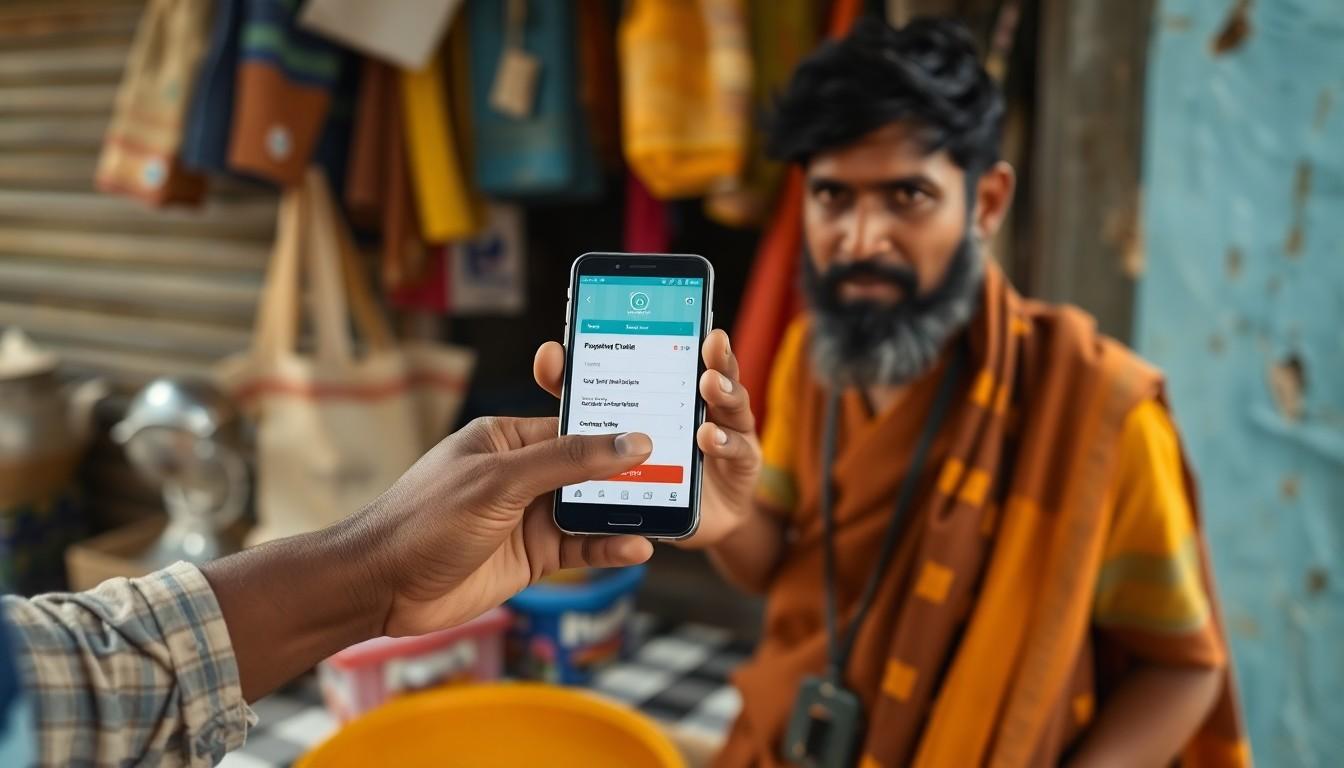

As UPI transactions in India hit record levels, small creators and sellers are turning to no-code payment links and pages for seamless, traceable online sales, transforming the country’s digital economy landscape.
For creators and small sellers in India, the simplest route to taking money online is increasingly also the most obvious: a single link in a social media bio that leads straight to checkout. Razorpay’s guide argues that the old workaround of asking buyers to transfer money to a personal UPI handle is no longer good enough once sales start to grow. It may move money, but it does not behave like a store. There is no clean order trail, no automated confirmation, no built-in refund flow and no easy way to reconcile payments with what was actually sold.
That gap matters because UPI now sits at the centre of India’s digital economy. Business Standard reported that UPI transactions hit a record ₹29.52 trillion in March 2026, with 22.64 billion transactions in the month, while the Department of Financial Services said the same figure reflected the platform’s sustained expansion across everyday payments. In practical terms, that means any checkout that forces buyers to copy a handle, switch apps manually and send screenshots is working against established consumer behaviour rather than with it.
The alternative is a hosted, no-code checkout page or payment link that can be dropped into Instagram, YouTube, WhatsApp or X. Razorpay says its Payment Links and Payment Pages are designed for exactly that use case: a single offer can sit behind a shareable URL, while a fuller catalogue can live on a branded payment page with product images, prices and UPI as the default option. The advantage is not just convenience. Each transaction is tied to an order, which makes confirmation, tracking and bookkeeping far easier than managing scattered transfers from personal accounts.
Razorpay also points to recurring use cases that go beyond one-off sales. UPI Autopay can support memberships, instalments for courses, coaching retainers and other subscription-style offers, turning a bio link into a repeat-revenue channel. For sellers handling physical goods or higher-value services, the same framework can be paired with transaction limits, settlement tools and invoicing workflows so that the checkout remains mobile-friendly without sacrificing record-keeping. The core idea is straightforward: instead of using a bio link as a pointer to somewhere else, the link itself becomes the storefront.
The timing is significant. India’s mobile-first payment habits mean that the quickest path from interest to purchase is usually the one that stays inside the buyer’s phone. A seller with a small audience can now present a polished checkout, accept UPI natively and keep a proper audit trail without building a website or hiring a developer. In a market where UPI volume continues to rise sharply, that kind of simple infrastructure is less of a technical upgrade than a business requirement.
Disclaimer: This article is intended to inform and educate, not to recommend or endorse any financial product, investment or strategy. Please consider your own financial circumstances and seek professional advice where appropriate before making financial decisions.



