

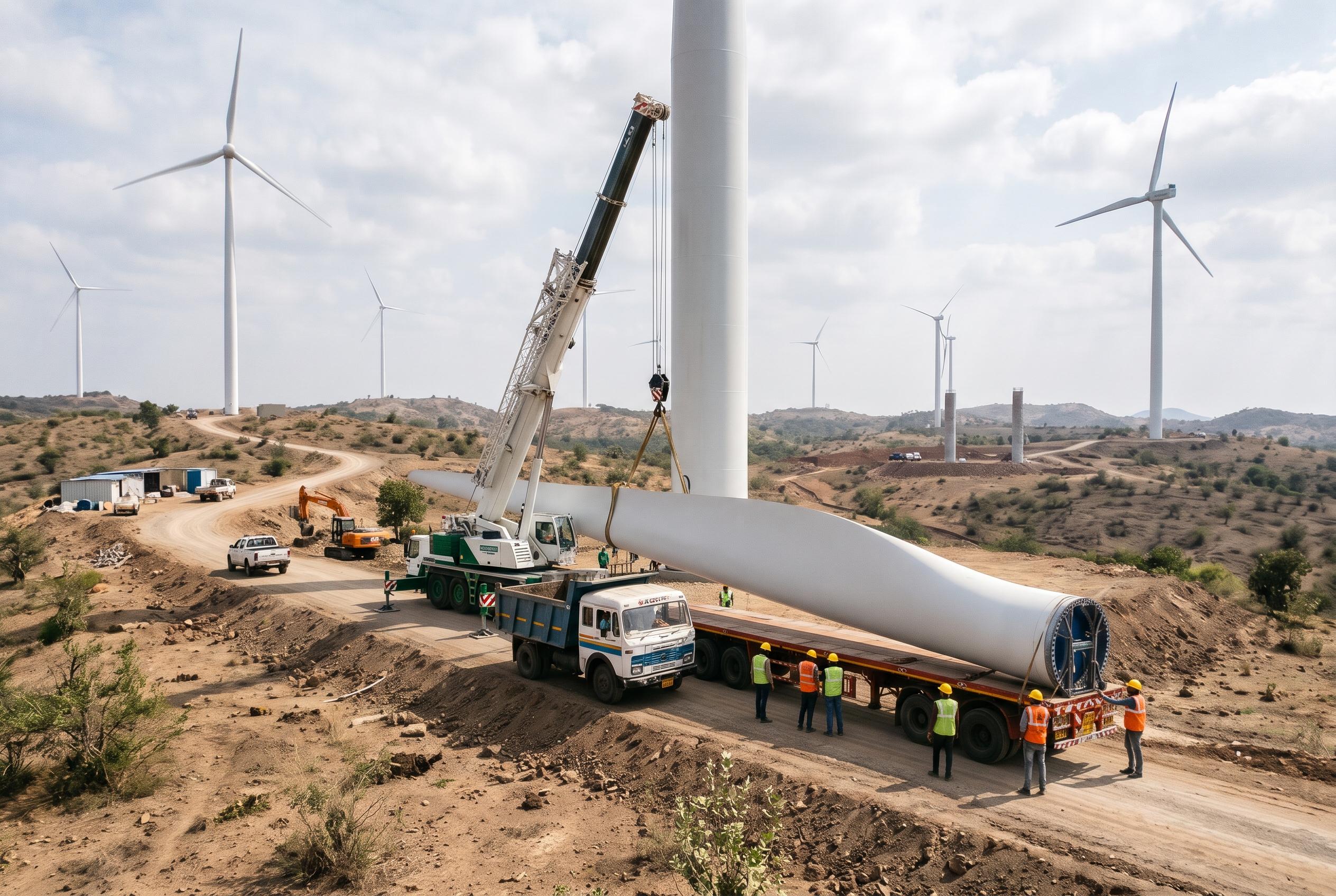

Revenue and deliveries surged, but Suzlon’s EBITDA margin fell as lower-margin turnkey projects grew and services contributed less. The company is betting that this shift will strengthen its role in India’s wind-power expansion.
Suzlon Energy has just posted record deliveries, but the numbers show a business making less profit from each rupee of sales. In the quarter ended September 2026, the wind-turbine maker supplied 710 megawatts in India, lifted revenue 26 per cent to Rs 4,869 crore and pushed its order book above 6 gigawatts, according to the company’s results release. Even so, EBITDA was unchanged at Rs 720 crore, and the margin narrowed to 14.8 per cent from 18.6 per cent a year earlier.
Management has said the decline was driven largely by the changing shape of the work Suzlon is taking on. In an earnings-call transcript, the company attributed the pressure to a heavier mix of large, full-scope projects, a smaller contribution from higher-margin services, one-time operating costs tied to Suzlon 2.0 branding and broader currency and commodity pressure. Executives said the fall was not the result of price cuts and put the underlying margin, excluding those items, at about 16.5 per cent to 17 per cent.
That shift matters because Suzlon now earns money from three distinct parts of the wind business, each with different economics. The core turbine segment still generates most of the revenue, but turnkey engineering, procurement and construction work carries lower margins than equipment-only supply. Operations and maintenance services are much more profitable, although they are a smaller slice of sales. The company’s own disclosures show that EPC work accounted for 38 per cent of the order book in the September quarter, and Suzlon wants that share to reach 50 per cent by fiscal 2028.
The broader market is also comparing Suzlon with Inox Wind, which has been steering towards a more equipment-led model. Inox’s investor presentation and management commentary indicate that roughly three-quarters of its order book has moved into equipment supply, a shift the company says should improve cash generation and reduce working-capital pressure. It has also guided to an EBITDA margin of 20 per cent to 22 per cent, while market data cited by analysts puts Suzlon on a lower trailing earnings multiple than its rival, suggesting investors are currently valuing the two companies differently.
Policy has helped Suzlon as well as its rivals. India’s Approved List of Models and Manufacturers framework has strengthened the case for locally made turbine parts, and Suzlon says more than 80 per cent of its production is now domestically sourced. That helps counter cheaper competition from Chinese players, while also supporting other Indian wind manufacturers. At the same time, Suzlon is trying to reshape itself for the next growth phase, with plans that include larger turbines, exports, repowering old sites and eventual moves into solar and battery storage. The business is still cyclical, and cash conversion remains a key watchpoint, but the company is clearly betting that accepting lower margins today will buy it a larger role in India’s wind-power build-out tomorrow.
Disclaimer: This article is intended to inform and educate, not to recommend or endorse any financial product, investment or strategy. Please consider your own financial circumstances and seek professional advice where appropriate before making financial decisions.



