

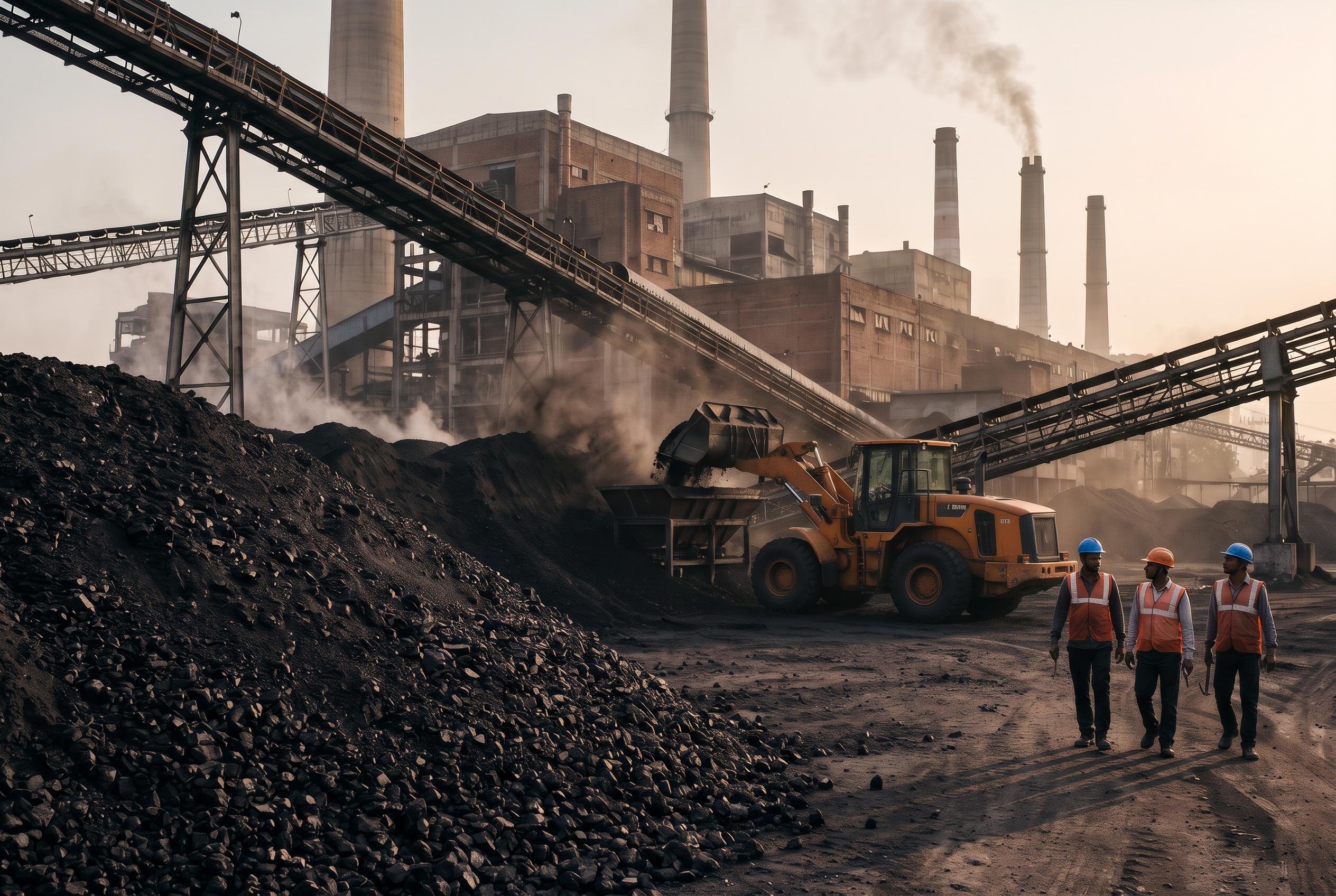

The government wants power station inventories raised to 55 million tonnes by March, but dozens of plants and industrial users still face tight supplies.
India is pressing coal miners and the railways to rebuild stockpiles at power stations to about 55 million tonnes by the end of March, a level that would more than triple inventories from roughly 18 million tonnes now and bring them back to around the level seen at the same point last year, people familiar with the plan told Bloomberg. The move is intended to reduce the risk of summer power shortages, but it also underscores how tightly the country’s electricity system remains tied to coal.
Official data show that coal inventories have improved from the lows seen earlier in the autumn, with the Ministry of Coal saying station stocks remained above 18 million tonnes for much of late September and early October as deliveries picked up. Even so, the level is still well below what the government considers comfortable, and energy analysts say many plants remain under strain after months of heavy drawdown.
The effort has depended heavily on a sharper push from Coal India and Indian Railways. The state miner said its shipments reached a record in October, while the rail ministry reported record coal loading and a rise in the average number of coal rakes sent each day to thermal plants. Together, those gains have helped stabilise supplies to the grid, even as officials seek to lift rail capacity further before the end of the fiscal year.
The recovery in plant stocks has not solved the wider shortage, however. Reuters-sourced reporting in Business Standard said 96 power stations still had less than three days of coal on October 19, while industrial users have continued to complain that they cannot secure contracted fuel. Rajiv Agarwal, secretary general of the Indian Captive Power Producers Association, said companies are being forced into the spot market or back on to the grid, while Vijay Kumar of the Indian Newsprint Manufacturers Association said paper makers had seen only limited improvement in availability.
The shortage is politically sensitive as India heads towards elections in several key states in the first half of next year, including Uttar Pradesh, and as summer demand looms. Officials are trying to avoid a repeat of the blackouts and price spikes that have accompanied past coal squeezes, especially after weak hydropower output and weather-related disruptions put extra pressure on coal-fired generation. Industry figures also warn that worsening smog in northern India could slow rail traffic and make deliveries more difficult, leaving the system vulnerable even if stocks continue to recover in the short term.
Disclaimer: This article is intended to inform and educate, not to recommend or endorse any financial product, investment or strategy. Please consider your own financial circumstances and seek professional advice where appropriate before making financial decisions.



