

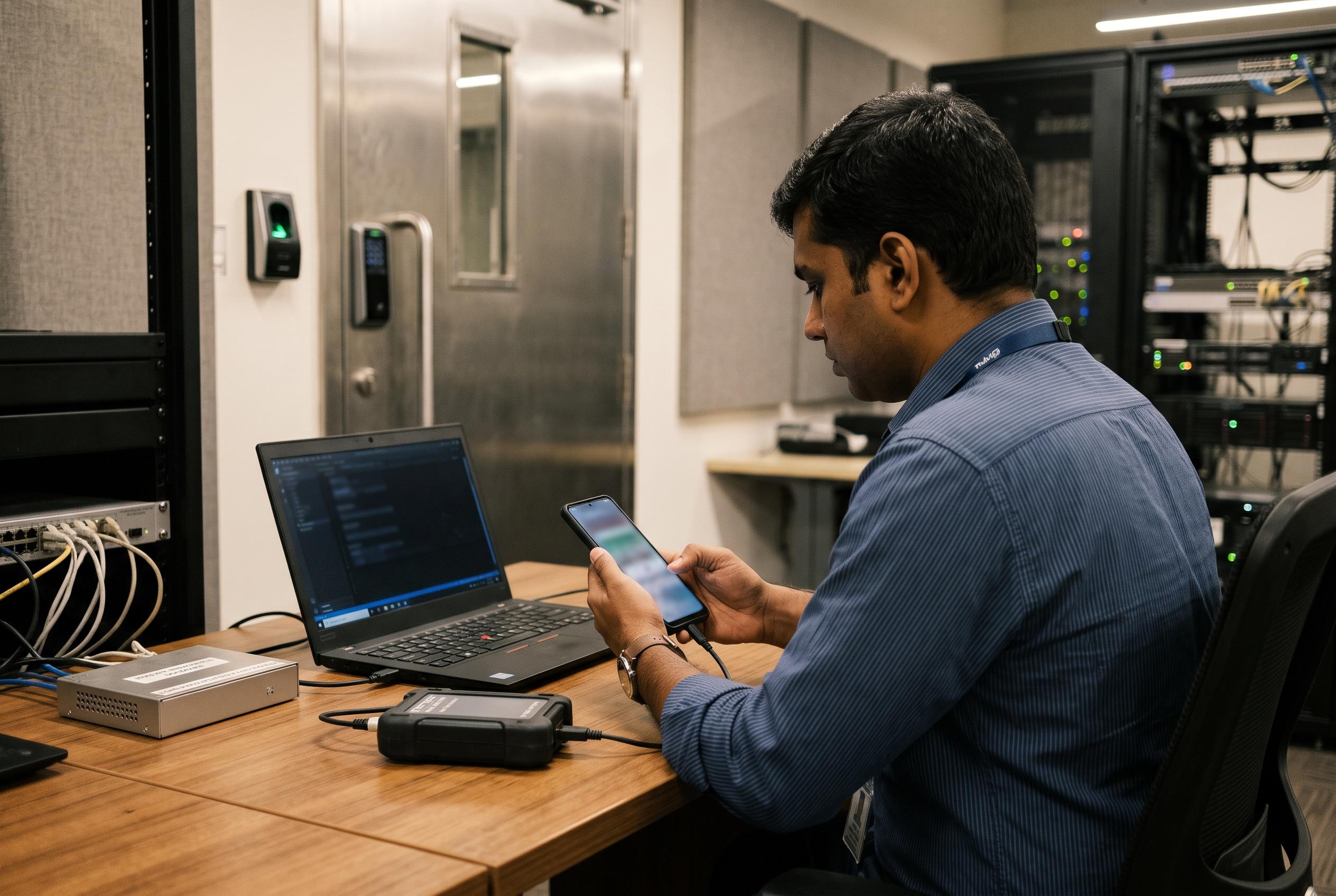

The EKA-1, Dhīr 2B and Dhīr 5B models aim to bring AI to mobile phones without internet access and sensitive systems isolated from external networks.
India’s Ministry of Electronics and Information Technology has unveiled three home-grown artificial intelligence models under the IndiaAI Mission, in a move officials say is meant to reduce dependence on foreign systems and widen access to AI in secure and low-connectivity settings. The launch, held in New Delhi on 3 November 2026, introduced EKA-1 from Soket AI and Dhīr 2B and Dhīr 5B from ZenteiQ, with MeitY Secretary S. Krishnan framing the effort as part of a broader push for strategic autonomy in artificial intelligence.
Soket AI’s EKA-1 is the largest of the three, with 26.3 billion parameters and training on roughly 7.5 trillion tokens, according to a government press release. The company says the model is built for mathematics, coding and reasoning, and is designed to run on private servers, private cloud systems and air-gapped environments, meaning systems that are not connected to external networks. Soket AI says the project is aimed at critical sectors including defence, cybersecurity, banking and finance, where control over sensitive data is a priority.
ZenteiQ’s Dhīr models are positioned differently: the company says Dhīr 2B and Dhīr 5B are compact enough to operate directly on mobile phones without an internet connection. According to ZenteiQ’s research page, the models were pretrained from scratch in India and are intended for offline use on laptops, embedded boards and edge devices, with support for English and ten Indian languages. The company said it is preparing a free mobile app for Android and iOS, while the model weights are already available on AIKosh.
The launch fits into a wider government effort to build an indigenous foundation-model ecosystem using Indian datasets and domestic talent. A policy paper from the Office of the Principal Scientific Adviser says the IndiaAI Mission received 506 proposals for foundational AI models by April 2025, with Soket AI among the initiatives selected in the programme’s early phases. The same paper says later rounds expanded the pool of supported projects and that models are expected to be made available through AIKosh to startups and research institutions, underscoring New Delhi’s focus on widening access while keeping greater control over data and infrastructure.
Disclaimer: This article is intended to inform and educate, not to recommend or endorse any financial product, investment or strategy. Please consider your own financial circumstances and seek professional advice where appropriate before making financial decisions.



