

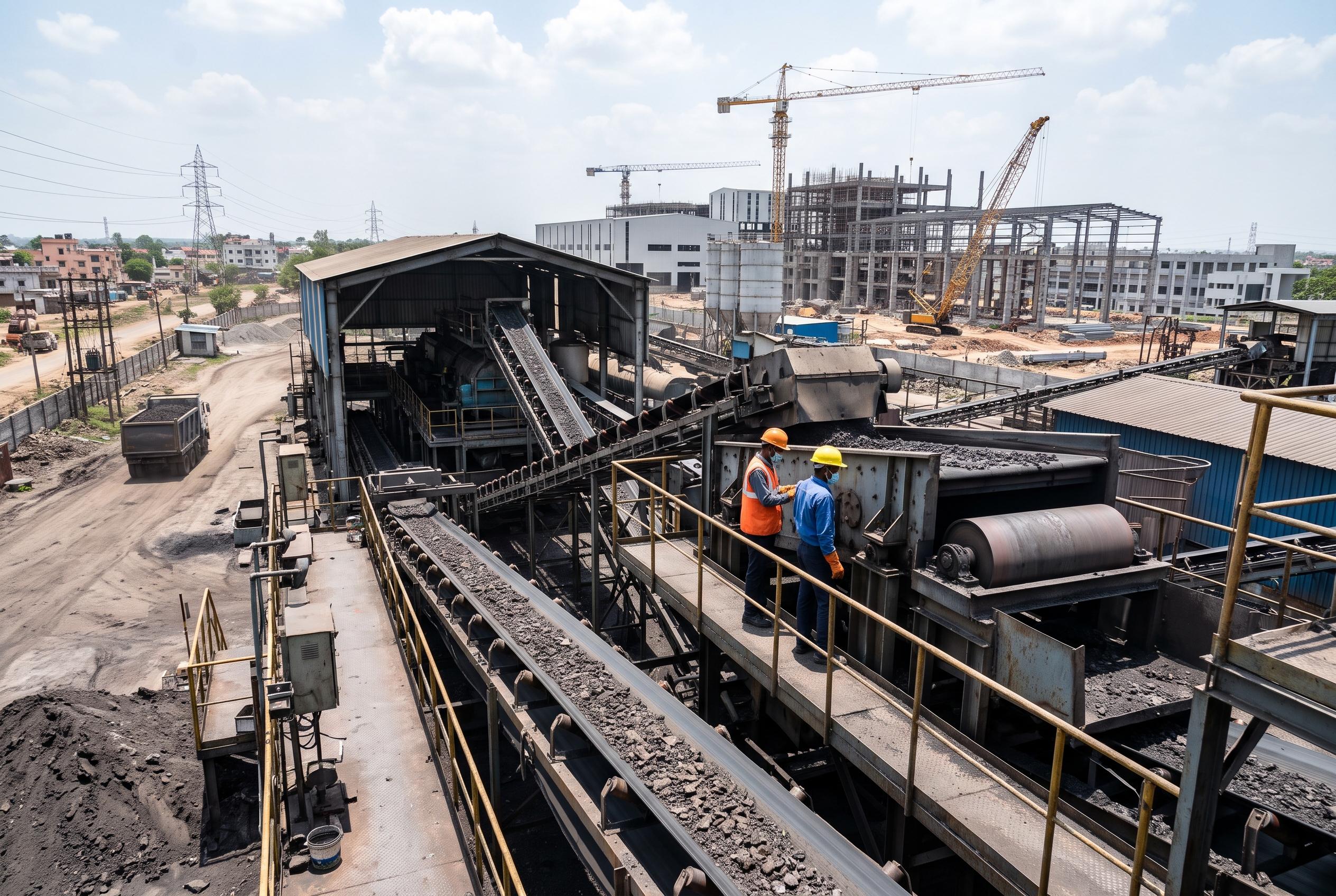

New Delhi is combining public funding, trade measures and international partnerships to develop critical-mineral processing and manufacturing at home, but financing and overseas dependencies remain obstacles.
India is moving to build a critical minerals policy that reaches far beyond the mine gate, with the aim of securing the raw materials needed for batteries, renewable energy equipment and other clean-tech industries. The Columbia University commentary says the government has assembled more than a dozen regulatory, financial and trade measures worth nearly $40 billion, combining direct support under the National Critical Mineral Mission with broader incentives for manufacturing and consumer demand. That wider approach, according to the analysis, is designed to develop exploration, processing, recycling and downstream industries at the same time rather than leaving the country dependent on imported inputs.
The policy push reflects a basic vulnerability. India still relies heavily on overseas supplies for many minerals, and the commentary says it is entirely dependent on imports for 10 of them, including lithium, cobalt, nickel, vanadium and niobium. The same analysis notes that the government has responded by cutting customs duties on several critical inputs, easing rules for exploration and foreign investment, and supporting overseas asset acquisition through state-backed vehicles such as Khanij Bidesh India Limited. A policy update from IMPRI India says the country has made progress in exploration and access, but commercial-scale processing remains a major bottleneck.
The financing challenge remains substantial. IEEFA says the sector faces volatile demand, sharp price swings, long project timelines and high upfront capital costs, all of which make private investment difficult to secure. The Columbia commentary suggests that India is trying to offset those constraints through public support for processing parks, research, stockpiles and recycling, while also using manufacturing incentives and consumer subsidies to create a market for the minerals it wants to produce or refine at home. But the report warns that industrial policy alone cannot solve the problem if the country cannot reliably obtain mineral resources, technology and capital from abroad.
That is where the external dimension of India’s strategy becomes more complicated. The commentary argues that resource-rich countries are increasingly seeking to keep more of the value chain at home, through export restrictions, domestic refining rules and other measures. IMPRI India similarly warns that overseas sourcing can be exposed to political risk, security concerns and local-processing requirements. In that setting, the Columbia authors say India could try to position itself as a “third way” between China’s state-led model and Western supply-chain strategies, using joint ventures, training, long-term supply contracts and co-investment to support value addition in developing economies while still serving Indian industry.
The same balancing act applies to India’s dealings with advanced economies. The commentary points to the Quad Critical Minerals Initiative and other partnerships as signs that New Delhi is trying to work with countries that share an interest in diversifying supply chains. Yet those governments are also trying to protect their own manufacturing bases, as seen in Australia’s domestic production tax incentive and tighter US trade and investment rules. The Columbia analysis says India’s best chance of success may be to present itself not as a challenger to those systems, but as a complementary industrial bridge: one that can help move minerals, processing and manufacturing across borders in ways that strengthen, rather than fragment, the wider supply network.
Disclaimer: This article is intended to inform and educate, not to recommend or endorse any financial product, investment or strategy. Please consider your own financial circumstances and seek professional advice where appropriate before making financial decisions.



