

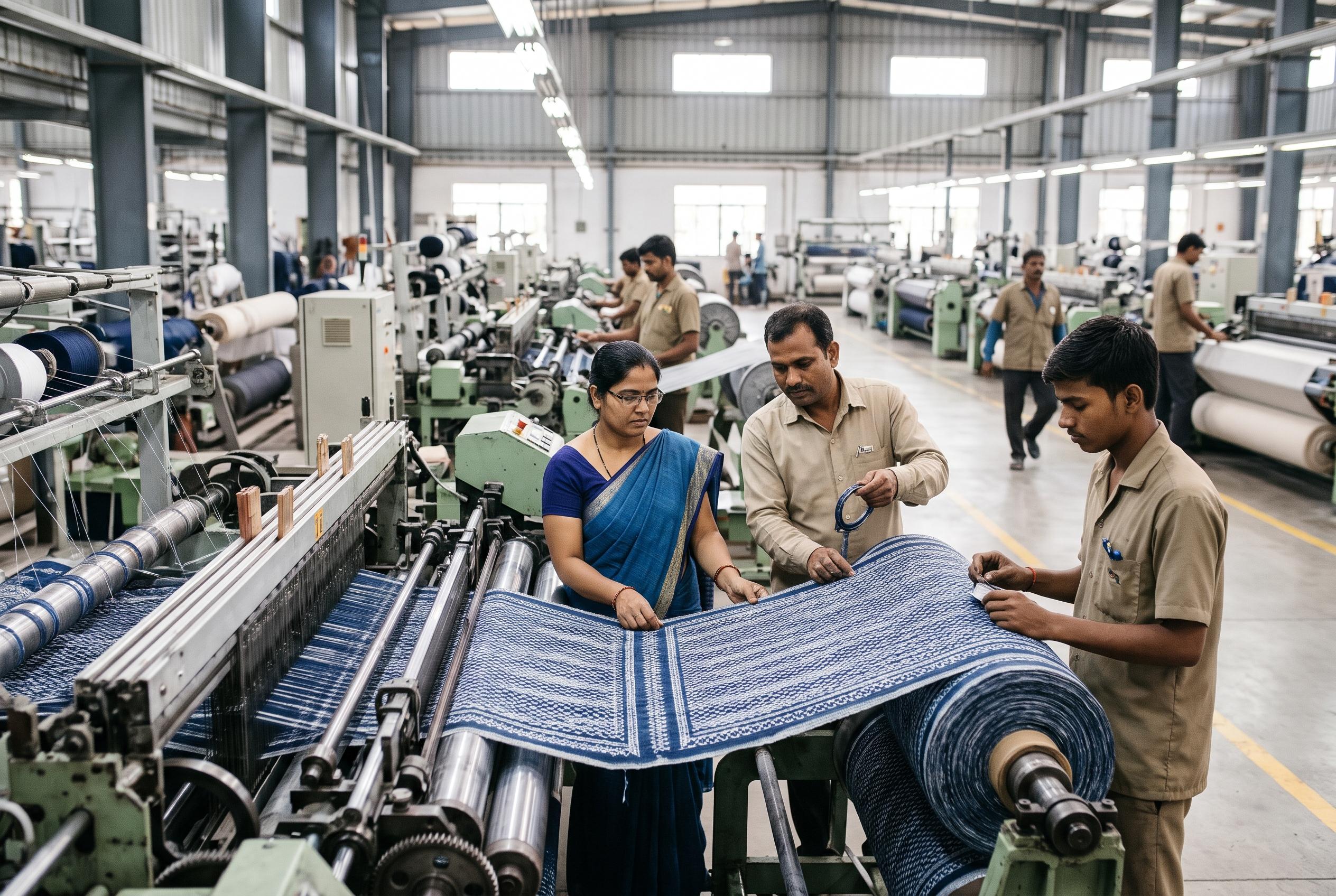

The government is examining a coordinated approach to GST, customs and anti-dumping duties as it seeks to cut costs across India’s textile supply chain and strengthen global competitiveness.
The Indian government is preparing a more unified tax approach for the textile industry in a bid to ease costs on raw materials, imported machinery and selected fibre inputs, according to people familiar with the talks cited by The Economic Times. The idea is to give manufacturers greater certainty across the value chain, from fibre and yarn to finished garments, while improving their ability to compete in overseas markets.
Officials are looking at whether the framework should span goods and services tax on textile products and inputs, basic customs duties on raw materials and machinery brought in from abroad, and anti-dumping duties on some man-made fibre and yarn imports, the report said. The move reflects a broader effort to expand textile manufacturing, encourage technical textiles and modernise older industrial clusters, all while trying to lift India’s share in global trade.
The Department of Revenue is working with the textiles ministry on requests from industry for relief on key inputs, including caprolactam, nylon chips, rayon-grade wood pulp and cotton, according to the information shared with KNN. Industry groups have also pressed for a six-month waiver of basic customs duty on a set of polyester-chain products, including monoethylene glycol, purified terephthalic acid, partially oriented yarn, fully drawn yarn and drawn textured yarn, after temporary exemptions on MEG and PTA were withdrawn in July.
The textiles ministry has separately asked the revenue department to examine machinery costs, highlighting a concern that investment support alone may not be enough if duties remain uneven or high at earlier stages of production. That review would sit alongside the government’s Rs 40,000-crore Textile Expansion and Employment Scheme announced in the Union Budget 2026-27, which is intended to support machinery upgrades, new technology and common testing facilities in traditional clusters. The wider budget package also includes an integrated programme for the sector, with measures covering fibres, handlooms, handicrafts and skills.
Disclaimer: This article is intended to inform and educate, not to recommend or endorse any financial product, investment or strategy. Please consider your own financial circumstances and seek professional advice where appropriate before making financial decisions.



