

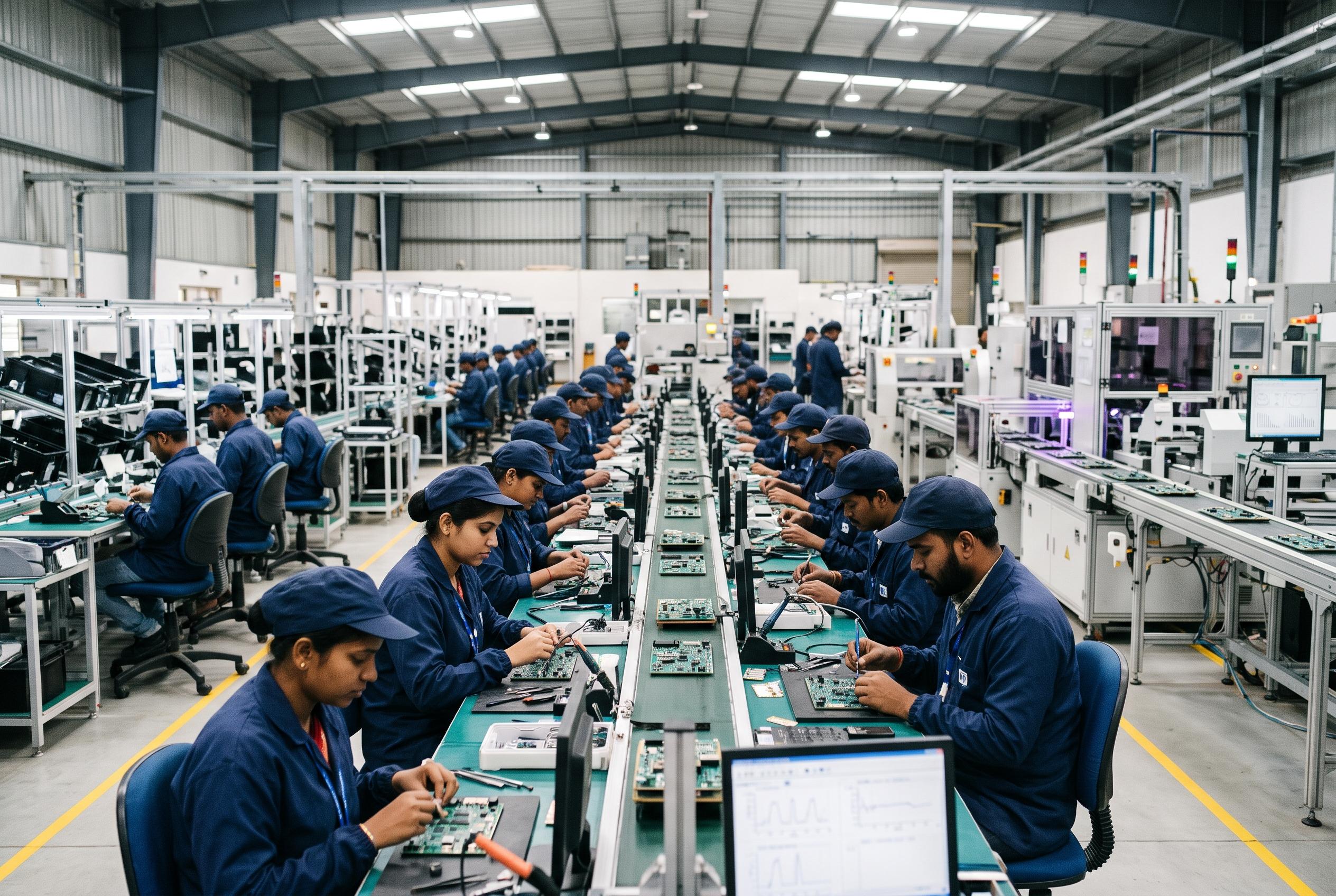

India’s electronics output and exports have soared, but the country still imports many of the high-value components inside finished devices. A new push to build a deeper local supply chain will determine whether the boom delivers more than assembly jobs.
India’s electronics manufacturing boom is gathering pace, but the bigger question is how much of the value created actually stays in the country. Output has surged over the past decade, exports have risen sharply, and the government is now shifting attention from final assembly to the deeper layers of the supply chain that determine where the real economic gains land.
According to government data cited by India Brand Equity Foundation, electronics production has climbed from ₹1.9 lakh crore in 2014-15 to ₹13.11 lakh crore in 2025-26. Electronics exports have risen even faster, from ₹38,263 crore to ₹4.24 lakh crore over the same period. Those numbers point to a remarkable manufacturing expansion, but they do not automatically mean India is capturing the full value of each device made on its soil.
That distinction matters because a large share of the most profitable parts of an electronic product can still be imported. If phones, appliances and other devices are assembled in India using semiconductors, displays, sensors and control systems sourced from abroad, the domestic economy retains only a fraction of the total value. Ashutosh Gupta, director of sales and marketing at Samriddhi Home Appliances, said the first phase of Make in India focused on factories, investment and output. The next stage, he argued, has to centre on components, engineering and skilled labour.
The government has begun to push in that direction through the Electronics Components Manufacturing Scheme, which aims to build a stronger local ecosystem for parts, sub-assemblies and capital equipment. Official material says the scheme is intended to reduce dependence on imports, lift domestic value addition and deepen India’s integration into global supply chains. Industry commentary suggests the policy has already drawn significant interest from investors, while projects are advancing across multiple factories. More broadly, government-backed reporting indicates domestic value addition in electronics has risen to about 18% to 20%, still leaving substantial room for improvement.
The challenge now is less about scale than substance. India needs more companies making motors, printed circuit boards, connectors, plastic casings, sheet metal parts and other inputs that sit behind finished devices. It also needs workers who can operate advanced machinery, inspect quality and solve technical faults, alongside firms willing to invest in product design and new technologies. As production grows, the real test will be whether India can move from being a large assembler to a more complete manufacturing base, with lower import dependence and a stronger place in the global electronics chain.
Disclaimer: This article is intended to inform and educate, not to recommend or endorse any financial product, investment or strategy. Please consider your own financial circumstances and seek professional advice where appropriate before making financial decisions.



