

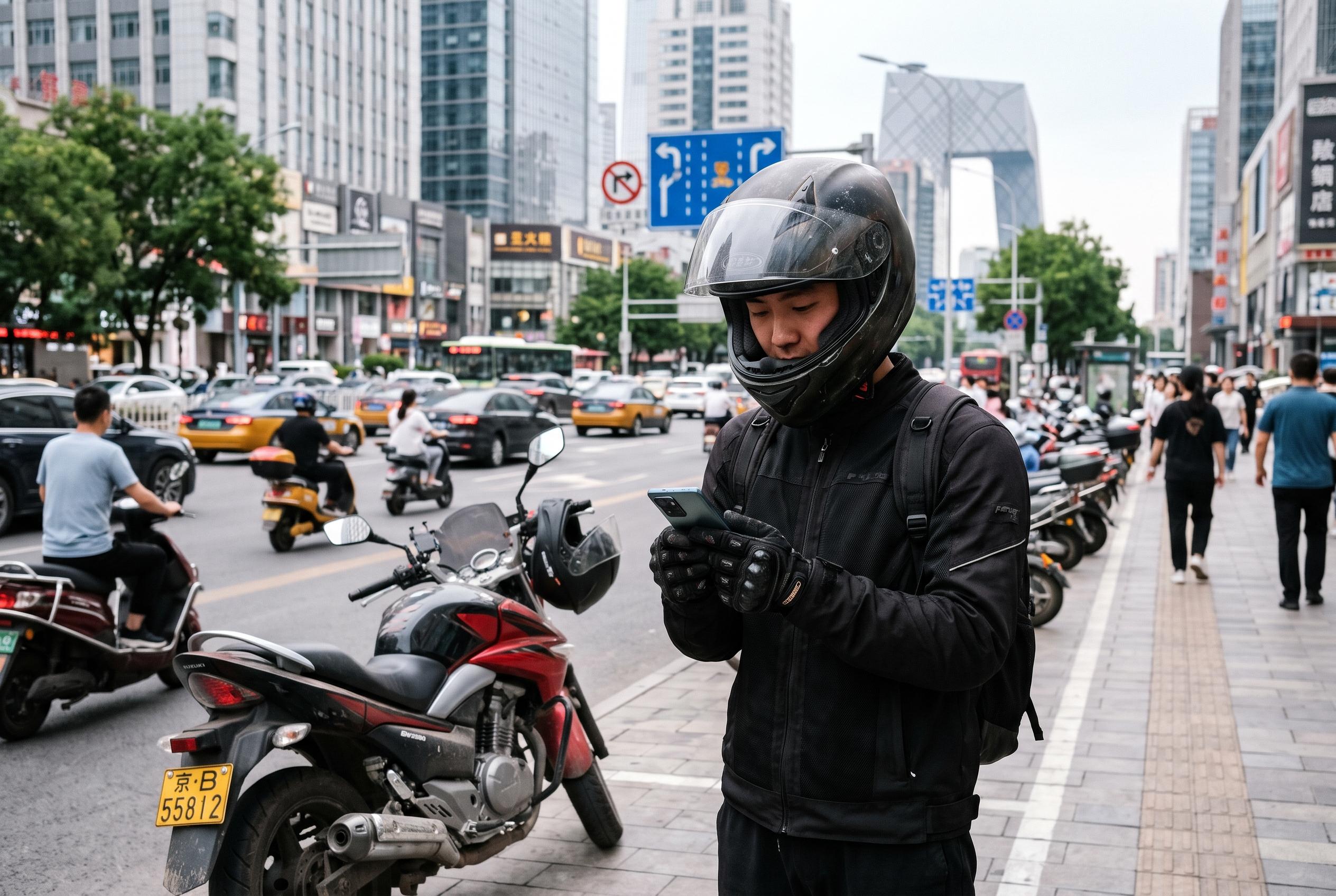

A platform backed by 15 insurers aims to make compulsory motorcycle cover easier to buy and pioneers online commercial-policy renewals, though access remains limited to Beijing.
A new Beijing platform for motorcycle insurance may mark a turning point for riders in the capital, after regulators and insurers moved to bring compulsory cover online and make renewals less dependent on the sort of opaque, branch-by-branch access that has long frustrated owners. According to reports from 21st Century Business Herald and other Chinese financial media, the Beijing Financial Supervision Bureau and the Beijing Insurance Industry Association oversaw the launch on 28 September 2026 of the “Beijing Motorcycle Online Insurance Platform”, built by 15 property insurers and designed to let personal motorcycle owners handle compulsory insurance entirely online.
The platform matters because motorcycle insurance in China has often been easier to discuss than to buy. For many riders, the problem has not been the law’s requirement to carry compulsory motor insurance, but the practical difficulty of obtaining it through normal channels. The new Beijing system aims to pull together insurers’ online entry points, create a single access path for compulsory cover and, notably, pioneer online renewal of commercial motorcycle insurance nationwide, according to the reports. That does not mean every hurdle has vanished, but it does suggest regulators are trying to shift the market away from the patchy, manual process that has defined motorcycle insurance for years.
The move also reflects a broader policy problem: insurers have often treated motorcycle cover as a low-margin line of business. Riders in online forums have long complained about limited quotas, forced add-ons and repeated trips to designated branches, while the companies themselves have faced pressure from the losses in China’s compulsory motor insurance business. Official figures cited by Chinese financial media showed the sector still ran an operating loss of 230 billion yuan in 2025, even after investment income was taken into account, with the annual underwriting loss widening over recent years. In that context, motorcycles, which are relatively cheap to insure and difficult to price at scale, have tended to fall to the margins.
That is why Beijing’s online platform is being watched closely beyond the city. The immediate benefit is simple: a rider no longer has to rely solely on a favoured branch, a broker or sheer luck to secure compulsory insurance. But the reform is still limited. It applies to Beijing, and it does not erase the separate rules that continue to govern new commercial motor policies or the designated outlets still used for some products. In other words, the platform improves access, but it does not yet represent a full national solution.
Even so, the Beijing launch may become a reference point for other cities if it proves workable. Reports from other parts of China suggest that some local markets are already loosening their rules, though the picture remains uneven and depends heavily on the insurer and the city. For riders, the broader significance is that the state is increasingly treating motorcycle insurance as a service issue, not merely a compliance requirement. If Beijing’s system is expanded or copied elsewhere, it could reduce the kind of queues, delays and informal fees that have made motorcycle insurance one of the more awkward corners of China’s motor market.
Disclaimer: This article is intended to inform and educate, not to recommend or endorse any financial product, investment or strategy. Please consider your own financial circumstances and seek professional advice where appropriate before making financial decisions.



