

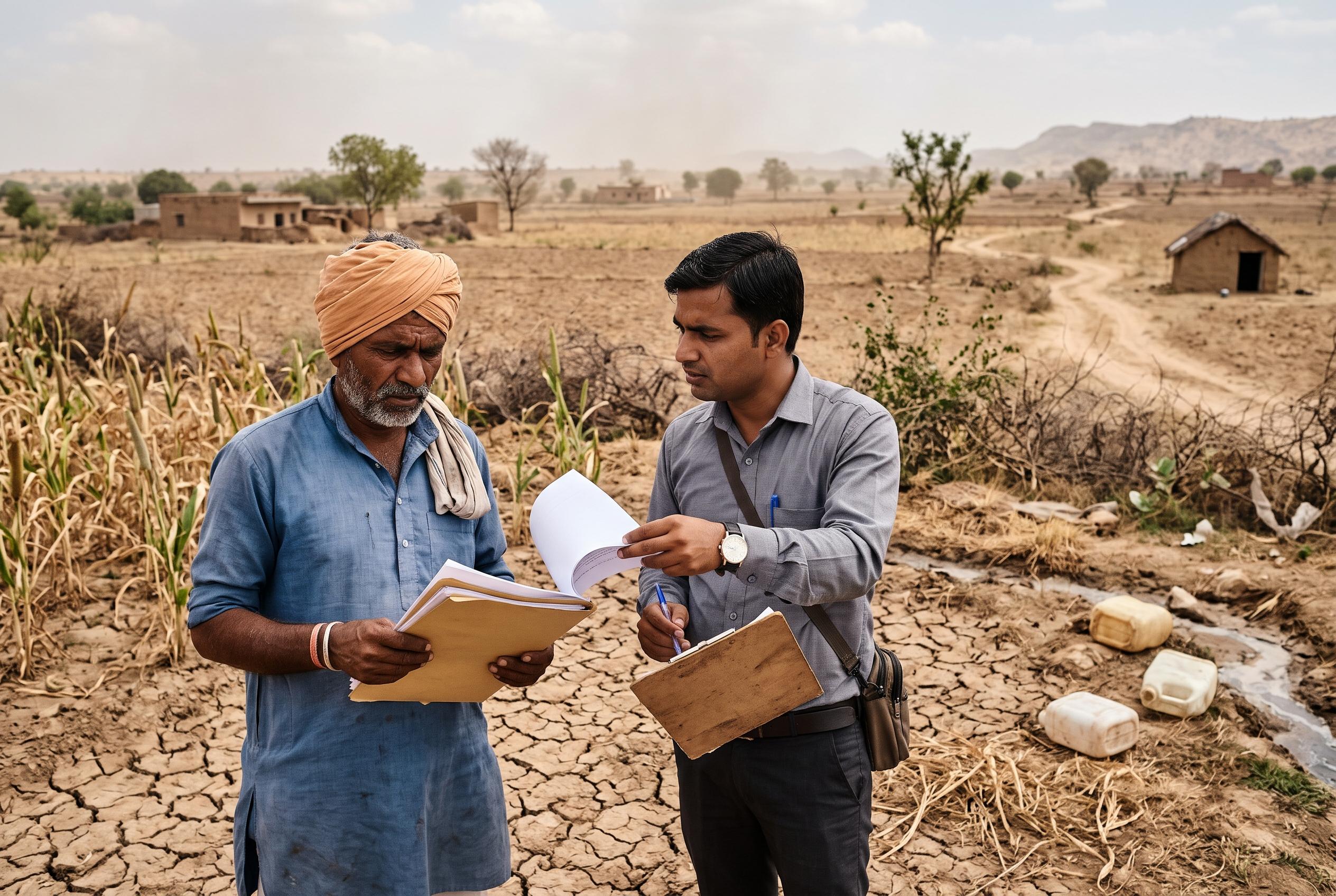

Shriram Finance, Mahindra Finance and Bajaj Finance are slowing lending and intensifying collections in drought-hit districts as poor rainfall threatens farm incomes and loan repayments.
India’s biggest non-banking financial companies are becoming more selective in rural markets as a weak monsoon threatens farm incomes and repayment patterns. Shriram Finance, Mahindra & Mahindra Financial Services and Bajaj Finance are slowing new lending in drought-hit districts, while stepping up collections and watching closely for early signs of stress, according to The Economic Times.
The caution follows a difficult rainy season. India’s southwest monsoon ended 13% below normal in 2026, its weakest performance since 2015, with the southern peninsula 24% short and Karnataka 32% below average. That matters for lenders because poor harvests can quickly squeeze household cash flow, damp rural spending and raise the risk of missed repayments on vehicle loans, small-business credit, consumer finance and microfinance.
Shriram Finance has pared back lending in parts of Karnataka, central India and eastern Maharashtra after ground feedback pointed to slower activity, its managing director and chief executive, Parag Sharma, told The Economic Times. Mahindra Finance has reduced funding in stressed locations, strengthened its in-house collections network and brought in outside agencies where needed. Its managing director and chief executive, Raul Rebello, said the company is monitoring three states and 282 districts classified as drought-prone, while also doubling its liquidity buffer in rupee terms from a year earlier.
Bajaj Finance is taking a similarly cautious line. The company is monitoring all 720 districts where it operates and has scaled back business in areas where drought has been declared, including reducing microfinance originations in some districts and parts of its business-to-business lending, vice-chairman and managing director Rajeev Jain said. Jain said Maharashtra appears to be the worst affected for now, although conditions differ from place to place. According to Sahi.com, Bajaj Finance has also tightened credit filters in rural consumer and unsecured lending and revised its fiscal 2027 assets under management growth guidance to 26% to 27%. For the wider sector, the shift suggests rural loan growth may slow in the months ahead, with Karnataka, Maharashtra and central India likely to stay under close watch.
Disclaimer: This article is intended to inform and educate, not to recommend or endorse any financial product, investment or strategy. Please consider your own financial circumstances and seek professional advice where appropriate before making financial decisions.



