

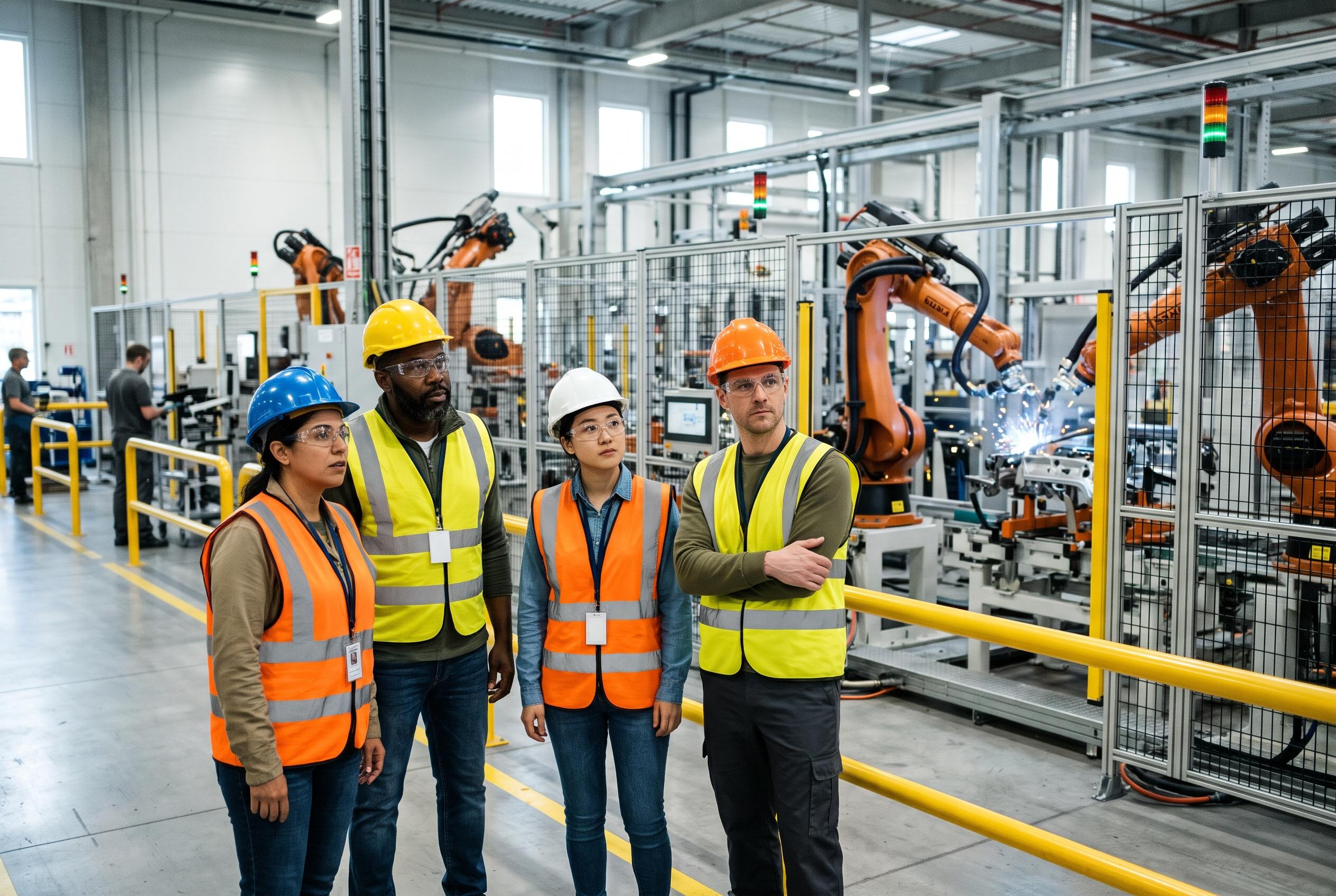

Economists say India must shift towards labour-intensive manufacturing, better skills and stronger worker protections as machinery-led growth and AI threaten to weaken job creation.
India must shift towards more labour-intensive growth if it is to create enough jobs for a fast-growing workforce, economists warned at a Business Standard summit in Mumbai, saying that technological change and artificial intelligence are widening the gap between output gains and employment. Sajjid Chinoy, head of Asia economic research at JPMorgan, and Soumya Kanti Ghosh, group chief economic adviser at State Bank of India, argued that the country needs a growth model that delivers more work for people, not just more output for capital.
Chinoy said the tension between rising gross domestic product and sluggish job creation is not unique to India, but he argued the problem is sharper in a country that still needs to add millions of jobs. He pointed to long-run industry data showing that production has become more machinery-heavy and less labour-heavy, and warned that artificial intelligence could now affect service-sector employment as well as factory work. Duvvuri Subbarao, the former Reserve Bank of India governor, made a similar case last week, saying India must pursue employment-intensive growth rather than simply fast expansion.
Ghosh said manufacturing remains the most important route to better jobs, particularly because India’s labour market still depends heavily on agriculture and the share of manufacturing in gross value added has remained broadly stuck at about 14% to 15%. He argued that sectors such as footwear, apparel, leather goods, and gems and jewellery can absorb workers at scale, while also noting that government efforts such as production-linked incentive schemes are beginning to support investment and exports. Economists at the International Labour Organisation have likewise argued that employment goals need to be built directly into macroeconomic policy, not treated as an afterthought.
Both economists said the challenge is not only to create jobs, but to create better ones. Chinoy said India needs a mix of education, labour reforms, temporary social protection and stronger reskilling so workers can move from shrinking sectors into newer ones. Ghosh said the scale of the skilling deficit remains large, citing labour-force data showing that only around 30.7% of the informal workforce has received training. That concern echoes recent analysis from the NCAER, which said higher skills, stronger small firms and better access to credit could lift both employment and productivity.
The economists also cautioned against treating the gig economy or capital-heavy industries such as data centres as a complete answer to India’s employment problem. Chinoy said gig work may help at the margins, but it cannot solve the broader jobs challenge, while data-centre-led growth would not be enough because of the capital intensity involved. He suggested that India should study states that have done better on manufacturing and labour participation, pointing to Tamil Nadu as an example, and urged more sharing of best practice across areas such as labour, land, health and education.
Disclaimer: This article is intended to inform and educate, not to recommend or endorse any financial product, investment or strategy. Please consider your own financial circumstances and seek professional advice where appropriate before making financial decisions.



