

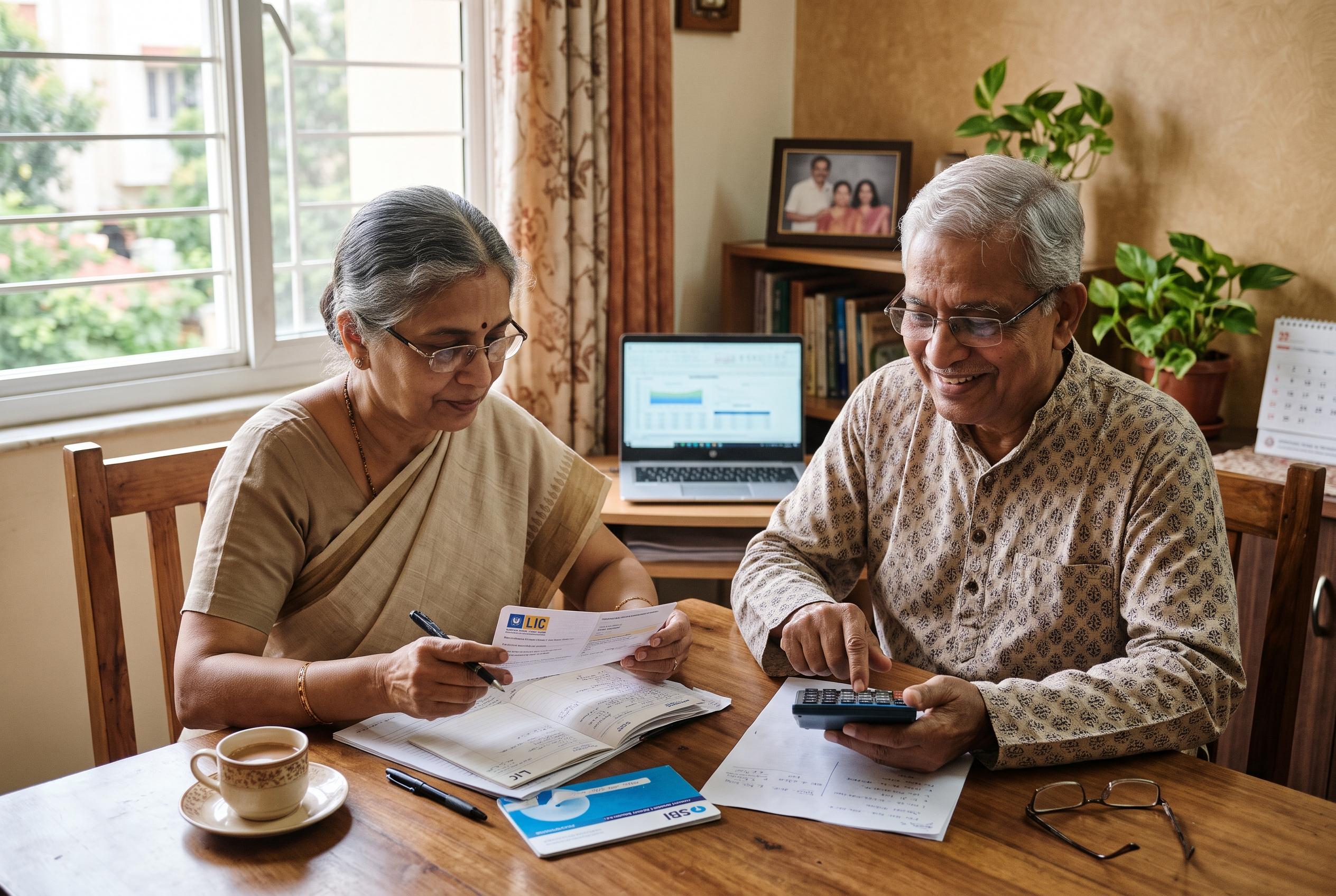

The government-backed Senior Citizen Savings Scheme pays 8.2% a year, with deposits of up to ₹30 lakh generating quarterly income for eligible retirees.
Retirement often sharpens the focus on one question: where can savings be kept safe while still producing a dependable income? In India, the answer for many older investors is the Senior Citizen Savings Scheme, a government-backed deposit available through post offices and authorised banks that offers a fixed return and quarterly interest payments. The scheme currently pays 8.2% a year, according to investment guides that track the latest small savings rates, making it one of the most attractive low-risk options for retirees seeking regular cash flow.
The appeal of the scheme lies in its combination of safety and predictability. As a sovereign-backed savings product, the principal is protected by the government, and the interest is credited every three months rather than monthly. At the current rate, a deposit of ₹5 lakh generates ₹41,000 a year in interest, while the maximum permitted investment of ₹30 lakh produces ₹2.46 lakh annually, or ₹61,500 each quarter. That works out to roughly ₹20,500 a month in equivalent income over a full year.
The scheme is open to Indian residents aged 60 and above, though there are exceptions for some early retirees. Civilian employees who take retirement under voluntary retirement or superannuation can qualify from age 55 if they open an account within a month of receiving retirement benefits, while retired defence personnel can do so from age 50. The minimum deposit is ₹1,000, and the account can be opened at authorised banks or post offices across the country.
Tax treatment is an important part of the calculation. Deposits qualify for a deduction of up to ₹1.5 lakh under Section 80C, but only under the old tax regime, while the interest earned is taxable. For senior citizens, banks and post offices must deduct tax at source if total interest income in a financial year exceeds ₹50,000, although eligible taxpayers can submit Form 15H to avoid TDS if their total income remains below the taxable threshold. Section 80TTB can also provide an additional deduction of up to ₹50,000 on interest income for senior citizens.
The account runs for five years, but savers can extend it in three-year blocks by applying within a year of maturity. Early closure is allowed, though penalties apply: 1.5% if the account is shut before two years and 1% if it is closed after two years but before five years. For couples in which both spouses qualify, the combined ceiling can reach ₹60 lakh, allowing a household to build a larger stream of quarterly income. For retirees who value certainty more than market-linked upside, the scheme remains a straightforward and widely used income option.
Disclaimer: This article is intended to inform and educate, not to recommend or endorse any financial product, investment or strategy. Please consider your own financial circumstances and seek professional advice where appropriate before making financial decisions.



