

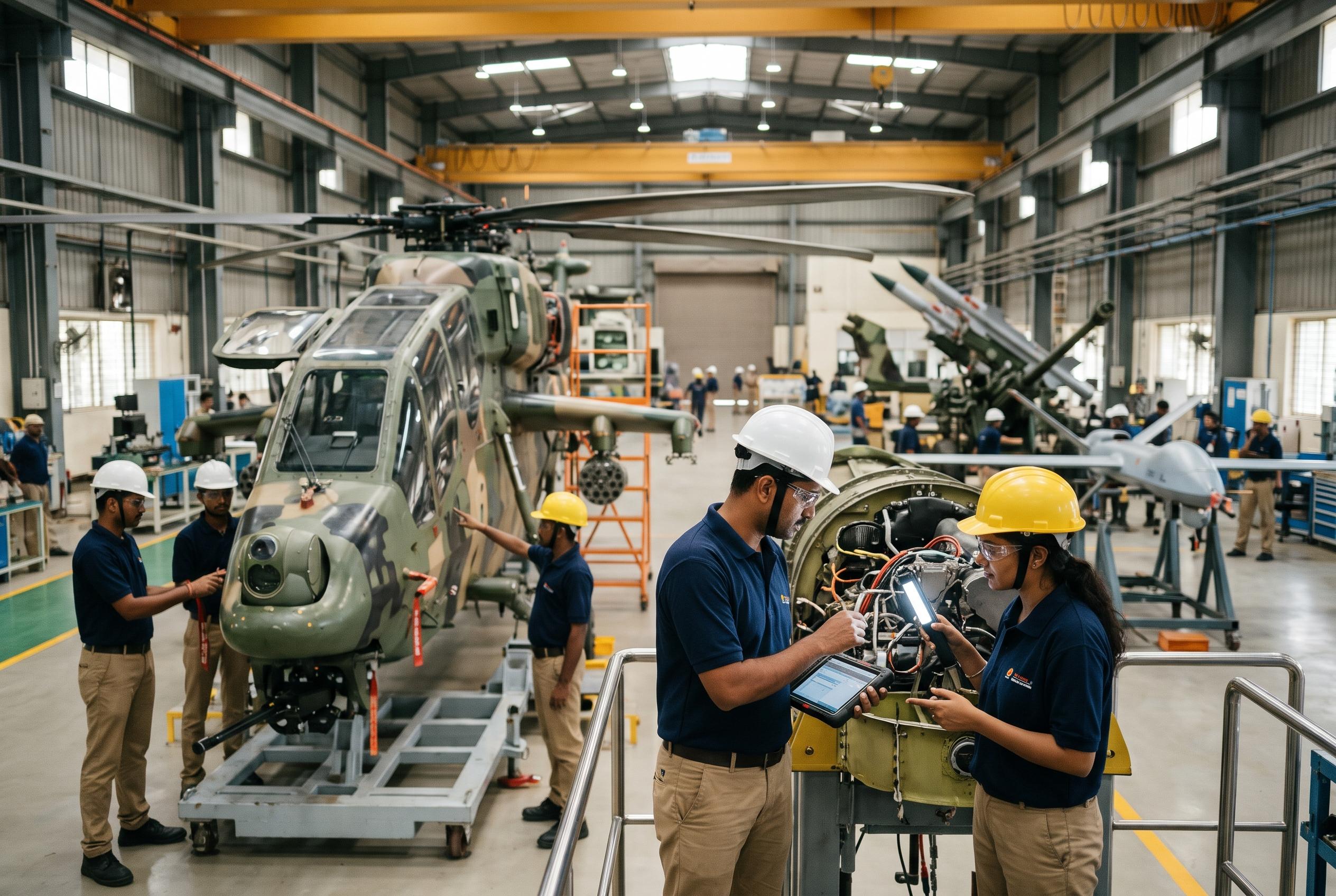

New Delhi has given in-principle approval to one of its biggest recent defence procurement packages, spanning drones, helicopters, artillery and air defence systems, though contracts and deliveries remain years away.
India has approved a sweeping round of military procurement worth about $22.32 billion, or Rs 2.12 lakh crore, in one of its largest recent defence buying decisions, according to reports from defence and business media. The Defence Acquisition Council, chaired by Defence Minister Rajnath Singh, gave initial approval on 26 October to a broad package for the army, navy and air force, with the government saying roughly 82% of the planned purchases are expected to come from Indian industry.
The approvals cover a wide mix of equipment, from high-mobility vehicles and self-propelled artillery to light multi-role helicopters, short-range air defence systems and unmanned platforms. For the Indian Army, the package includes counter-drone systems, surveillance drones, an integrated surveillance and strike system and a long-range kamikaze drone system, reflecting the growing emphasis on battlefield awareness, mobility and protection against airborne threats. The proposed helicopter buys are meant to serve both the army and the air force, with roles ranging from reconnaissance and search-and-rescue to combat support and disaster relief.
Defence officials also cleared proposals linked to the Indian Navy, including an active offboard decoy system designed to help defend ships against anti-ship missiles. According to the reports, the navy’s proposed new platforms are intended to be built domestically and fitted with modern warfare capabilities, though the announcement did not set out detailed specifications, costs or delivery timelines. For the air force, the package includes special utility helicopters, air defence systems, weapons and a mobile X-band Doppler weather radar system, which would provide more localised weather tracking in forward operating areas.
The scale of the domestic sourcing target is likely to draw particular attention. Reuters-style reporting and Indian media accounts have highlighted the 82% local content figure as part of New Delhi’s broader push to strengthen home-grown defence manufacturing and cut reliance on overseas suppliers where possible. But the figure does not mean the equipment is already built in India, nor does it guarantee that every contract will go to a domestic company. The approvals are only the first formal step in the procurement process.
That matters because an Acceptance of Necessity, or AoN, is an in-principle green light rather than a signed contract. Further stages typically include detailed requirements, technical evaluation, commercial bidding, negotiations and final contract awards, followed by manufacturing, testing and delivery. The latest package therefore signals the direction of India’s modernisation drive more clearly than its immediate military effect. What happens next will depend on how quickly the individual programmes move through the procurement pipeline and whether domestic producers can meet the armed forces’ technical demands at scale.
Disclaimer: This article is intended to inform and educate, not to recommend or endorse any financial product, investment or strategy. Please consider your own financial circumstances and seek professional advice where appropriate before making financial decisions.



