

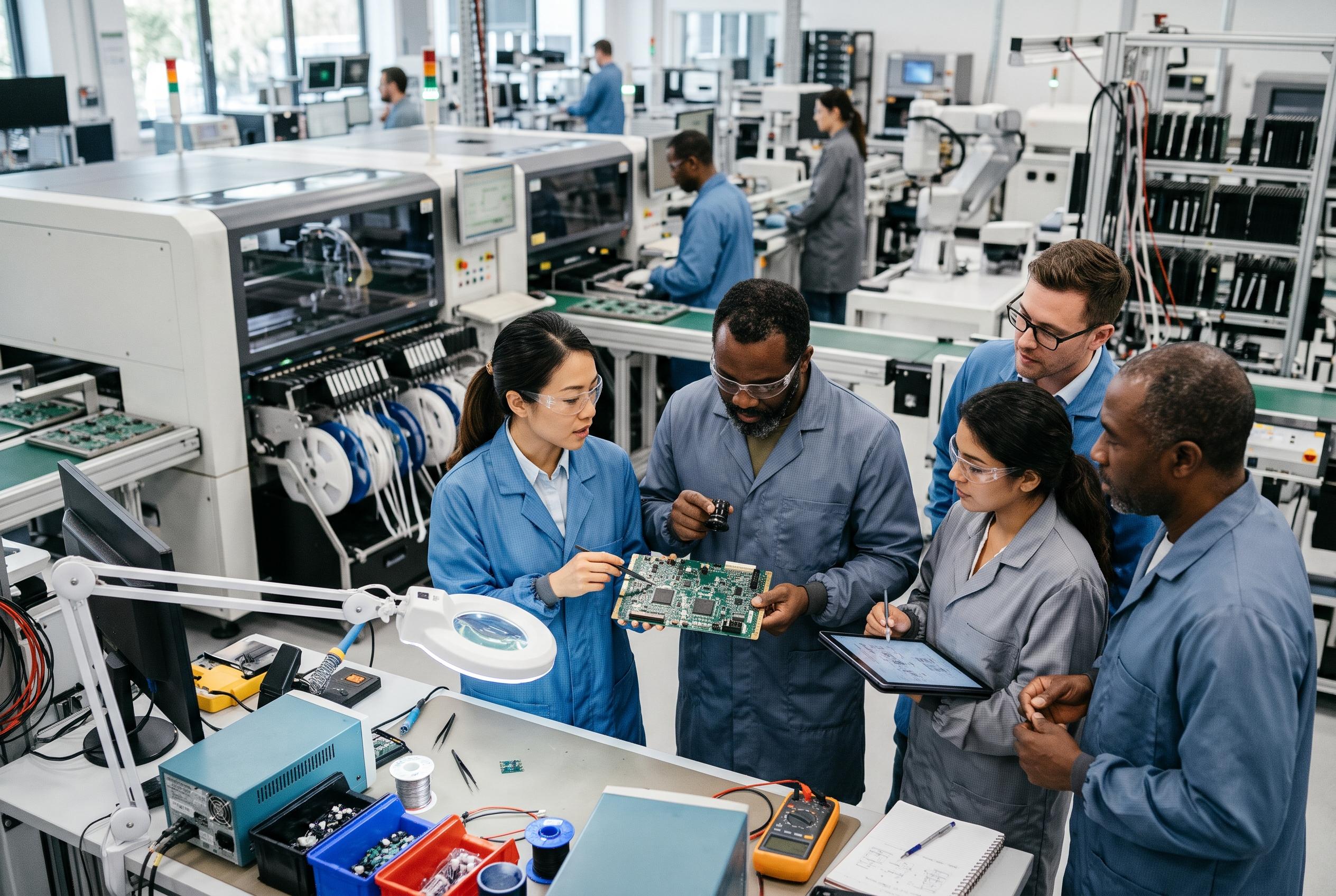

India is producing more electronics, but industry leaders say the next phase must localise components, engineering and technical skills if the country is to retain more value at home.
India has spent years building scale in electronics manufacturing, but the harder question now is how much of that output is actually retained at home. Business Today reported that rising production does not automatically translate into higher domestic value creation, because the real gains depend on where components are made, where engineering takes place and how much design capability sits inside the country. Industry executives argue that India’s next phase must move beyond assembly and towards a deeper industrial base that captures more of the product value chain.
Ashutosh Gupta, sales and marketing director at Summercool Home Appliances, told Business Today that the first phase of Make in India was largely about creating capacity and attracting investment. The next step, he said, is to strengthen the parts that determine where value really accumulates: components, engineering skills and technical talent. His comments reflect a broader shift in policy thinking, as policymakers and manufacturers increasingly focus on domestic value addition rather than output figures alone.
That distinction matters because electronics production involves multiple layers, from design and component development to testing, logistics and final assembly. When firms import most of the parts and only assemble products in India, they still boost manufacturing statistics and employment, but a large share of the economic value remains abroad. Semiconductors, displays, sensors and control systems can account for a substantial portion of a product’s cost, which is why production totals can exaggerate the amount of value created locally.
The government’s Electronics Component Manufacturing Scheme is meant to address that gap. According to the Prime Minister’s Office, the scheme is designed to draw investments of ₹59,350 crore, support production worth ₹4,56,500 crore and create 91,600 direct jobs. It is intended to deepen the domestic supply chain and cut reliance on imports by encouraging production of a wider range of parts and sub-assemblies inside India. Other scheme details published by policy trackers say the programme offers a mix of capital expenditure-linked and turnover-linked incentives, aimed at building a more resilient component ecosystem.
There are early signs of momentum. According to industry data cited in Business Today, 38 factories under the scheme had already begun operations, while another 16 were in the construction and machinery-installation phase. LiveMint has also reported strong interest in the initiative, with hundreds of proposals submitted as companies look for a foothold in India’s expanding electronics base. Yet analysts and industry figures caution that localisation only works if it remains commercially viable, with cost, quality and scale all moving in step. Gupta said companies will need workers who can run modern equipment, manage quality systems and solve technical problems, not just provide headcount. The broader goal, he suggested, is to build supplier networks that can serve both domestic manufacturers and overseas markets.
Disclaimer: This article is intended to inform and educate, not to recommend or endorse any financial product, investment or strategy. Please consider your own financial circumstances and seek professional advice where appropriate before making financial decisions.



