

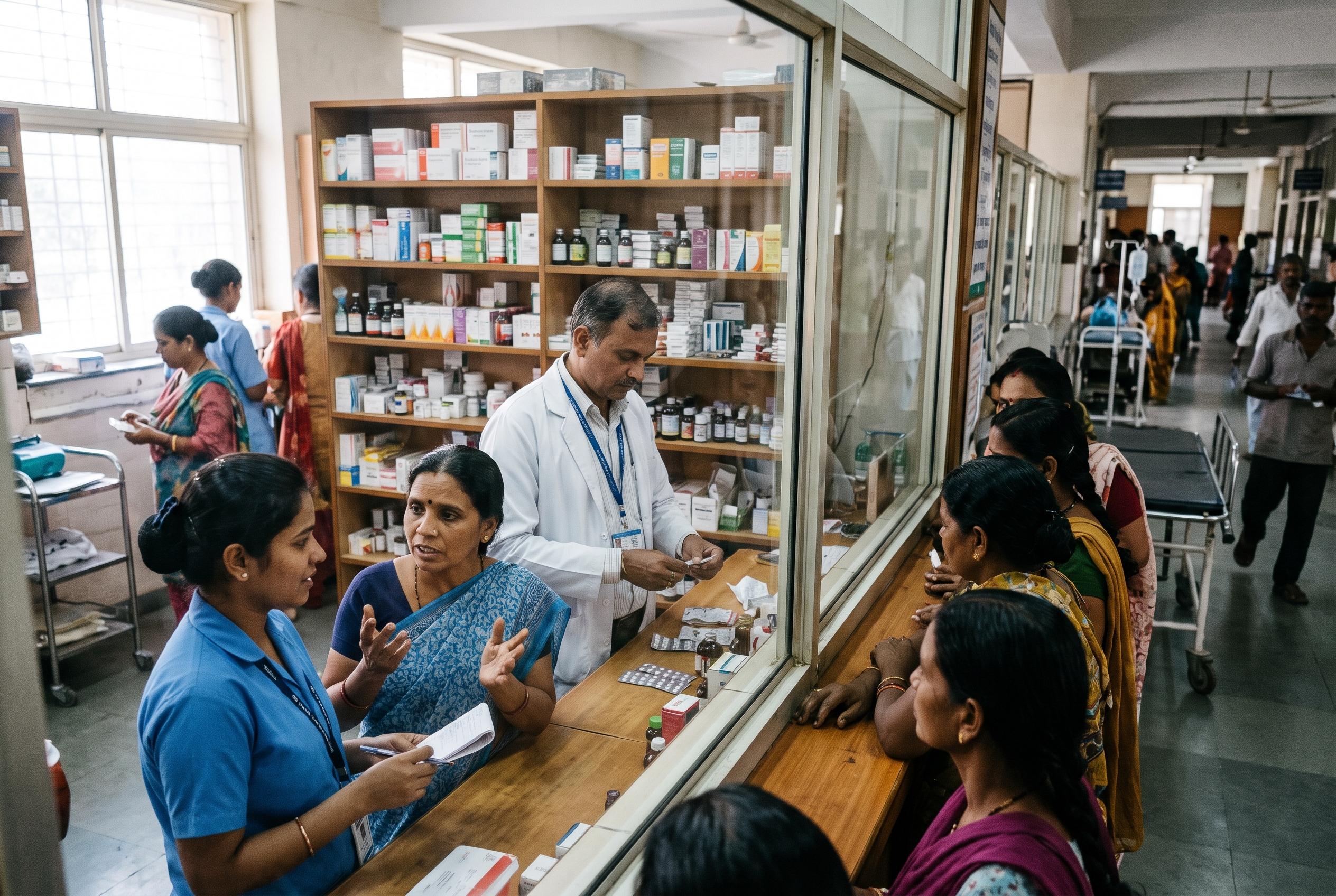

A 30% cap on trade margins for 137 non-scheduled cancer drugs could cut prices sharply, but hospitals and industry experts warn that revenue may be recovered through separate charges for services and diagnostics.
India’s move to cap trade margins at 30% on 137 non-scheduled cancer medicines is set to feed through to pharmacy and hospital pricing from November 9, with the government arguing that patients could see steep reductions in what they pay for a range of oncology drugs. In court filings, the Centre said the measure could cut maximum retail prices by roughly 20% to 70% and save patients about ₹2,500 crore a year, while also addressing what it described as serious bargaining and information imbalances in the way cancer medicines are sold.
The policy has been welcomed by patient advocates as a step towards making treatment more affordable, but healthcare executives and industry specialists say the benefits may not stop with oncology drugs alone. N. Santhanam, a healthcare administrator who has worked across hospital and pharmaceutical businesses, told BusinessLine that the sector should be able to absorb the change and that “no one will go out of business”, but he also argued that cancer medicines are only one part of a wider affordability problem across healthcare.
Others in the industry, speaking on condition of anonymity, warned that hospitals and drugmakers may try to make up for thinner margins by recouping revenue elsewhere in the treatment chain. They pointed to the risk that charges for services that were previously bundled into the overall bill could be separated out and priced more explicitly. Some drew a parallel with the aftermath of price controls on cardiac stents nearly a decade ago, saying that costs then appeared to move into other items and services.
Hospital administrators say the commercial pressure is real. They cite payroll, consultant fees, infrastructure, technology and infection-control spending as fixed costs that must still be covered, and argue that a narrower pool of recoverable revenue could lead to more line items being charged separately. One corporate hospital executive said the industry needs a broader review of hospital economics rather than regulation of a single therapeutic category.
The pharma industry, meanwhile, is working to implement the change within the deadline, according to Sudarshan Jain of the Indian Pharmaceutical Alliance. He said companies are preparing to communicate revised prices to consumers and that the benefit should be passed through to patients. Even so, advocates including KM Gopakumar, co-convener of the Working Group on Access to Medicines and Treatments, say cancer drugs will remain costly for patients who need repeated doses, and he has urged the government to look beyond medicines and consider price ceilings on other hospital services, including diagnostics. Industry insiders also note that the policy may narrow the price gap between branded innovator drugs and cheaper generics, potentially prompting multinational and domestic manufacturers to rethink their future strategy even if they continue supplying the market for now.
Disclaimer: This article is intended to inform and educate, not to recommend or endorse any financial product, investment or strategy. Please consider your own financial circumstances and seek professional advice where appropriate before making financial decisions.



