

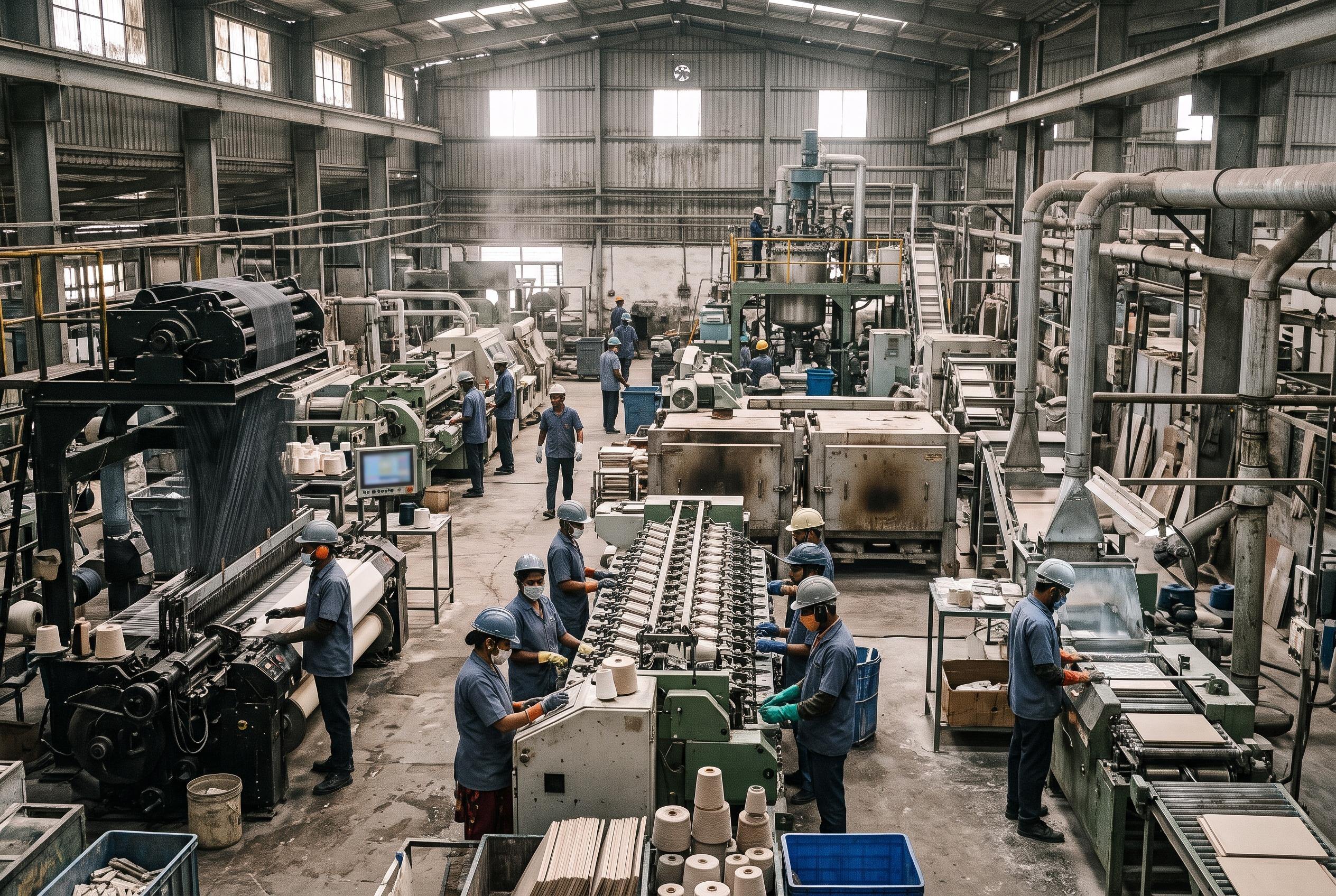

Rising fuel, power, freight and raw-material costs are squeezing Gujarat’s ceramic, textile and chemical makers just as they prepare to ramp up production ahead of Diwali.
Gujarat’s industrial belt is heading into the festive production season under mounting strain, as higher coal, gas, electricity, freight and raw-material costs squeeze margins across some of the state’s most energy-dependent sectors. The pressure is most visible in Surat’s textile-processing units, Morbi’s ceramic factories and chemical plants that rely on steady thermal fuel supplies to keep production lines moving. According to the lead report, manufacturers are trying to build output ahead of Diwali even as input costs rise and working capital becomes harder to manage.
The timing is awkward. Industry groups told local publications that companies are typically trying to run harder before the holiday slowdown, but are now confronting sharply higher fuel bills, unstable supply conditions and little room to pass on the full increase to buyers. The Financial Express reported that Morbi’s ceramic sector is already under pressure from surging container freight rates, doubled gas prices and anti-dumping duties, with exports falling steeply and some plants warning of shutdowns. The Times of India also reported that Gujarat manufacturers are feeling the heat from fuel costs ahead of Diwali as they prepare for a seasonal production push.
In Morbi, the strain is severe enough to threaten the wider recovery of India’s tile hub. Surfaces Reporter said nearly 800 ceramic units are either shut or close to closure because of rising coal, gas and other raw-material costs, and noted that gas prices have more than doubled since 2020. The New Indian Express earlier reported that West Asia-related supply shocks forced 170 ceramic units in Morbi to shut and disrupted exports from Surat, while Mint said more than 400 ceramic units were halted for at least three weeks during a gas supply disruption. Together, the reports show how vulnerable the cluster is to even brief interruptions in fuel availability.
Textile processors in Surat are facing a different but related squeeze. The lead report said coal used in processing has more than doubled in price in a matter of months, while energy and steam costs have climbed sharply and processors have been able to recover only part of the increase from customers. That gap matters because textile processing is labour-intensive and cash-flow sensitive: if input costs rise faster than selling prices, mills either accept thinner margins or cut back production. Industry representatives quoted in the lead report warned that some units that were once profitable are now barely breaking even.
The problem is not confined to fossil fuels. The report also described renewed pressure on spinning units in Kadi and Saurashtra, where restrictions on captive solar generation have left some factories more dependent on grid electricity despite earlier investments in renewable power. That creates a separate source of uncertainty for manufacturers that had assumed approved solar capacity would reduce their long-term energy costs. The dispute highlights a larger issue for industrial policy in Gujarat: renewable capacity can only deliver savings if access to the grid is predictable enough to support production planning.
For chemical makers, the challenge is availability as much as price. The lead report said imported Indonesian coal has not been arriving in the quantities needed by thermal power stations and industrial users, while gas remains a costly substitute for some processes. That leaves plants juggling fuel quality, supply security and equipment requirements at the same time. In a sector where production stops can be expensive and hard to reverse, uncertainty over fuel mix can quickly become a competitiveness problem.
Taken together, the reports point to a broader structural weakness in Gujarat’s industrial economy: its export clusters are highly productive, but also highly exposed to changes in energy markets and logistics costs. Morbi’s ceramics depend on continuous kiln operations and steady fuel supply; Surat’s textile units need affordable power, steam and chemicals; chemical plants require dependable thermal fuel. When all of those inputs rise at once, manufacturers are pushed toward lower utilisation, delayed orders and weaker exports rather than simple price increases. The near-term question is whether fuel supplies stabilise soon enough to prevent further shutdowns and losses during the festive season.
Disclaimer: This article is intended to inform and educate, not to recommend or endorse any financial product, investment or strategy. Please consider your own financial circumstances and seek professional advice where appropriate before making financial decisions.



