

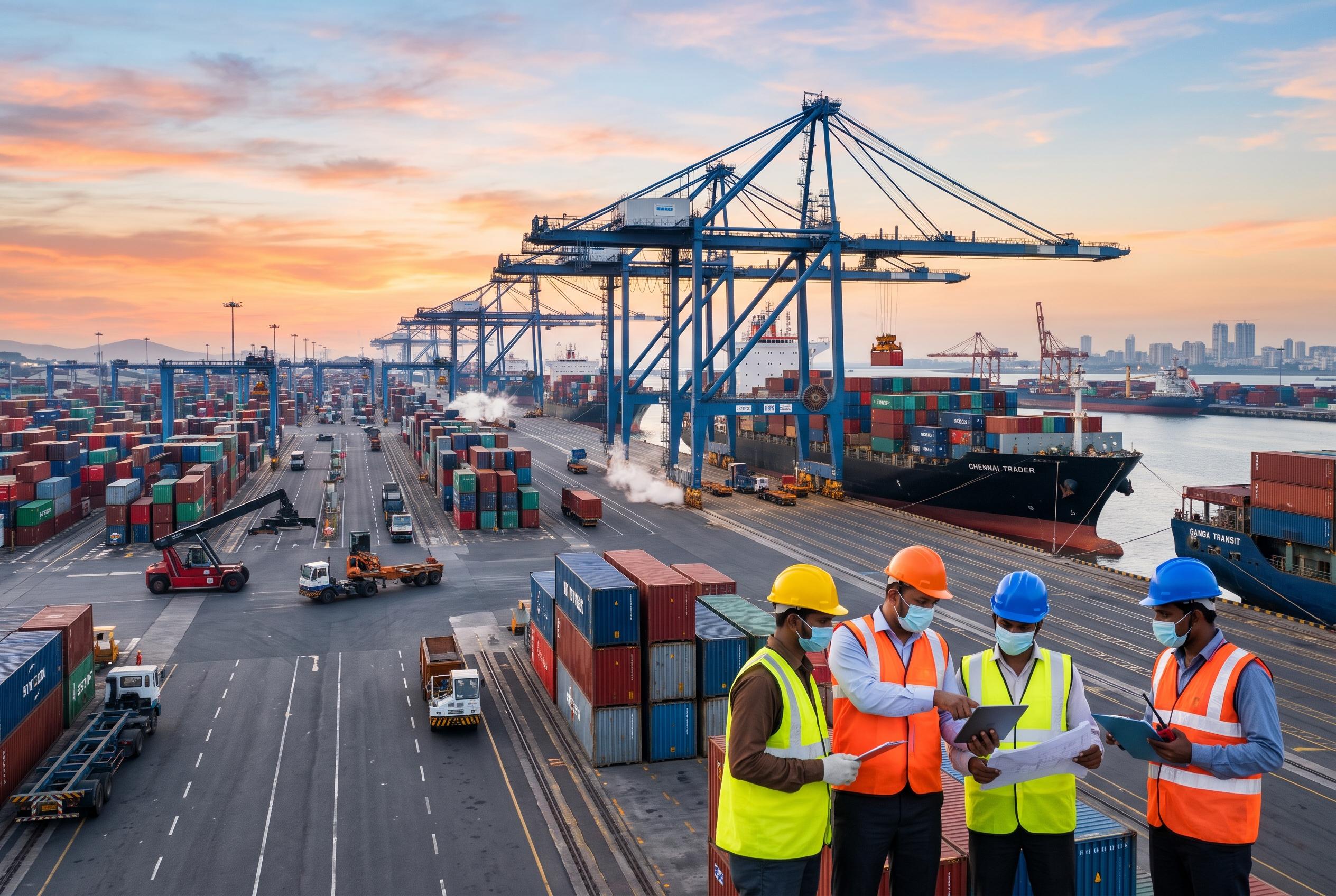

India will need to expand port capacity at least twice more by 2047, Piyush Goyal says, as the government accelerates a maritime infrastructure programme designed to support a larger economy and boost global trade.
India will need to keep expanding its ports at pace if it wants to support a larger economy and a deeper role in world trade by 2047, Piyush Goyal said on Sunday during a visit to Rotterdam. The commerce and industry minister said India had already doubled port capacity over the past decade, but argued that the next 20 years would require another two rounds of expansion to keep up with demand.
His remarks fit into the government’s wider Maritime Amrit Kaal Vision 2047, which is intended to lift port capacity, modernise coastal infrastructure and reduce friction in logistics. According to the policy outline cited in the maritime sector brief, the long-term goal is to take major-port capacity to roughly 10,000 million tonnes per annum by 2047, up from about 800.5 million tonnes in 2014 to around 1,728 million tonnes in 2025-26.
The expansion drive is already moving through a busy pipeline. Business Standard reported that the Ministry of Ports, Shipping and Waterways is targeting more than 700 million tonnes a year of additional capacity by 2030, with flagship projects such as the planned Vadhavan port expected to play a major role. That same review said officials were being pressed to speed up implementation, while inland waterways cargo has already crossed 200 million tonnes, ahead of the Maritime India Vision 2030 target.
The broader strategy also includes new laws, shipbuilding support and funding for maritime development. The ministry’s updated framework has replaced older colonial-era shipping and ports statutes, while also backing a ₹24,736 crore shipbuilding assistance scheme and a ₹25,000 crore Maritime Development Fund, according to the maritime programme summary. The government has framed the push as part of the larger Viksit Bharat 2047 agenda, aimed at turning India into a more competitive maritime and trading power.
Disclaimer: This article is intended to inform and educate, not to recommend or endorse any financial product, investment or strategy. Please consider your own financial circumstances and seek professional advice where appropriate before making financial decisions.



