

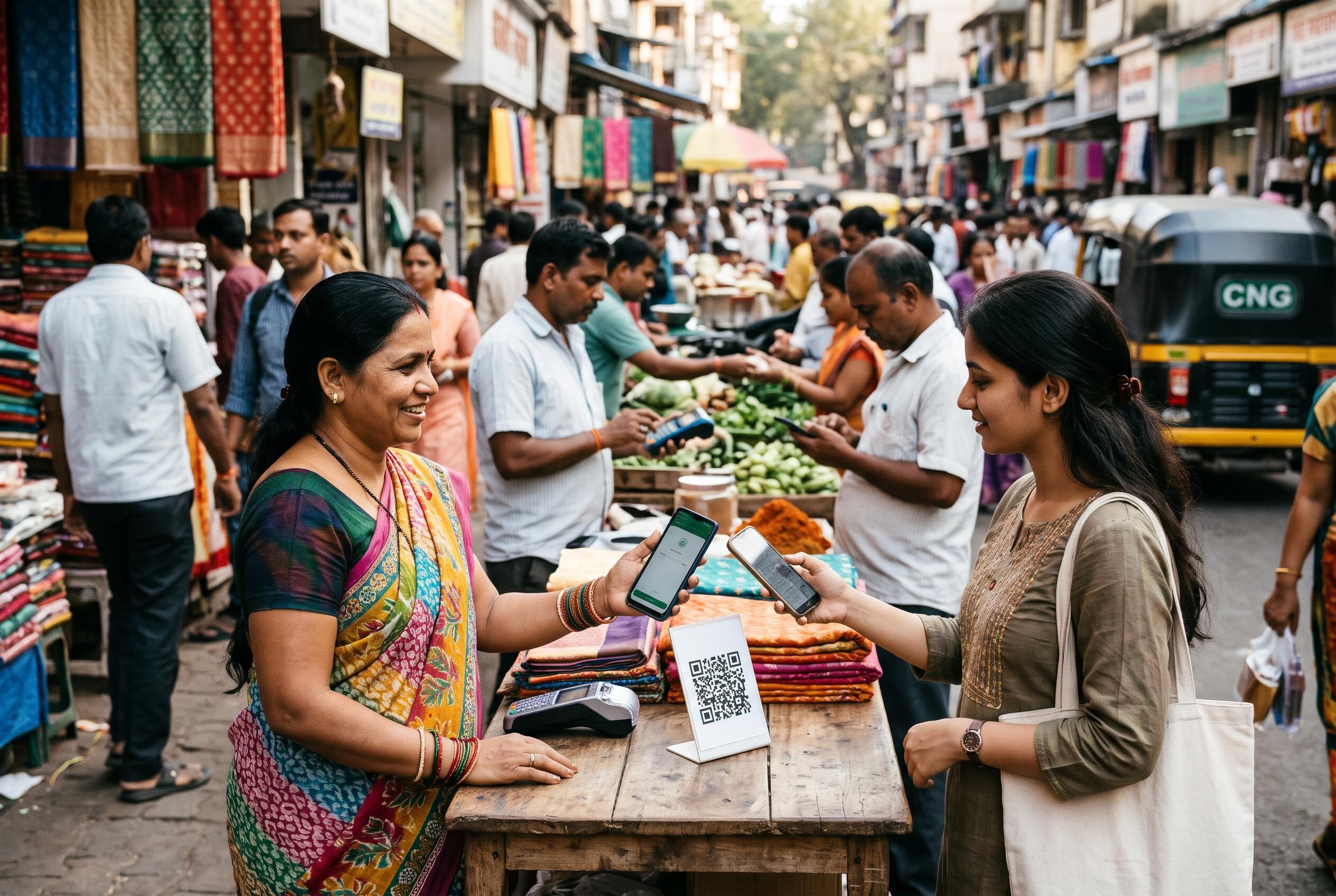

As India’s QR-code economy matures, PhonePe and Razorpay are using AI to cut failed transactions, improve checkout and help merchants win and retain customers.
India’s digital payments story is moving beyond the simple act of moving money. As the country’s QR-code revolution matures, the focus is shifting towards making payments more useful for consumers and more profitable for merchants, with artificial intelligence increasingly being used to improve reliability, personalisation and business operations.
At TechSparks 2026, Deep Agrawal, PhonePe’s head of payments, and Khilan Haria, chief product officer at Razorpay, told a panel chaired by Madanmohan Rao of YourStory that the real opportunity now lies in building context around every transaction. For PhonePe, that means helping a growing base of more than 500 million UPI users do more than pay friends, utility bills or merchants. For Razorpay, it means tackling the broader commercial problems that small and medium-sized businesses face once they have payment infrastructure in place, including customer acquisition, repeat purchases and conversion.
That shift is already visible in the products the two companies are building. Razorpay has said its Vulcan payments foundation model, developed with NVIDIA and AWS, is designed to analyse vast amounts of transaction data so the company can better predict fraud, spot missing information and improve checkout performance. In the panel discussion, Haria said a single payment can contain thousands of attributes, making it possible to identify patterns that conventional systems might miss. PhonePe is taking a different route, using machine learning to reduce failed transactions. Agrawal said an internal tool called Kill Switch estimates the chances that a payment will go through, allowing the company to warn customers in advance if a bank is likely to be down rather than leaving them with a pending payment.
Both companies are also using AI to extend their reach into broader commerce services. Razorpay has introduced Ray, an AI assistant for merchants, and Agent Studio, which lets businesses deploy autonomous agents for tasks such as recovering abandoned carts, handling disputes and verifying delivery details. The company said it already has a dozen agents live and hundreds of brands using them, with plans to expand further. PhonePe, meanwhile, has been building AI-powered search, voice bots for users of feature phones and SmartPages, a tool intended to help small merchants create payment pages without needing a developer or a sophisticated e-commerce stack.
The strategy reflects a wider change in India’s digital economy. Payments are no longer being framed as the end product, but as a layer that can help surface relevant financial products, lower friction for merchants and bring more people into the formal economy. Agrawal and Haria both argued that the next wave of growth will come from contextual services built on top of payments: smarter checkout, more relevant product recommendations and simpler tools for businesses that are trying to sell online for the first time. In that sense, the competition is no longer just about processing transactions quickly. It is about turning each payment into a starting point for a deeper customer relationship.
Disclaimer: This article is intended to inform and educate, not to recommend or endorse any financial product, investment or strategy. Please consider your own financial circumstances and seek professional advice where appropriate before making financial decisions.



