

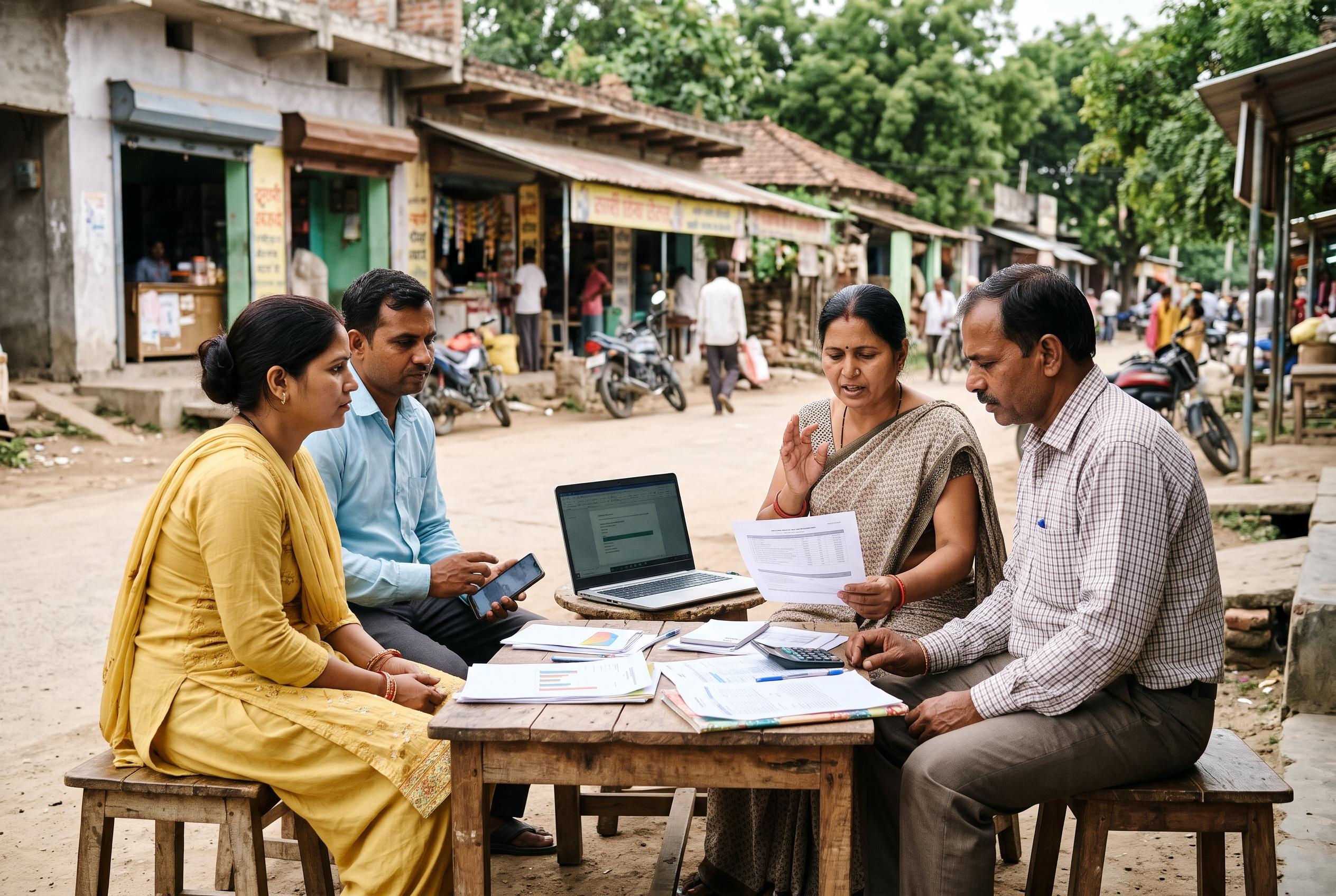

Securities and Exchange Board of India chairman Tuhin Kanta Pandey says rural investors could drive the next phase of market growth, provided brokers widen products, build trust and strengthen cyber security.
At an industry event in Mumbai, Securities and Exchange Board of India chairman Tuhin Kanta Pandey said the next major expansion in retail broking is likely to come from smaller towns and villages, not just the big cities that have traditionally driven market participation. Business Today reported that Pandey framed the outlook around three priorities for the market: depth, trust and technology, arguing that India’s next phase of growth will depend on widening access beyond the country’s urban core.
Pandey pointed to SEBI survey data showing that nearly two-thirds of households are aware of securities market products, yet fewer than one in ten actually invest. He also said almost half of prospective investors are in rural India, a shift that he believes will reshape the industry’s growth map. According to the Financial Express, he urged brokers and market intermediaries to broaden the product set beyond equities to include bonds, real estate investment trusts and infrastructure investment trusts, as the regulator seeks to deepen participation and improve liquidity.
A key part of that agenda is investor confidence. Pandey said brokers should stop treating know-your-customer checks as a one-off compliance task and instead approach them as an ongoing process of understanding clients’ needs. He told the audience that “A client who understands risk invests wisely and stays invested longer. That is good for the client, for you and for the market.” National broadcaster Newsonair also reported that SEBI is stepping up efforts against unregistered advisers, misleading financial influencers and fraudsters impersonating brokers, using verified labels, SEBI Check tools and validated UPI handles to help investors identify genuine market participants.
Technology, Pandey said, is now central to how modern markets operate, but it also brings new risks. Business Standard reported earlier that he has described digital systems as the core architecture of today’s securities markets, with surveillance increasingly shaped by data-driven tools. In Mumbai, he warned intermediaries to treat cyber security as a business priority rather than a back-office cost and said: “Test your systems. Plan for failure.” SEBI is also working on a wider regulatory overhaul, including simpler rules for depository participants, a more graded compliance structure for brokers, faster processes for capital-raising transactions and new frameworks for artificial intelligence, all aimed at making the market easier to access while preserving safeguards.
Disclaimer: This article is intended to inform and educate, not to recommend or endorse any financial product, investment or strategy. Please consider your own financial circumstances and seek professional advice where appropriate before making financial decisions.



