

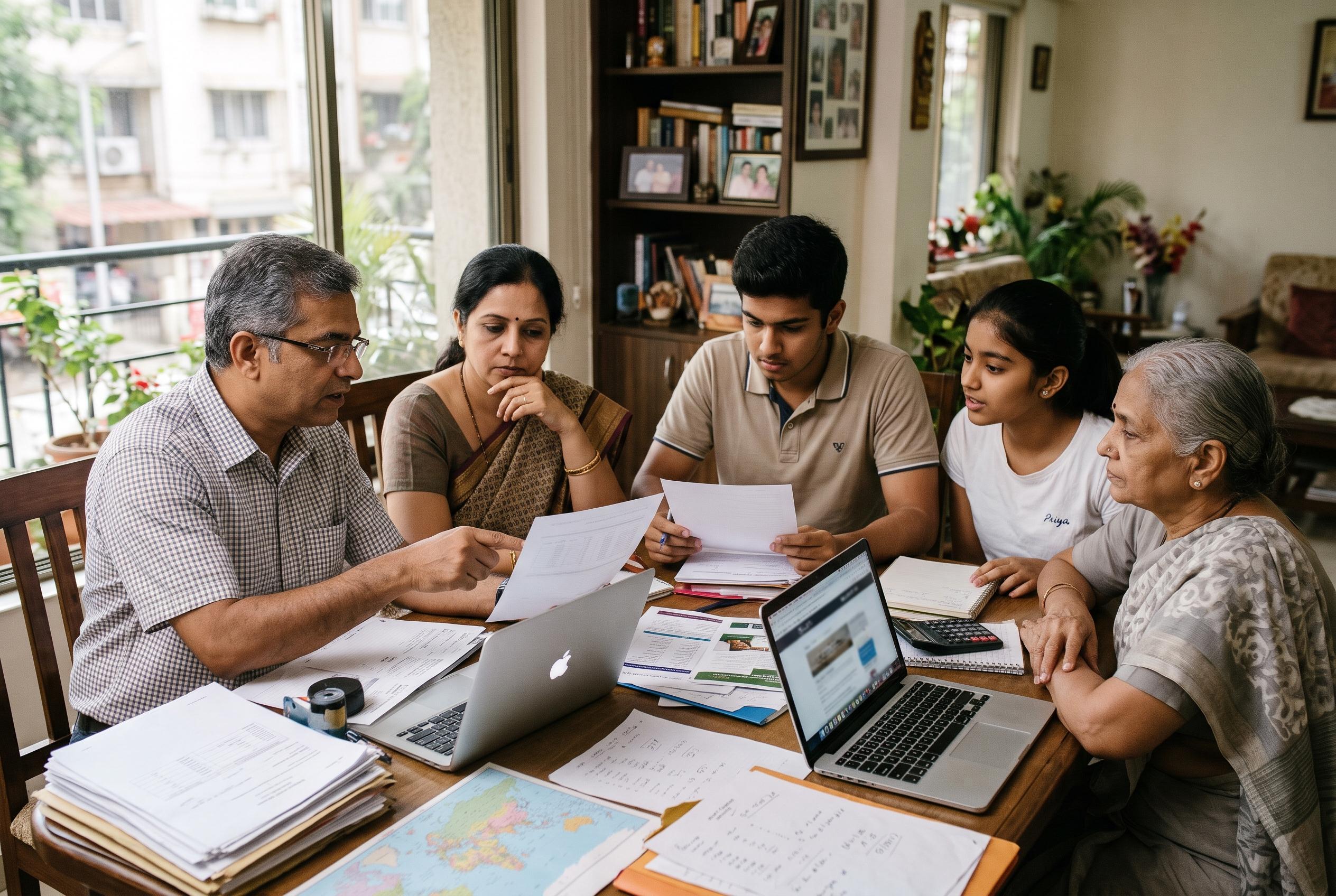

Indian families saving for foreign university fees face a double squeeze from education inflation and a weaker rupee, making early currency-aware planning essential.
For Indian families planning overseas education, the biggest budgeting mistake is often to focus only on inflation. As NDTV Profit noted in its explainer, tuition and living costs abroad do not just rise over time; they can become far more expensive if the rupee weakens against the dollar or other major currencies. That means a target that looks adequate today can fall short badly by the time a child actually leaves for university.
The article set out a simple example: if education costs rise by 6% a year and the rupee loses 4% a year against foreign currencies, a goal that appears to require Rs 1 crore today could swell to more than Rs 4 crore over 15 years once both forces are taken into account. The message is straightforward. Families saving for study abroad need to plan for two separate risks at once: higher university fees and a weaker currency. Business Standard said experts increasingly advise households to build both domestic inflation and currency depreciation into their long-term calculations, rather than treating exchange rates as a secondary issue.
That is why advisers often recommend a phased investment approach rather than leaving the entire sum in equities until the last minute. NDTV Profit suggested building the corpus through equity systematic investment plans in the early years, then moving a large share into debt as the goal gets closer to reduce market volatility. But that shift can create a tax bill. Long-term capital gains tax may apply when investors sell equities to reallocate the money, so families are advised to factor in tax while setting the target amount. Moneycontrol also noted that some households use forex cards for day-to-day spending abroad, wire transfers for tuition and an emergency cash reserve to soften the blow of currency swings.
Even so, the depreciation of the rupee has not stopped Indian students from looking overseas. The Economic Times reported that many families still see an international degree as a worthwhile long-term investment, even as recent currency weakness, tighter visa scrutiny and higher fees force them to reassess destinations and budgets. Moneycontrol said the rupee’s slide towards the 90-per-dollar level has already made loans larger and travel plans more expensive, underlining a wider truth for anyone saving for foreign education: the final bill will depend not just on tuition inflation, but on where the exchange rate stands when the fees are due.
Disclaimer: This article is intended to inform and educate, not to recommend or endorse any financial product, investment or strategy. Please consider your own financial circumstances and seek professional advice where appropriate before making financial decisions.



