

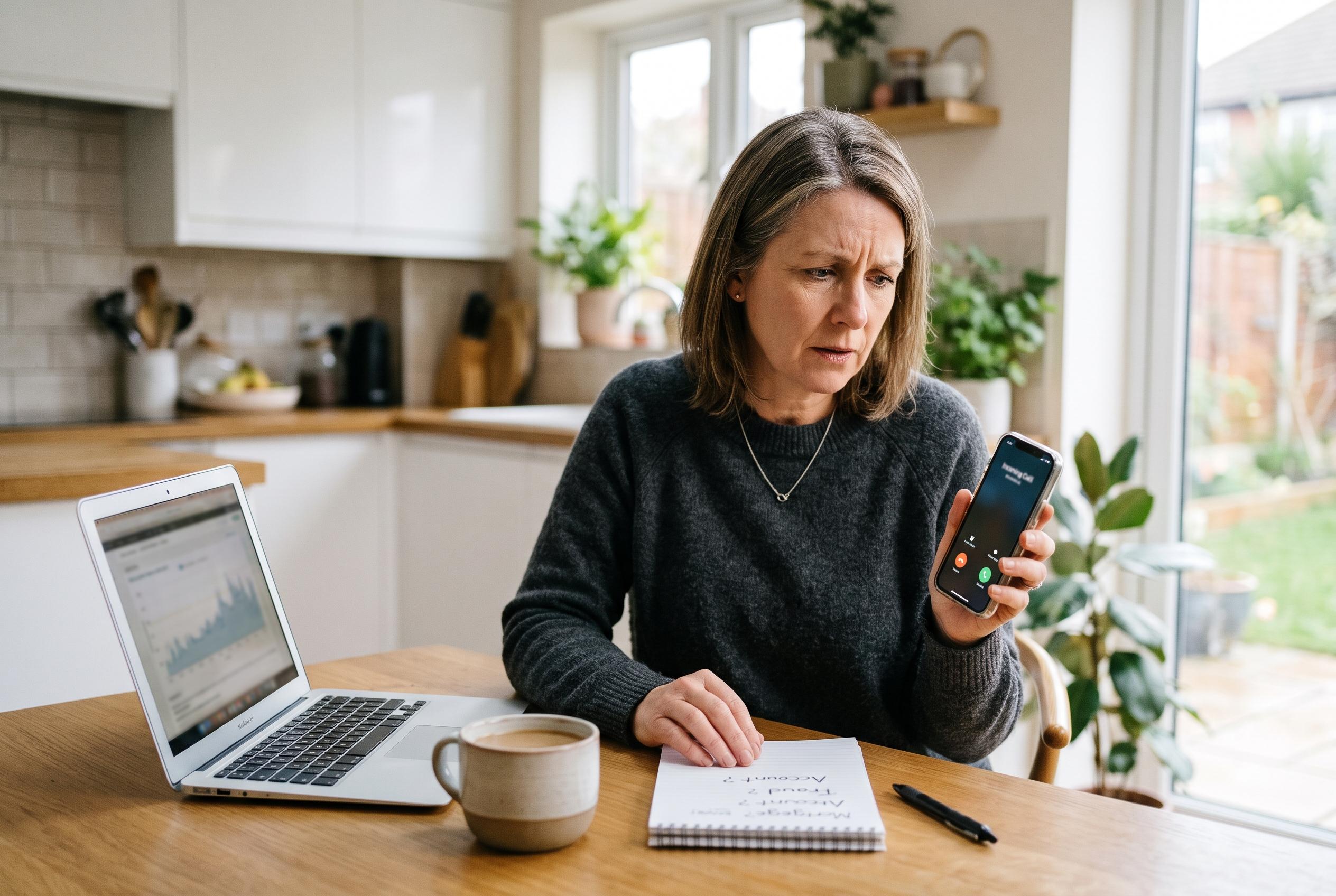

Fraudsters are impersonating banks with spoofed numbers, fake alerts and requests for security codes or emergency transfers. Here is how to verify a call and protect your account.
A call that appears to come from your bank can feel urgent enough to override caution, especially when the number on the screen matches the one on your debit card. But, as the Federal Trade Commission warns, caller ID is not proof of identity. Scammers can falsify the number or business name that appears on your handset, which means a convincing-looking call may have nothing to do with your bank at all.
That risk is at the heart of a growing wave of impersonation scams targeting bank customers. The FTC has long warned that fraudsters use spoofed caller ID to pose as trusted organisations, while the FDIC Office of Inspector General has also described cases in which criminals displayed a bank’s real telephone number in an attempt to obtain login details. In other words, seeing a familiar number should not be treated as confirmation that the person on the line is genuine.
The scam often begins with a panic-inducing claim: an attempted wire transfer, a suspicious purchase or a supposed login from another state. The goal is to create enough fear that the victim reacts before thinking through the details. The FDIC’s consumer guidance says some fraudsters pair these calls with fake fraud-alert texts, building a sequence that seems plausible and official. If the caller already knows your name or other personal details, the deception becomes even more convincing.
One of the most dangerous moments comes when the caller asks for a one-time security code. That code may have been sent by your bank because the scammer has initiated a login or password reset and needs the number to complete the takeover. The FTC specifically advises consumers not to share verification codes with anyone claiming to work in a bank’s fraud department. Handing over that code can give a criminal access to your account even if your password itself has not been disclosed.
A request to move money is another major warning sign. Some scammers tell victims that their account has been compromised and that savings must be transferred immediately to a so-called safe or temporary account. In reality, that account may be controlled by the criminal. Requests to shift money, buy cryptocurrency or withdraw cash in response to an unexpected call are hallmarks of an impersonation scam, not legitimate fraud prevention.
What makes these schemes especially effective is that they do not always sound sloppy or obviously fake. Criminals can use stolen personal information, banking jargon and polished language to make the conversation feel routine. Some scam operations also rely on technology that mimics trusted institutions so closely that even a professional tone is no safeguard. A caller who knows your address or recent account activity may still be a fraudster.
The safest response is to end the call and contact the bank yourself using a number you have independently verified. Use the phone number on your card, on an account statement or in the bank’s official app or website, not a number given by the caller. The Consumer Financial Protection Bureau recommends reaching financial institutions through contact details obtained independently rather than replying directly to a suspicious message or call. If the caller was genuine, the bank will still be there when you ring back.
If you have already shared information, speed matters. Contact your bank’s fraud team immediately, explain exactly what was disclosed and ask what steps are needed to protect your accounts. Change passwords through the bank’s official channels, and ask whether cards or online banking access should be replaced. If money has moved, the FBI’s Internet Crime Complaint Centre recommends alerting the financial institution at once and filing a report, while suspected scams can also be reported to the FTC. Keeping records of texts, call details and transactions may help investigators and the bank review what happened.
The core lesson is simple: a number on a screen is not proof. Banks may call customers about suspicious activity, but no legitimate representative should pressure you into sharing passwords, codes or transfer instructions on the spot. Building habits such as checking account alerts, enabling multifactor authentication and warning older relatives about impersonation tactics can reduce the chance of a costly mistake. In these scams, the safest move is often the least dramatic one: hang up, verify independently and call back only on your own terms.
Disclaimer: This article is intended to inform and educate, not to recommend or endorse any financial product, investment or strategy. Please consider your own financial circumstances and seek professional advice where appropriate before making financial decisions.



