

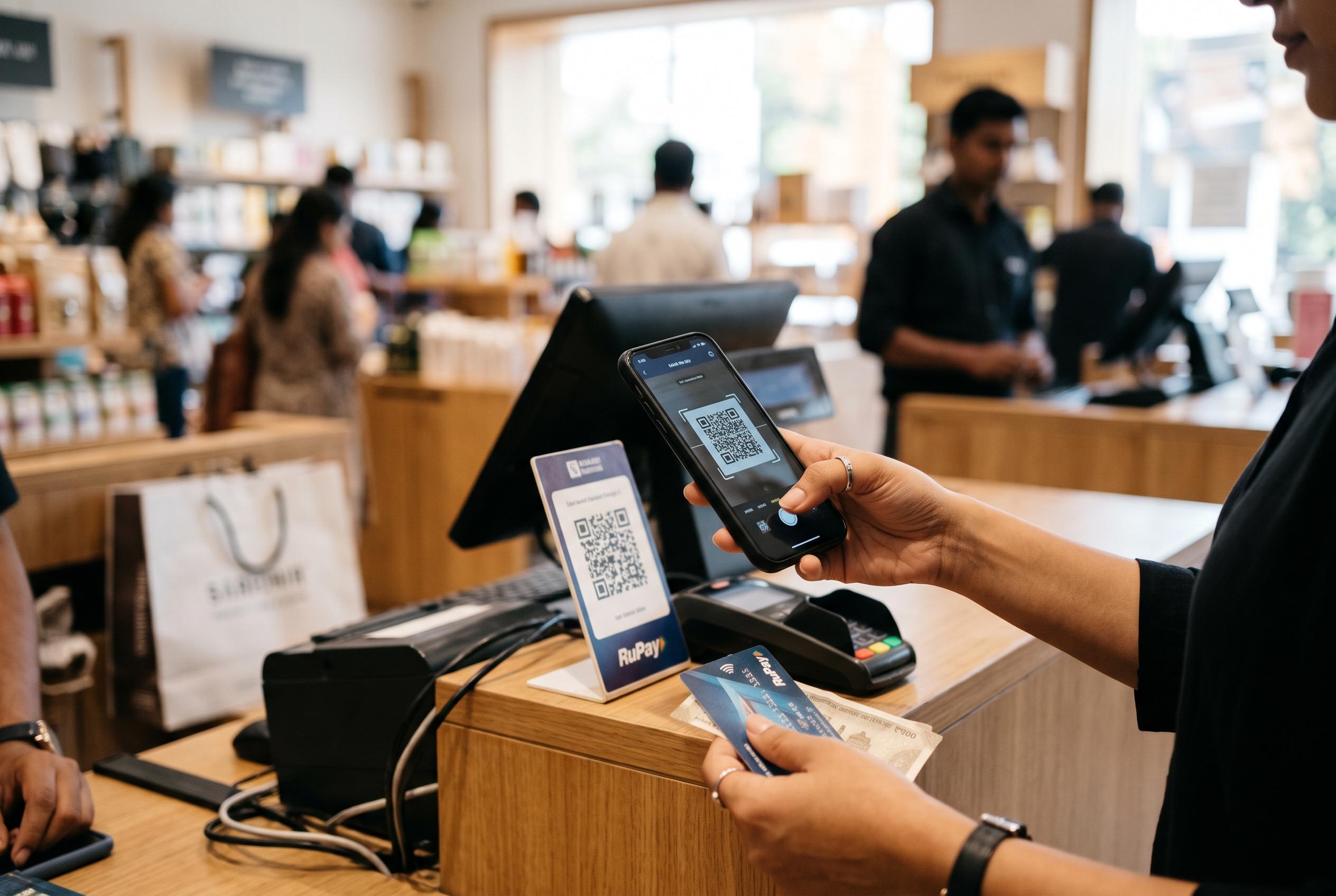

Linking a RuPay credit card to UPI can earn rewards on routine QR payments, but fees, spending caps and issuer rules determine whether the benefits add up.
Using a credit line for everyday QR-code purchases is increasingly being presented as a way to make routine spending work harder for the cardholder. Business Standard said the appeal is straightforward: money stays in a savings account for longer, small-ticket purchases can earn rewards, and newer financial apps can help users track bills and account activity in one place. The broader shift is being driven by the growing use of UPI, India’s dominant digital payment system, which has made scan-and-pay transactions part of daily life.
The biggest change has been the arrival of RuPay credit cards on UPI. According to several Indian personal-finance guides, only RuPay credit cards can currently be linked to UPI, allowing users to earn points or cashback on transactions that would otherwise have produced no credit-card benefit. That has turned everything from tea and groceries to short rides and neighbourhood shopping into potential reward-earning purchases, although the actual value depends on the issuing bank’s rules.
Not every card is a good fit for this style of spending. Industry comparisons suggest that the best choice depends on how someone pays and what they want back. Some cards are designed for simple cashback on routine merchant QR scans, while others offer richer reward rates but come with annual fees, spending caps or narrow eligibility rules. One 2026 comparison highlighted cards with very different propositions, from low-cost products meant for broad everyday use to premium options with higher earning rates and more demanding fee structures.
That fine print matters. As Assure Fintech noted, the NPCI framework enables credit-card-on-UPI payments, but it does not guarantee rewards; those are determined by the card issuer. It also distinguishes between a UPI-linked card payment and a direct card swipe at checkout, which means consumers need to check exactly where their rewards apply. OnePaisa added that UPI processed more than 16 billion transactions in a single month in early 2025, underlining why banks and card issuers are now treating QR payments as a major battleground for customer loyalty.
Disclaimer: This article is intended to inform and educate, not to recommend or endorse any financial product, investment or strategy. Please consider your own financial circumstances and seek professional advice where appropriate before making financial decisions.



