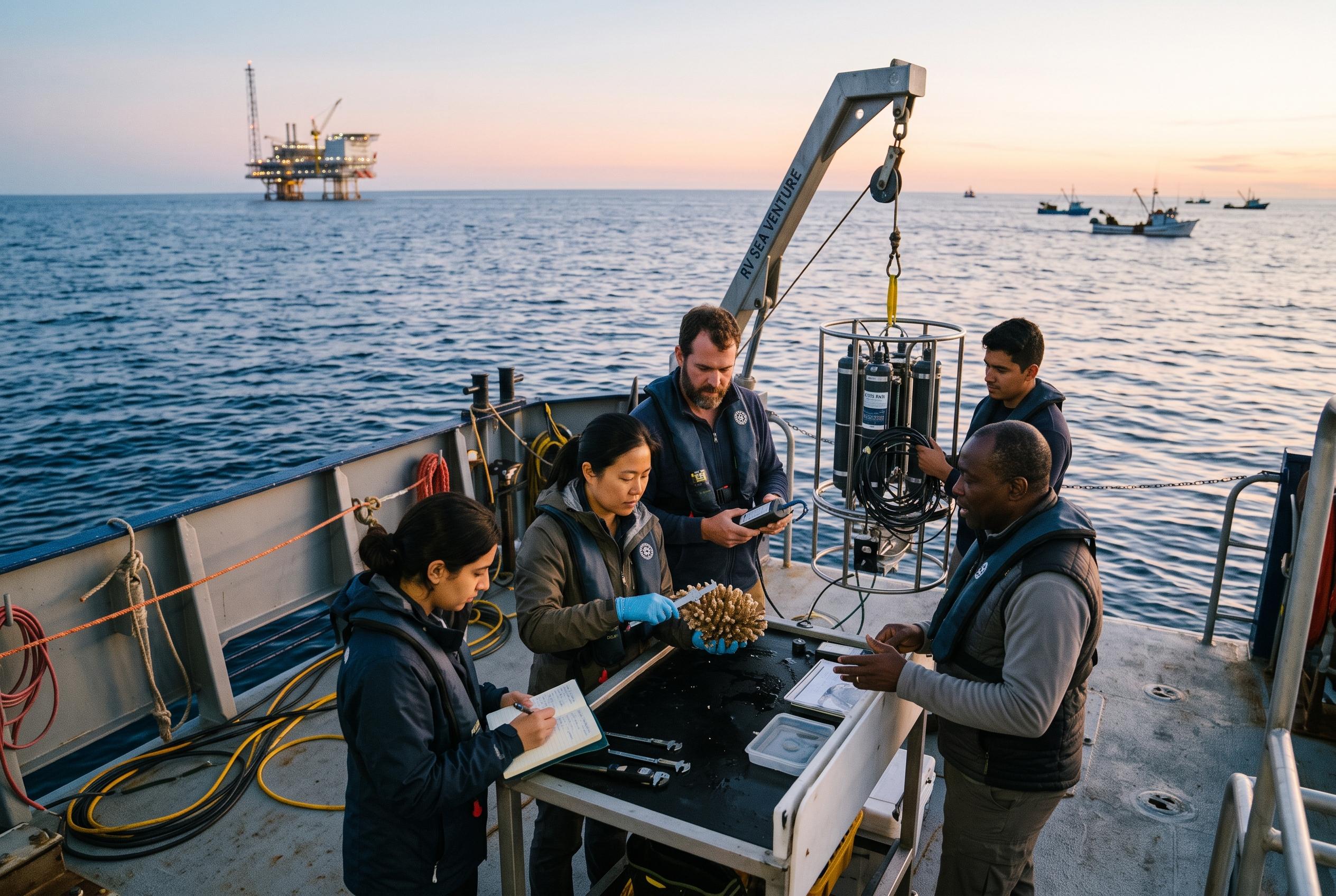

As India expands plans for fisheries, offshore energy, ports and deep-sea resources, its ability to protect marine ecosystems will determine whether it can offer a durable model for ocean-based development.
India’s blue economy is moving from policy idea to development strategy, but the country’s ambitions at sea are running ahead of the safeguards needed to make them durable. The Lowy Institute argues that India is being watched as a test case for whether ocean-based growth can be aligned with ecological limits, given its more than 11,000 kilometres of coastline and its aspirations in the Indian Ocean. The central tension is straightforward: can India expand marine industries without repeating the pattern seen elsewhere, where economic growth is pursued first and environmental protection is left to catch up later?
That question has become more urgent because the government has been broadening the policy framework around the sector. According to reporting on the Union Cabinet’s approval of a National Blue Economy Policy 2026, the plan is meant to support fisheries, offshore renewable energy, coastal tourism, marine biotechnology and port development while still protecting marine ecosystems. The earlier draft policy, outlined by India’s Ministry of Earth Sciences and summarised by the Press Information Bureau, also tied the blue economy to stronger coastal livelihoods, biodiversity protection and national security at sea. In principle, that is a wide-ranging agenda. In practice, the challenge is whether all of those goals can be pursued at once without forcing conservation to take a back seat.
India’s Deep Ocean Mission adds another layer to that debate. The Indian National Centre for Ocean Information Services says the programme is designed to develop technologies for deep-sea mining, manned submersibles and underwater robotics, with the stated aim of using deep-sea resources sustainably. Supporters see this as a way to build scientific capability and open new commercial opportunities. Critics of blue-economy strategies more generally would say such projects illustrate the risk at the heart of the model: the deeper the push into extraction, the harder it becomes to draw a reliable boundary between careful use and ecological damage.
That is why the argument over India’s blue economy is not just about the size of the opportunity, but about the model of development it represents. Lowy’s analysis suggests the concept has already split into different “shades of blue”, ranging from conservation-first approaches to those that place growth above all else. India’s policy choices will show which version prevails in practice. If the country can strengthen ports, fisheries, renewable power and coastal employment while genuinely protecting marine habitats, it may offer a workable model for others. If not, the blue economy risks becoming another slogan for expansion with too little restraint.
Disclaimer: This article is intended to inform and educate, not to recommend or endorse any financial product, investment or strategy. Please consider your own financial circumstances and seek professional advice where appropriate before making financial decisions.