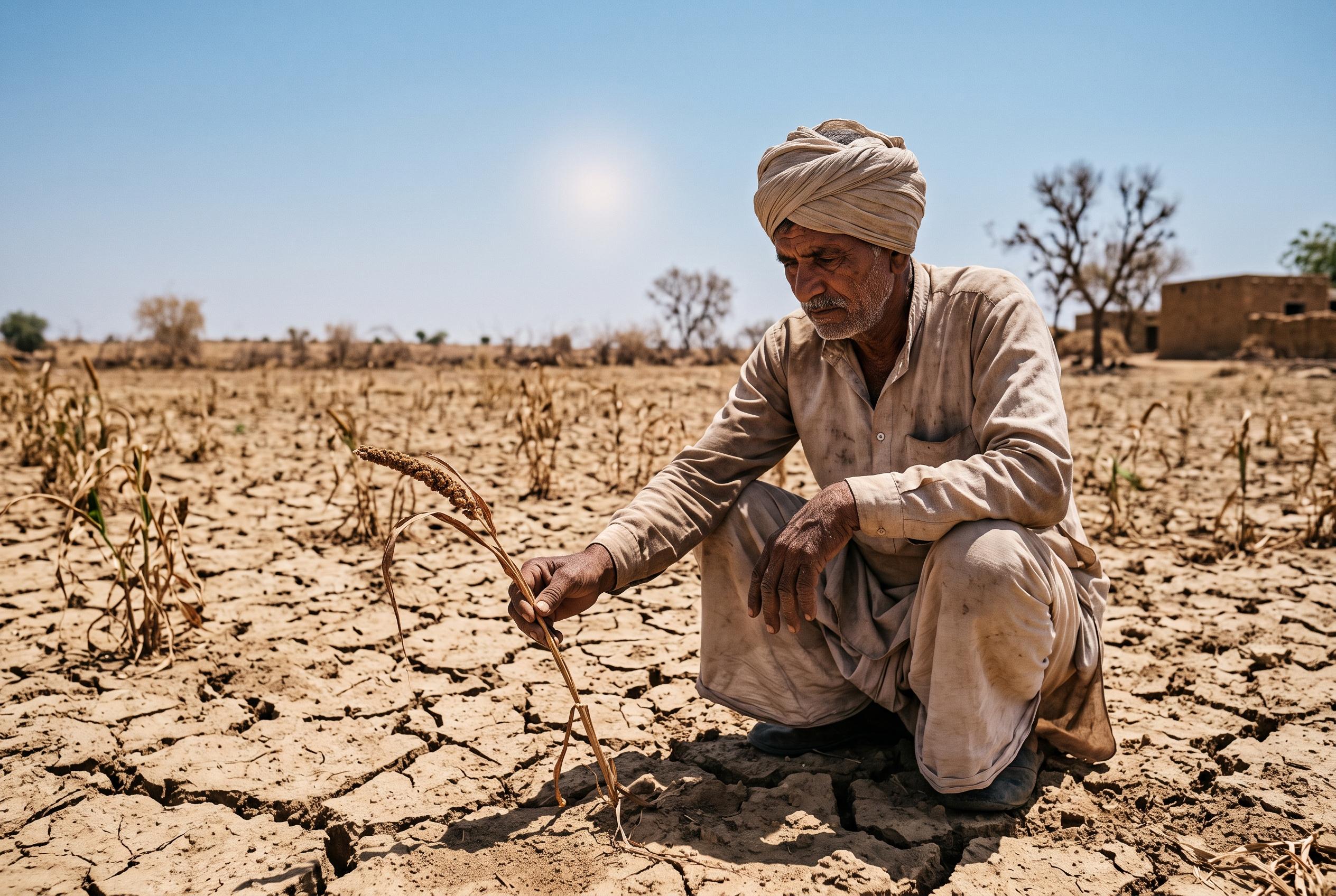

India is on track for its weakest monsoon since 2009, with rainfall 15% below average, threatening crop yields and pushing food inflation higher amid persistent weather challenges linked to El Niño, experts warn.
India is heading towards its driest monsoon in 17 years, with rainfall so far running 15% below the long-term average as a strengthening El Niño pattern suppresses showers, according to the India Meteorological Department. If that gap holds, this year would mark the weakest monsoon since 2009, when precipitation finished 18% below normal. The weather office had originally forecast a 10% shortfall in May.
A late-season tropical cyclone could still develop in the Bay of Bengal in the final week of September, which may bring some relief to eastern and north-eastern parts of the country, according to Christian Werner, managing director of Global Weather Climate Analytics, as reported by Bloomberg. Even so, Werner expects the national deficit to remain in the 13% to 16% range, leaving the broader rainfall picture largely unchanged. At Lancaster University’s CRUCIAL prediction platform, founder and planetary scientist Mark Roulston said there is a 68% chance the monsoon will end with a deficit of 10% to 20%.
The stakes are high because the monsoon delivers most of India’s annual rainfall and supports millions of farmers who grow rice, sugar and cotton. With the rains faltering, planting of rice, sugarcane and corn is trailing last year’s pace, raising the risk of damage to both the current harvest and the next crop cycle. Food prices are already under pressure, with inflation in August rising for a seventh straight month to 5.95%, the highest level this year. Economist Yuvika Singhal of QuantEco has said that, in a weak monsoon year, every 1 percentage-point rainfall shortfall tends to add about 25 basis points to food inflation.
The government has already moved to cushion the impact, including allowing duty-free sugar imports and selling onions at subsidised prices in some states. Recent reports also point to weaker sowing, lower urea sales and rising prices for staples such as maize, arhar and soyabean, underscoring how quickly a poor monsoon can ripple through agriculture and consumer prices. Forecasts suggest the El Niño influence could persist into 2027, leaving policymakers and farmers facing another stretch of weather uncertainty.
Disclaimer: This article is intended to inform and educate, not to recommend or endorse any financial product, investment or strategy. Please consider your own financial circumstances and seek professional advice where appropriate before making financial decisions.