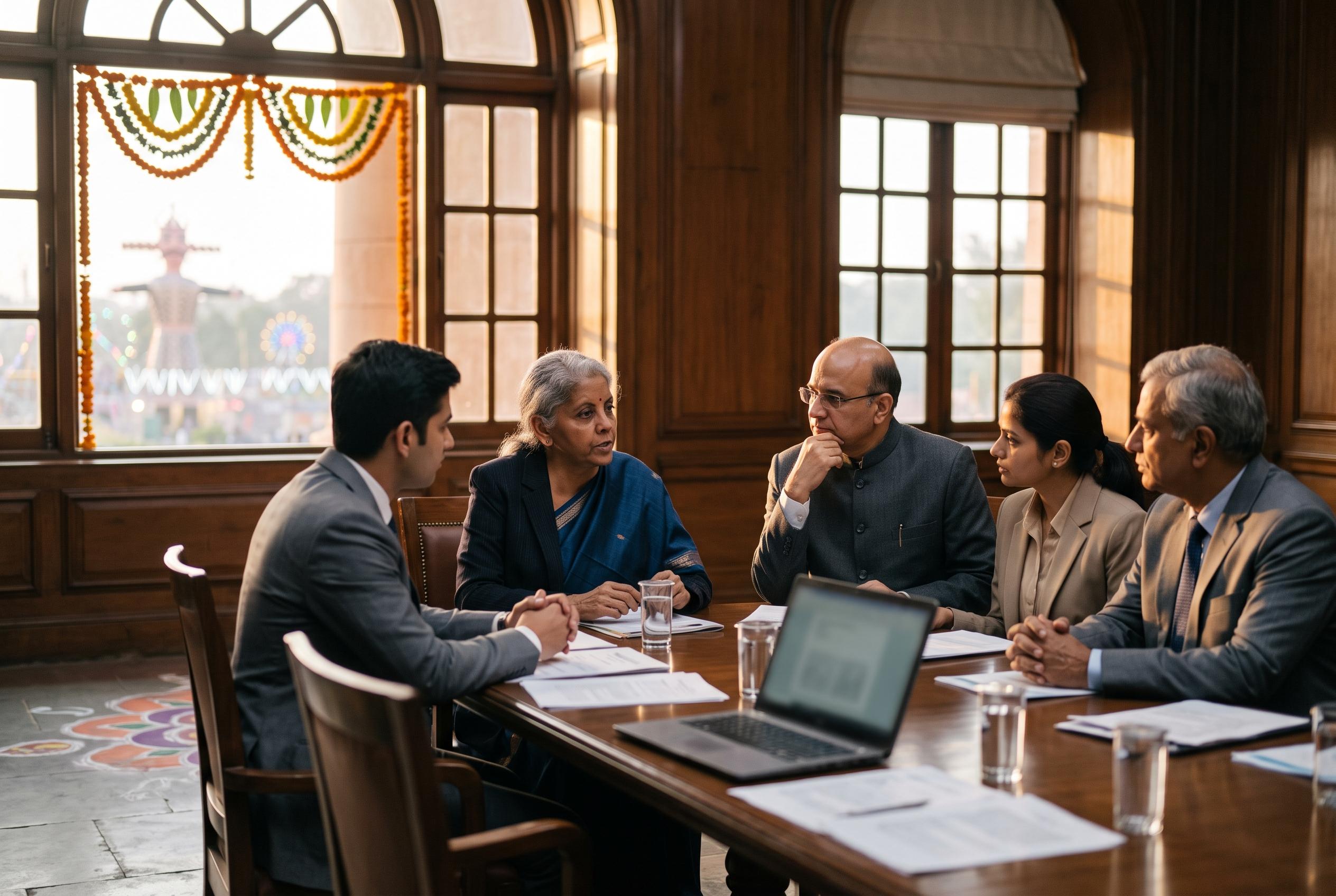

India’s much-anticipated cabinet reshuffle is nearing two key deadlines, with potential changes aimed at balancing regional power, easing ministerial workloads, and introducing a technocrat into the finance portfolio amid political pressures and internal bureaucratic shifts.
The long-anticipated reshuffle of India’s 71-member Union Cabinet now appears to be heading towards one of two deadlines: before the Shradh period begins on 26 September or around Dussehra on 20 October. According to Deccan Chronicle, the timing remains uncertain, but the expectation inside government is that a reset is coming. The likely shape of that exercise is said to be more tactical than strategic: an unexpected new face for the finance brief, greater regional and political balance within the BJP and its allies, and fewer overlapping portfolios for ministers already stretched across multiple departments.
That sense of urgency is being reinforced by a performance review of Cabinet members initiated by the Prime Minister’s Office. Reports cited by Deccan Chronicle say recent Gen Z protests, along with pressure from both the ruling party and the RSS, have added momentum to calls for change. Under the Constitution, the Union Council of Ministers can be no larger than 15 per cent of Lok Sabha strength, which currently allows for up to 81 ministers. That leaves room for roughly 10 additional appointments if the leadership decides to widen the team.
The finance portfolio is drawing particular attention. The report suggests that a civil servant or technocrat could be brought in to lead the ministry, giving it a non-political face at a time when economic management remains under close scrutiny. The broader complaint inside government is that several senior ministers are handling too much at once. Amit Shah oversees home and cooperation, J.P. Nadda manages health as well as chemicals and fertilisers, and others including Shivraj Singh Chouhan, Manohar Lal, H.D. Kumaraswamy, Lalan Singh, Pralhad Joshi, Ashwini Vaishnaw and Jyotiraditya Scindia are each carrying multiple responsibilities. The reshuffle is expected to reduce that load.
The same column turns to the politics of survival in Madhya Pradesh, where Chief Minister Mohan Yadav has remained in place despite controversy. According to the report, his continuing strength rests on two pillars: backing from Suresh Soni and the support of an efficient civil-service network. Yadav’s rise, the piece says, was helped by his role in coordinating visits by senior RSS and BJP figures to the Mahakaleshwar temple in Ujjain, where he built close links with Soni and later emerged as his protégé. Even allegations that his extended family and associated entities acquired 137 plots in the Ujjain area, covering 168 acres and worth about ₹45 crore, have not dislodged him.
Administratively, Yadav’s office is described as tightly managed by a small group of officials. Neeraj Mandloi, a 1993-batch IAS officer who became additional chief secretary to the chief minister in August 2026, is portrayed as the key gatekeeper. He is supported by Sudam Khade, Ilayaraja T., Kaushlendra Vikram Singh and Chandrashekhar Walimbe, each handling different parts of the bureaucracy, coordination and legislative work. Intelligence, too, has seen changes: Anshuman Yadav, a 1998-batch IPS officer, took over as additional director general of intelligence after A. Sai Manohar retired on 31 August 2026. The report says RSS insiders believe Yadav’s political future may be decided only after the 2027 Uttar Pradesh assembly election.
The column also re-examines Subhash Chandra Garg, once a senior finance official now often seen as an establishment critic. Garg, a 1983-batch Rajasthan-cadre IAS officer, became finance secretary in March 2019 and was considered close to Nripendra Mishra, then principal secretary to the prime minister. During the telecom crisis, he reportedly argued for recovering the principal adjusted gross revenue dues from Bharti Airtel, Vodafone Idea and Tata Teleservices while waiving interest and penalties, a position the government did not accept. After the Supreme Court’s AGR ruling, he later backed a one-time settlement. His abrupt transfer from finance to power on 23 July 2019 and subsequent offer to resign made him a prominent symbol of bureaucratic unease. More recently, he has questioned reported April-June GDP growth of 7.8 per cent, arguing the underlying figure may be far lower. The government has pushed back strongly, with the World Bank also cited in defence of the data, leaving open a broader question about whether Garg is a converted dissenter or a sidelined insider turned critic.
Disclaimer: This article is intended to inform and educate, not to recommend or endorse any financial product, investment or strategy. Please consider your own financial circumstances and seek professional advice where appropriate before making financial decisions.