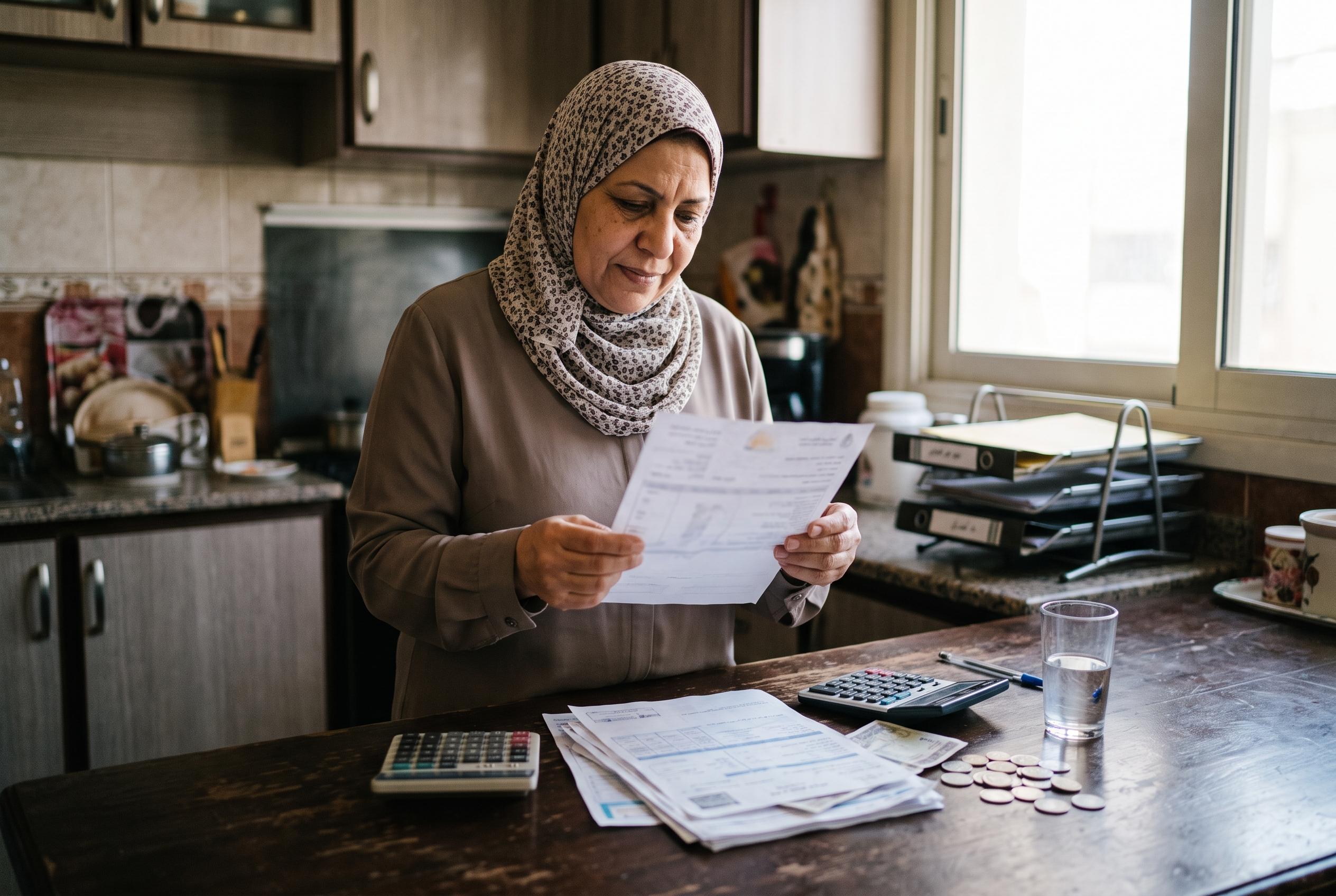

Egypt’s household electricity bills are increasingly complicated by a seven-tier system that varies charges based on usage levels, with recent tariff updates prompting consumers to monitor their consumption closely to manage rising costs.
Household electricity bills in Egypt are not calculated as a flat rate. Instead, the monthly total depends on how many kilowatt-hours a home uses and how that consumption falls across the country’s tariff bands, which rise as usage increases. According to recent reporting from Aseskahraba, the residential system has seven tiers, with the lowest band covering the first 50 kWh and the highest rate applying once usage climbs above 1,000 kWh. Egypt Independent reported in July 2026 that those household rates ranged from 68 piastres per kWh at the bottom tier to EGP2.58 at the top, reflecting the latest published schedule.
The basic method is straightforward: subtract the previous meter reading from the current one to find the month’s consumption, then allocate that total across the relevant tiers. For example, if a meter moves from 12,000 kWh to 12,350 kWh, the household has used 350 kWh during the billing period. Aseskahraba’s billing guide and calculator explain that the charge for each slice of usage is then multiplied by that tier’s unit price before the subtotals are added together.
That means two homes with similar numbers of residents can receive very different bills. Air conditioners, water heaters, refrigerators, freezers, washing machines and ovens can all push usage higher, particularly when they are run for long periods or are less efficient models. Aseskahraba’s calculator notes that inverter appliances can reduce consumption, while its meter guide stresses that consumers who understand how to read their meters are better placed to spot unusual jumps in use.
Official pricing has also remained a moving target in recent years. Masrawy reported in December 2025 that the Ministry of Electricity and Renewable Energy said there had been no new increase in the residential tiers since September 2024. By July 2026, however, Egypt Independent and Cairo24 were both reporting the updated tariff list then in force, underlining why households should always check the latest official schedule before trying to estimate a bill for a specific month.
For consumers trying to keep costs down, the practical advice is familiar but effective: switch off equipment that is not in use, avoid leaving chargers plugged in unnecessarily, set air conditioners to sensible temperatures, clean filters regularly and use LED lighting where possible. The same reports also suggest avoiding half-load cycles on washing machines and dishwashers unless the machine is designed for them, because the biggest savings usually come from reducing the appliances that drive the highest demand.
Disclaimer: This article is intended to inform and educate, not to recommend or endorse any financial product, investment or strategy. Please consider your own financial circumstances and seek professional advice where appropriate before making financial decisions.