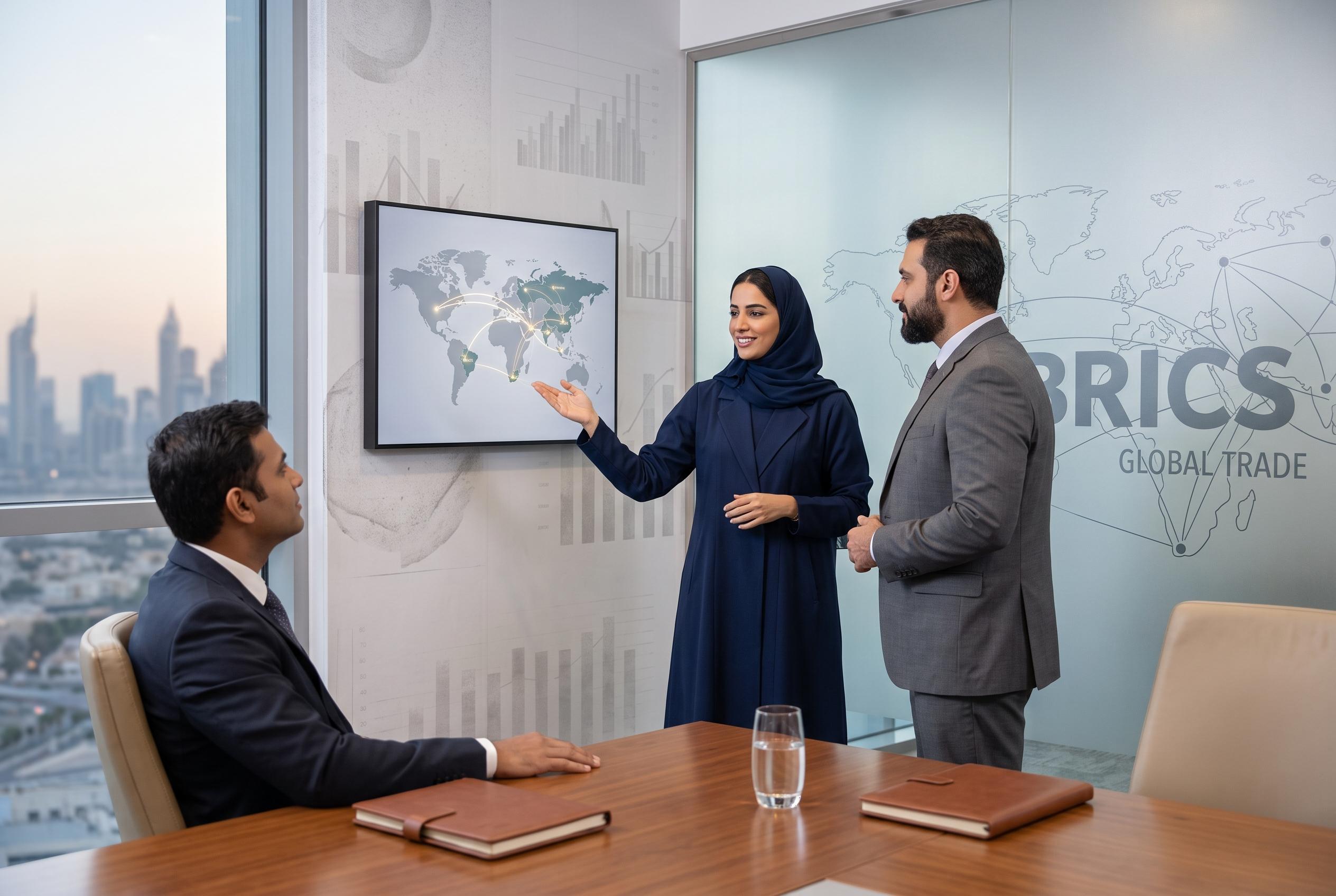

The United Arab Emirates is actively using BRICS as a strategic platform to expand its trade relationships, targeting more predictable global commerce while marking a historic milestone in non-oil trade reaching over $1 trillion in 2025.
The United Arab Emirates is using BRICS as a platform to widen its trade links and push for more predictable global commerce, with Trade Minister Thani bin Ahmed Al Zeyoudi describing the bloc as an important forum for economic co-operation among emerging markets. After attending the 2026 BRICS trade ministers’ meeting in Jaipur, India, Al Zeyoudi said the UAE’s presence under India’s presidency reflected Abu Dhabi’s determination to deepen commercial ties with member states and address the strains currently facing world trade.
On the sidelines of the meeting, Al Zeyoudi held bilateral discussions with officials from India, Russia, China, Egypt, Indonesia and South Africa, focusing on trade, investment and the private sector’s role in priority industries. He also met India’s commerce and industry minister, Piyush Goyal, to review progress on the Comprehensive Economic Partnership Agreement between the two countries and to look at expanding co-operation in services, digital trade, logistics and food security. That agenda fits a broader pattern in which the UAE has been building a wider network of trade deals and regional partnerships to reduce its reliance on traditional markets.
The BRICS outreach comes as the UAE’s non-oil trade with the group has grown sharply. According to figures cited by the ministry, commerce with BRICS countries reached more than $312 billion in 2025, up 28.5% from $243 billion in 2024. The bloc accounted for roughly 31% of the UAE’s total non-oil foreign trade last year, alongside 34% of imports, 23% of non-oil exports and 28% of re-exports.
That growth sits within an even larger trade expansion. The National reported that the UAE’s non-oil foreign trade passed $1 trillion for the first time in 2025, driven by stronger exports, rising re-exports and heavy import flows in goods such as gold, mobile phones and cars. The ministry says Al Zeyoudi has overseen a system built around free zones, ports and trade agreements, including a series of Comprehensive Economic Partnership Agreements, as the country seeks to position itself as a key hub linking Asia, Africa and Europe.
Disclaimer: This article is intended to inform and educate, not to recommend or endorse any financial product, investment or strategy. Please consider your own financial circumstances and seek professional advice where appropriate before making financial decisions.