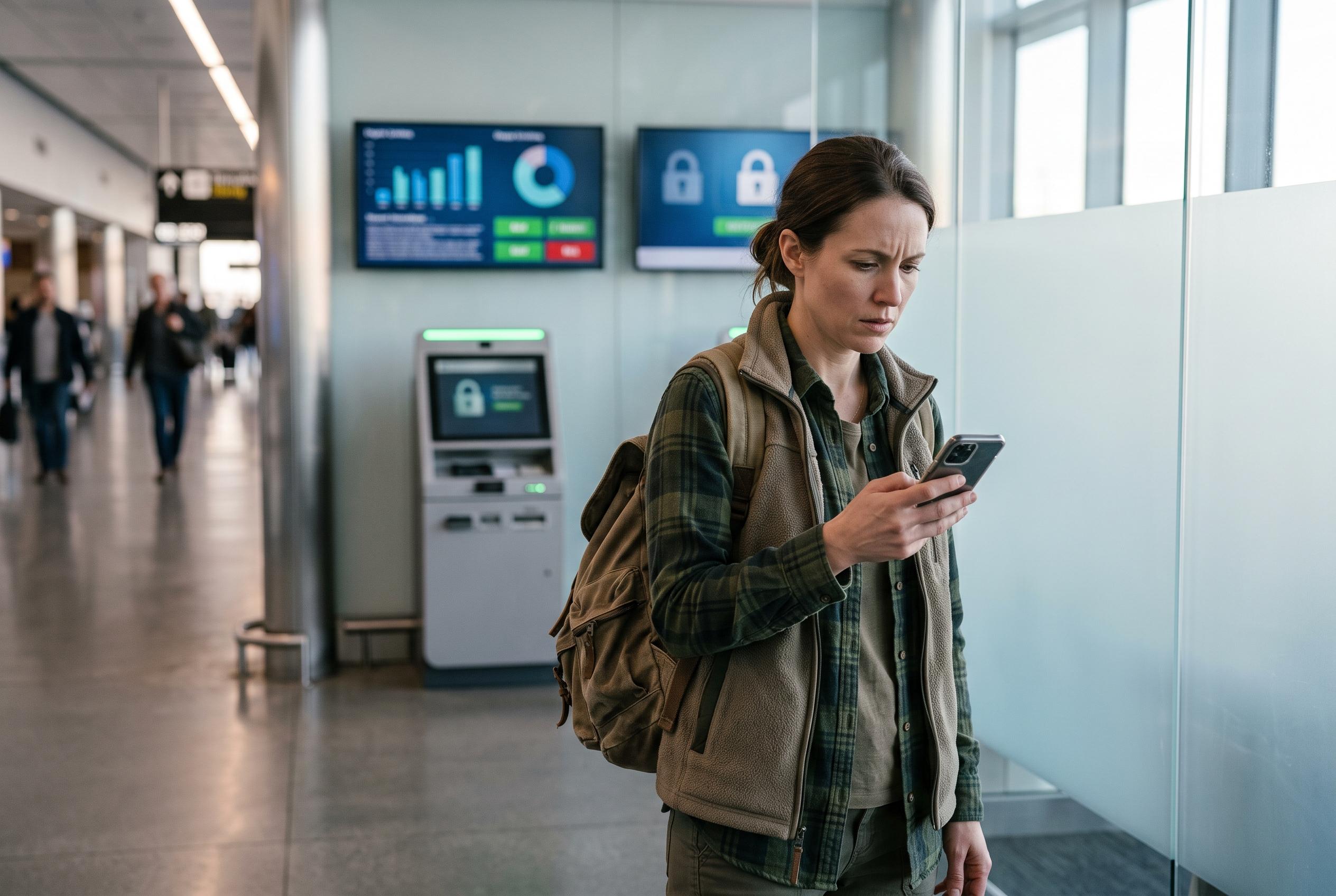

Long-term travellers risk being locked out of their bank accounts as fraud detection systems become more sensitive to unusual login activity and device reliance, prompting advice on proactive safeguards.
Bank lockouts can arrive with little warning for long-term travellers, turning an ordinary card payment into a full-blown access problem. The issue is not usually the size of a purchase alone. Banks and payment processors also weigh the login itself, including where it appears to come from, how quickly the user seems to have moved between countries and whether the connection resembles a normal home line or something more suspicious. According to the article published by Go Back Packing, that is why a traveller can be using the same account successfully for weeks and then suddenly find the app blocked and the fraud line unusable from abroad.
The risk rises when the banking session looks unusual in several ways at once. A login from one country shortly after another from a very different location can trigger alarms, as can a shared hostel or café network that has already been associated with questionable activity. Commercial VPNs can make matters worse, because they often appear to banks like data-centre traffic rather than a personal mobile or household connection. LegalClarity, Nolo and Finder all note that banks may freeze or restrict accounts when they suspect fraud, need to verify identity or run into compliance concerns, and that account holders often need to act quickly through the bank’s formal recovery process.
The most dangerous failure, though, is often not the bank check itself but the loss of the device that holds the second factor. If a phone doubles as the authenticator for email, bank logins and recovery codes, a traveller can be locked out of several systems at once. The practical fix is to prepare before departure: keep recovery codes on paper, maintain a second authenticator device if possible, and open a separate backup account or card that is funded and stored apart from the main wallet. The article’s advice also stresses keeping contact details current, including a number that can actually receive calls overseas.
If a lockout happens anyway, repeated login attempts can make the situation worse. The safer approach is to stop trying, switch to a reliable connection such as mobile data and use the bank’s in-app messaging if available. If a phone call is unavoidable, a service that presents a domestic caller ID may be more effective than calling from an international line. The broader lesson from the legal guides is consistent: banks can freeze access for a range of reasons, and travellers who build redundancy into their money, devices and recovery options are far less likely to be stranded by a false fraud alert.
Disclaimer: This article is intended to inform and educate, not to recommend or endorse any financial product, investment or strategy. Please consider your own financial circumstances and seek professional advice where appropriate before making financial decisions.