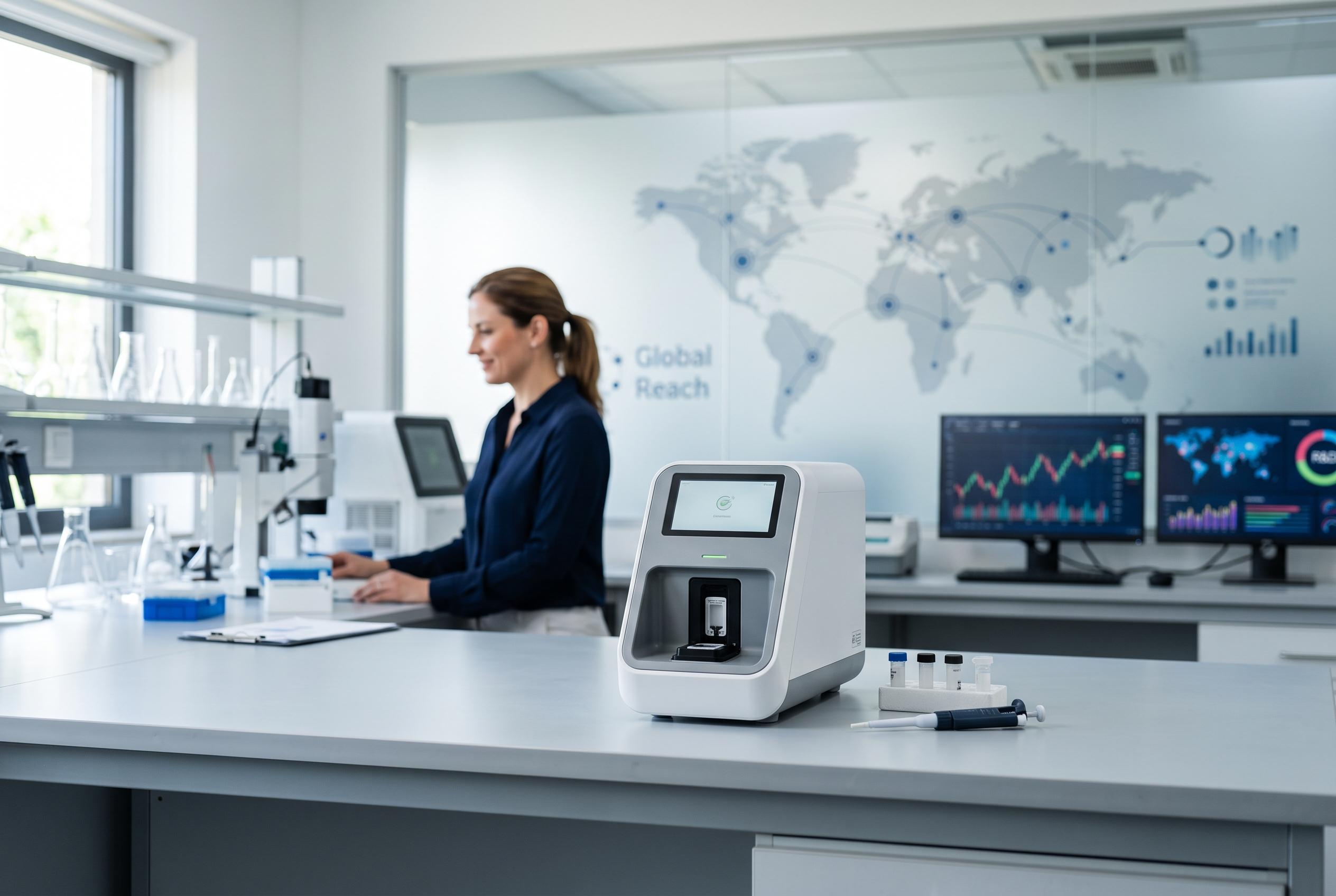

Goa-based Molbio Diagnostics prepares for its IPO, seeking to raise nearly ₹940 crore to fund R&D and expand the international footprint of its globally validated Truenat platform, a portable molecular testing system endorsed by WHO.
Molbio Diagnostics is preparing to open its initial public offering on August 10, with the issue scheduled to close on August 12 and a listing planned for August 17, according to the company’s IPO details. The diagnostics maker, based in Goa, is seeking to raise ₹939.7 crore, including a fresh issue of ₹200 crore and an offer for sale of ₹739.7 crore by existing shareholders.
At the centre of the business is Truenat, a portable molecular testing platform designed to bring PCR-based diagnostics closer to the point of care. Molbio says the battery-operated system can deliver results in about an hour and is suited to settings where laboratory infrastructure is limited. Its own product material says the platform has been built for multiple diseases, including tuberculosis, COVID-19, hepatitis, HIV and HPV, with supporting devices for sample preparation and analysis.
The company has also presented Truenat as a globally validated platform. Molbio says it is one of only two rapid molecular diagnostic systems endorsed by the World Health Organisation for the initial detection of tuberculosis and rifampicin resistance. The company adds that the platform is patented in more than 100 countries and has been deployed in over 85 markets. In a separate company update, Molbio said more than 30 validated and regulatory-approved assays are now available.
Financially, the company has shown steady growth in recent years. According to the IPO material, revenue rose from ₹840.66 crore in the year ended March 2024 to ₹1,027.94 crore in March 2025 and ₹1,455.17 crore in March 2026, while profit after tax increased from ₹83.54 crore to ₹138.58 crore and then to ₹164.14 crore over the same period. Total assets climbed to ₹2,148.42 crore by March 2026. Molbio plans to use most of the fresh capital for a research and development facility, a centre of excellence and office infrastructure, with additional spending earmarked for manufacturing equipment.
The offering comes with familiar risks for a diagnostics business tied closely to public health programmes. Molbio itself says it depends heavily on government and international aid funding, while tuberculosis-related test kits account for a large share of revenue. The company also warns that a small number of large customers contribute a meaningful proportion of sales and that regulatory delays could slow the launch of new assays. Even so, Molbio is leaning on a case built around decentralised testing, broader disease coverage and a growing international footprint.
Disclaimer: This article is intended to inform and educate, not to recommend or endorse any financial product, investment or strategy. Please consider your own financial circumstances and seek professional advice where appropriate before making financial decisions.