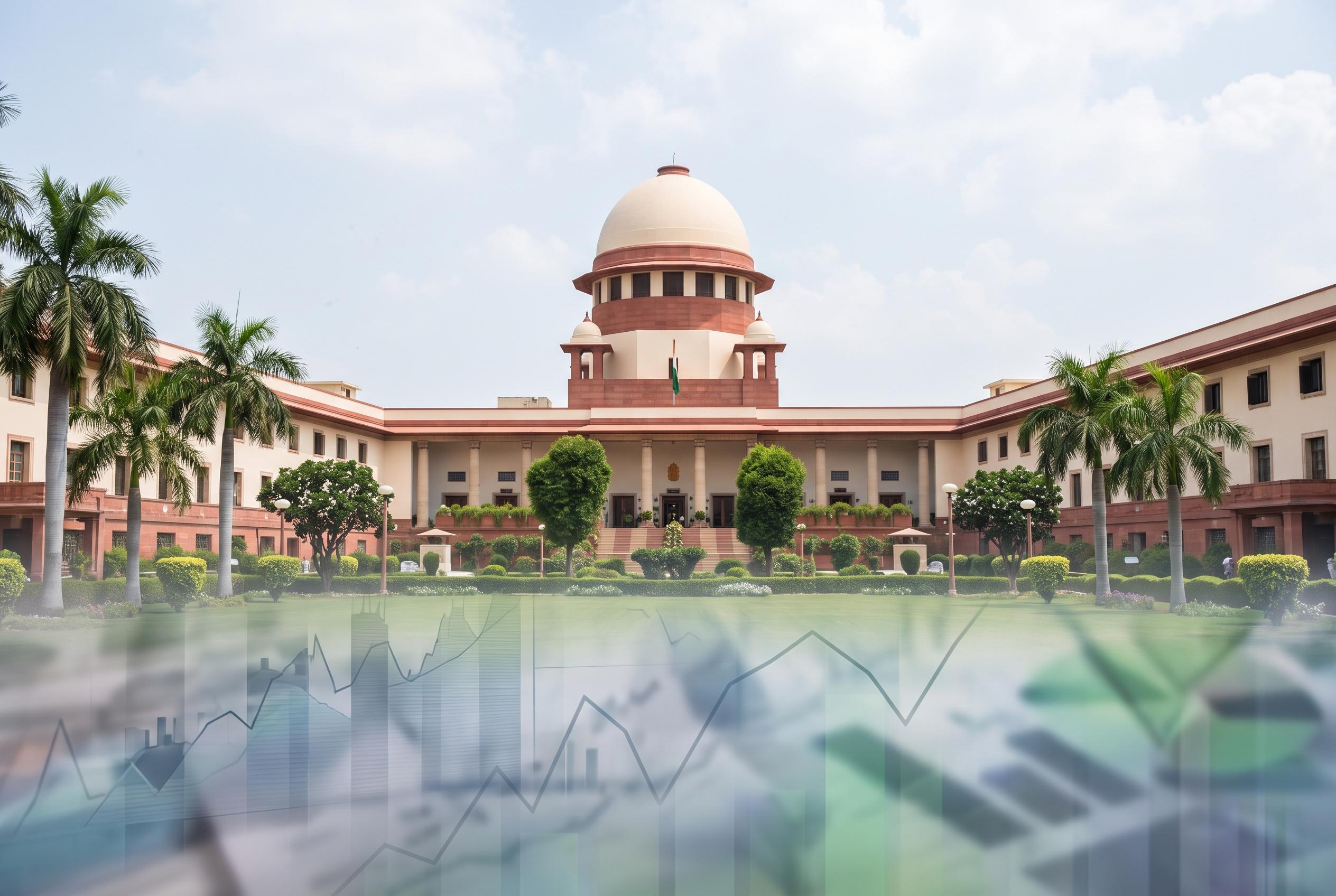

The Supreme Court’s ruling on Gameskraft Technologies’ GST dispute rekindles debate over whether recent amendments serve as genuine clarifications or constitute new tax liabilities, raising critical questions for future legal challenges.
India’s Supreme Court has reopened an old fault line in tax law: when does a clarification become a new levy? In a case rooted in Gameskraft Technologies’ challenge to a ₹21,000 crore GST notice, the court held in May 2026 that online money gaming, fantasy sports and casino-style transactions fall within the tax net and that the 2023 amendments to the CGST law apply retrospectively. That conclusion is now being tested against the court’s own earlier guidance in Commissioner of Income Tax v. Vatika Township, where a Constitution Bench warned that taxpayers are entitled to arrange their affairs on the basis of the law then in force.
The tension matters because Vatika Township set a demanding standard for any amendment said to be merely clarificatory. A tax charge must have all its essential parts in place: the taxable event, the person liable, the rate and the measure of value. If one of those elements is missing, the later amendment does not explain the law; it completes it. In the Gameskraft dispute, the pre-October 2023 regime was argued to have several gaps, including the legal basis for valuing stakes under rule 31A(3), uncertainty over the supplier definition, the absence of clear policy consensus in GST Council deliberations and the Revenue’s own practice of collecting tax only on platform fees for years before the 2022 notice.
That background gives extra weight to the GST Council process itself. According to the material discussed in the IndiaCorpLaw analysis, the Group of Ministers on casinos, race courses and online gaming spent an extended period working through basic questions of rate, valuation and scope, which suggests the issue was not settled in the way a true clarification would imply. The 2023 amendment also inserted a deeming fiction treating online gaming firms as suppliers of actionable claims. Such language can sometimes be read as corrective, but here it appears to have done more than tidy up drafting: it shifted the legal footing of a disputed industry while policymakers were still debating the underlying tax treatment.
The wider consequence is that the court’s ruling may not end the argument. The Supreme Court has now confirmed the constitutional validity of applying 28% GST to the full face value of bets, and other summaries of the judgment say retrospective demands exceeding ₹1.12 lakh crore across 71 companies were thereby validated. Yet the reasoning leaves open the sharper question raised by Vatika Township: whether Parliament and the tax administration were truly clarifying an existing liability, or whether they were creating one for the first time and then relabelling it. That question may well return in future litigation, especially where the pre-amendment record shows persistent uncertainty rather than settled law.
Disclaimer: This article is intended to inform and educate, not to recommend or endorse any financial product, investment or strategy. Please consider your own financial circumstances and seek professional advice where appropriate before making financial decisions.