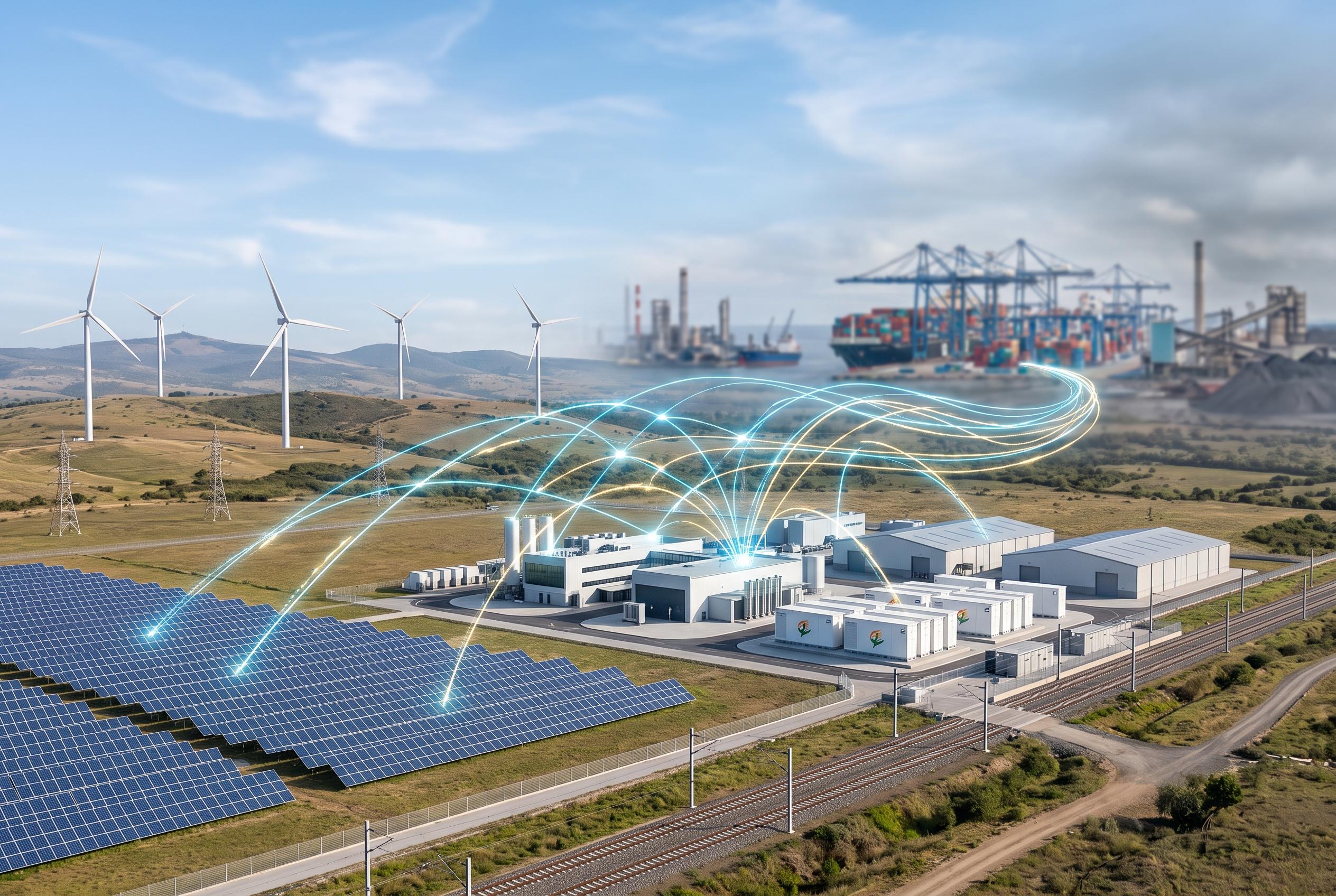

A joint report warns that India’s increasing reliance on overseas supplies for essential minerals could undermine its clean energy ambitions, exposing supply chain vulnerabilities amid global processing concentration and rising demand.
India’s clean-energy push could open a new vulnerability: dependence on imported critical minerals, according to a joint report by the Confederation of Indian Industry and EY. The report said India is already fully reliant on overseas supplies for 15 of the 23 minerals it assessed as essential to the energy transition, underscoring a shift in the country’s energy-security concerns from fuel imports to industrial inputs.
As solar, wind, battery storage, electric mobility and modern power networks expand, minerals such as lithium, nickel, cobalt, silicon and rare earths are becoming central to the system. The report said India will need far stronger domestic exploration, processing, manufacturing and recycling capacity if it is to reduce exposure to supply shocks and price swings.
The challenge is not limited to mining. Global refining and processing is heavily concentrated, with China dominating much of the downstream market. The report said China accounted for 93% of graphite refining in 2024, 85% of rare-earth processing, 79% of cobalt refining, 70% of lithium refining and 44% of nickel refining, a level of concentration that leaves importers highly exposed.
Demand is also expected to rise sharply over the long term. The report projected that between 2025 and 2070, India’s needs for critical minerals will increase substantially as renewable power, electric mobility, battery storage, nuclear energy and grid infrastructure grow. Copper is expected to be the biggest single requirement, with demand of more than 66 million tonnes over the period, followed by graphite, silicon, phosphorus and nickel.
Other recent research points in the same direction. The International Institute for Sustainable Development has said India’s net-zero ambitions will depend on securing reliable mineral supplies, while the Institute for Energy Economics and Financial Analysis warned that India’s dependence on imports for lithium, cobalt and nickel remains near-total, with synthetic graphite heavily tied to China. Together, the reports suggest that India’s transition will depend not only on building more clean energy capacity, but also on securing the minerals, technology and supply chains that underpin it.
Disclaimer: This article is intended to inform and educate, not to recommend or endorse any financial product, investment or strategy. Please consider your own financial circumstances and seek professional advice where appropriate before making financial decisions.