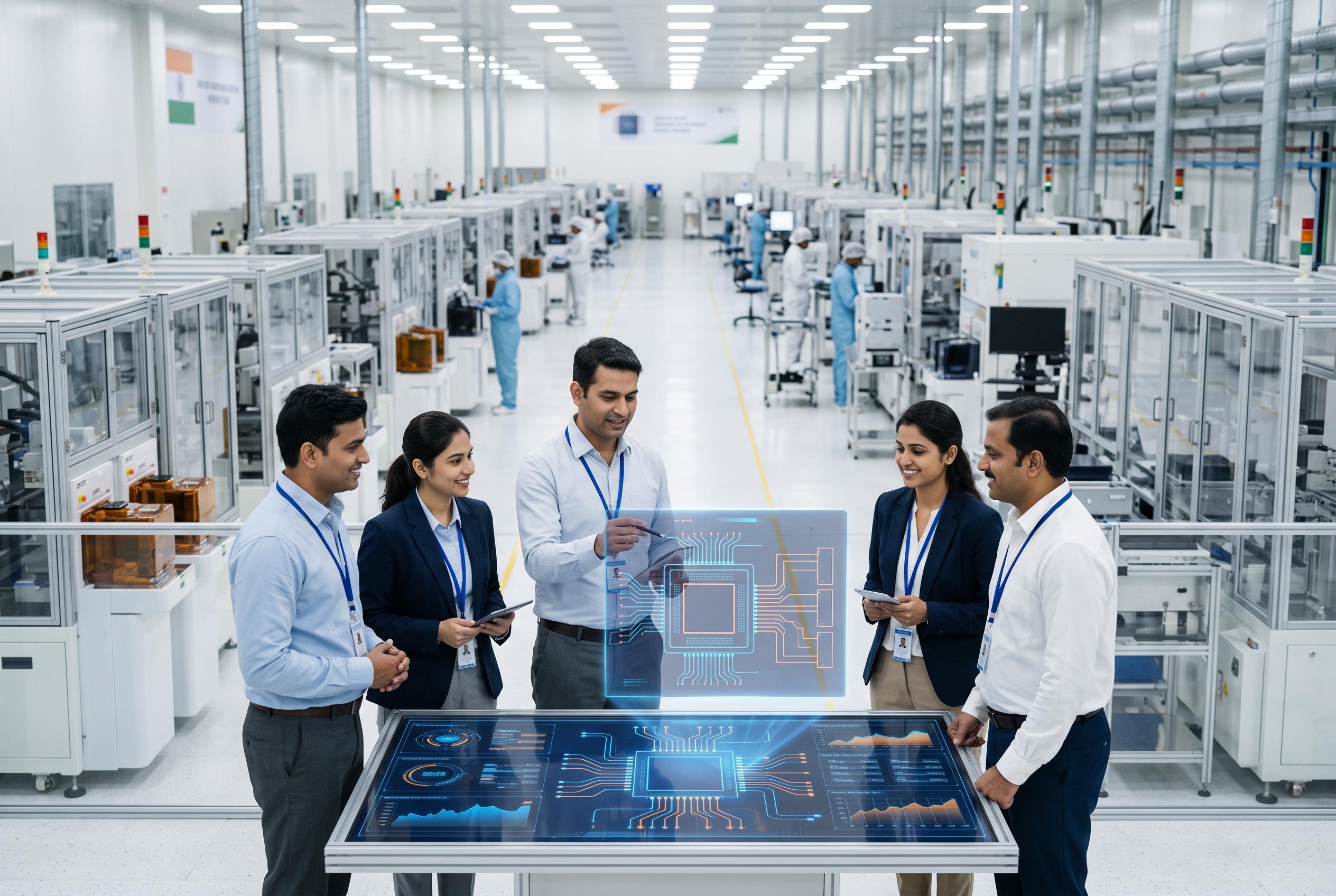

India is prioritising mature-node semiconductor production, leveraging human capital and government backing to build a comprehensive ecosystem that strengthens self-reliance while co-operating with Vietnam for manufacturing and testing capabilities.
India’s push into semiconductors is being shaped less by a race to the cutting edge than by a calculation about where it can build strength fastest. According to VietnamPlus, New Delhi is concentrating on mature-node chips, especially 28 nanometres and above, because they are widely used in cars, power electronics, industrial controls and the internet of things. The approach is meant to reduce dependence on imports, strengthen technological self-reliance and position India more firmly in global supply chains.
That strategy is already backed by public money and a growing pipeline of projects. India Briefing reported that Semicon 2.0 has set aside $13.23 billion to expand the country’s semiconductor ecosystem, while Business Standard said the Union Budget 2026-27 gave a further policy push to deepen domestic capabilities. Industry coverage also indicates that India now has 12 approved semiconductor projects, including major efforts involving Micron, Kaynes and Tata Electronics.
The focus is not only on fabrication. VietnamPlus said India is building out assembly, testing, packaging, design, intellectual property and materials supply, with the aim of creating a fuller value chain rather than relying on a single segment. Drishti IAS noted that the government’s semiconductor mission is intended to support the whole ecosystem, from research and development to module manufacturing and talent formation, while India Briefing said the plan is meant to attract global manufacturers, equipment suppliers and investors.
Human capital remains India’s biggest advantage. VietnamPlus, citing Nasscom’s Sudhanshu Mittal, said India accounts for about 20% of the world’s semiconductor design engineers, a base built up over years as multinationals placed research and design work in Bengaluru, Hyderabad and Noida. A government press release said India hosts about 7% of global semiconductor-related Global Capability Centres, underlining the country’s role in design and R&D rather than just production.
Even so, the country still faces hard bottlenecks. According to VietnamPlus, the main gaps are the shortage of workers experienced in running chip plants, dependence on imported wafers and specialty gases, and infrastructure demands such as stable power and ultra-pure water. That makes India’s strategy look pragmatic rather than ambitious for ambition’s sake: it is trying to build capacity where it has a realistic chance of competing before moving higher up the technology ladder.
For Vietnam, the Indian model offers a useful comparison. VietnamPlus said the two countries see each other as complementary rather than direct rivals: India can contribute design, research and technology, while Vietnam can provide manufacturing, assembly and testing strength. The same report said cooperation could extend to digital payments, standards and research, and to critical minerals such as rare earths, where both countries hold sizeable reserves but still need processing technology to turn resources into industrial advantage.
Disclaimer: This article is intended to inform and educate, not to recommend or endorse any financial product, investment or strategy. Please consider your own financial circumstances and seek professional advice where appropriate before making financial decisions.