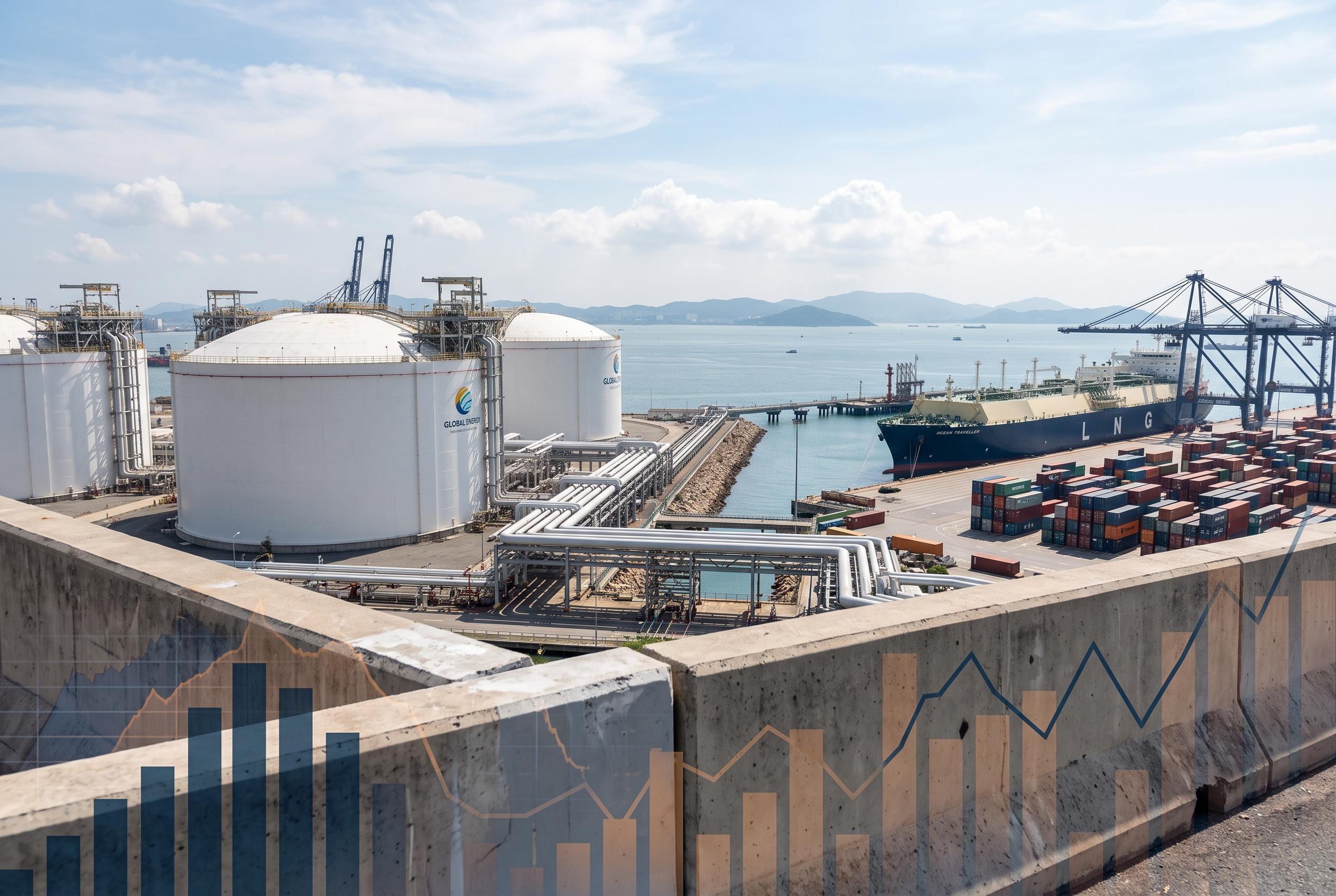

India’s natural gas consumption has nearly returned to pre-disruption levels, with increased dependence on imported LNG amid a global supply crunch and shifting sourcing dynamics, according to recent research.
India’s natural gas market has rebounded to almost its pre-disruption pattern, with June consumption rising across most major end-use sectors even as the country faces a tougher global market for liquefied natural gas, according to a research note by Equirus. The brokerage said total gas demand reached 197 million metric standard cubic metres a day in June, up 7% from May and 2% from a year earlier, while demand excluding the power sector climbed to 176 million metric standard cubic metres a day, pointing to a broader recovery.
The increase was driven entirely by imported supply. Equirus said LNG use rose to 110 million metric standard cubic metres a day in June, up 13% on the month and 10% on the year, while domestic output held flat from May at 87 million metric standard cubic metres a day and fell 8% from a year earlier. That pushed import dependence to 56%, underlining how quickly India has leaned back on overseas cargoes to meet rising demand.
Demand growth was spread across city gas distribution, miscellaneous industrial users and refineries, with some support also coming from fertiliser and power. Equirus also revised May’s numbers sharply higher, saying consumption that month was actually 184 million metric standard cubic metres a day rather than 169 million previously estimated, and LNG imports were 97 million metric standard cubic metres a day rather than 83 million. That revision suggests the recovery was already stronger than first believed.
On the supply side, India’s sourcing mix has shifted markedly. Equirus said the country imported about 7 million tonnes of LNG during May to July, 15% more than a year earlier, even as Qatar’s volumes collapsed by 91%; the United States became the largest supplier, followed by Nigeria and Oman. But the outlook is less certain, with stronger Chinese buying intensifying competition for flexible cargoes, Asian spot prices moving above $20 per million British thermal units and European storage still below historic norms. Equirus said additional global LNG projects could ease availability over time, although shipping constraints, sanctions and payment risks may limit how much of that supply reaches India at workable prices.
Disclaimer: This article is intended to inform and educate, not to recommend or endorse any financial product, investment or strategy. Please consider your own financial circumstances and seek professional advice where appropriate before making financial decisions.