
A decade after its launch, India’s Government e-Marketplace has evolved from a basic online portal into a vital infrastructure for transparent, inclusive, and data-driven government purchasing, connecting millions of buyers and suppliers across the country.
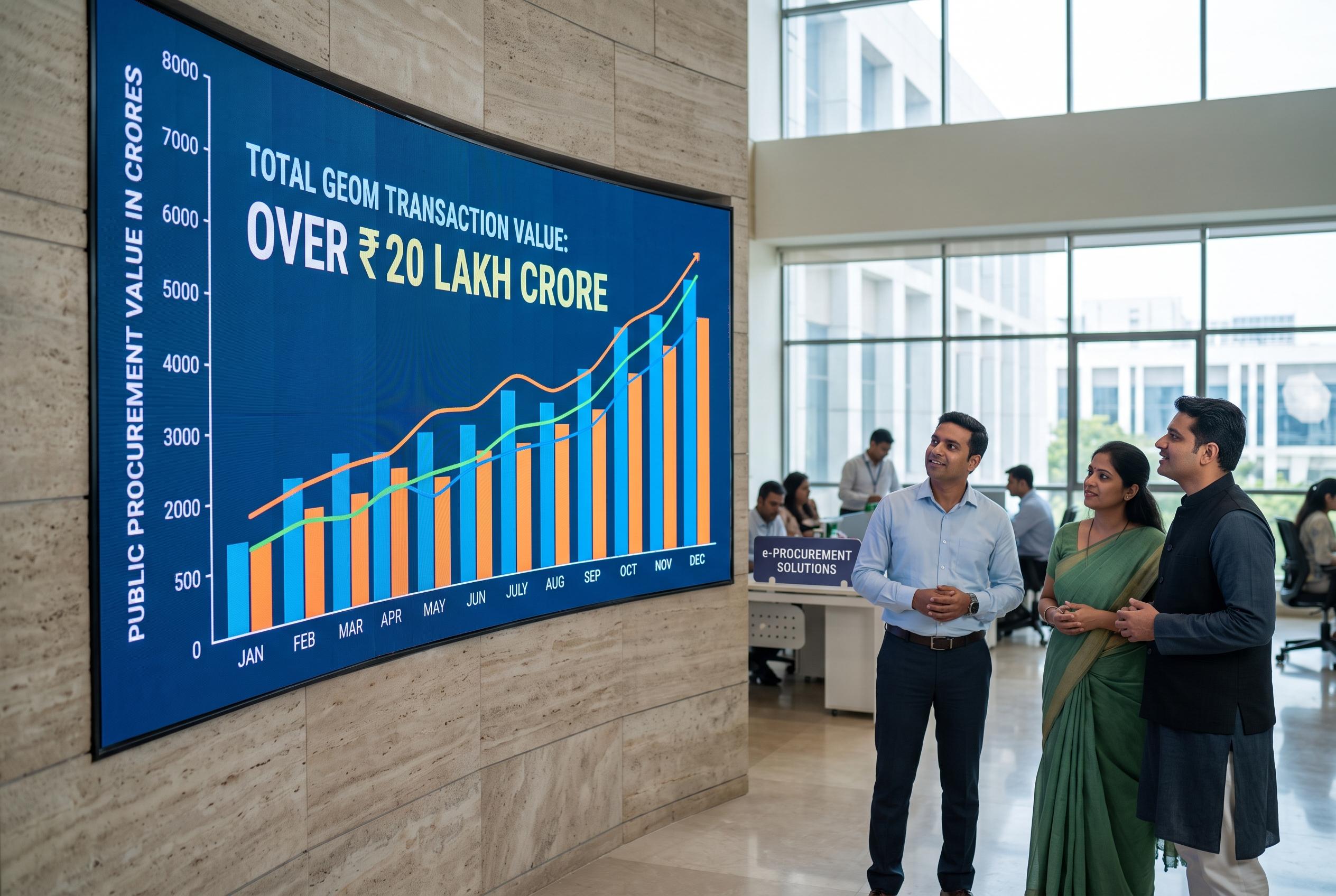
A decade after its launch, India’s Government e-Marketplace has become far more than a simple online buying portal. What began on August 9, 2016 as an effort to replace slow, paper-heavy procurement with a single digital system is now one of the central pillars of the country’s public purchasing framework, linking government buyers and private sellers on a common platform. According to the platform’s own figures, GeM now connects more than 1.37 lakh buyer organisations with nearly 25 lakh sellers and service providers and has handled cumulative purchases worth more than ₹20 lakh crore.
The platform’s appeal lies in the way it has reorganised a process that was once fragmented across approvals, tenders and paperwork. GeM now covers the full procurement cycle online, from registration and listing through bidding, order placement, delivery and payment. Government buyers can use direct purchase, comparison shopping, bidding and reverse auctions, while digital records and automated workflows are meant to make the system more transparent and easier to audit. Data tools such as past transaction summaries and price trend reports also allow departments to compare costs before buying.
GeM’s growth has also been driven by scale. Industry updates cited by IBEF and Business Standard say the platform’s cumulative gross merchandise value has reached about ₹18.4 lakh crore, with roughly ₹5 lakh crore recorded in the 2025-26 financial year alone. In the same period, Micro and Small Enterprises accounted for a large share of activity, with Business Standard reporting that they represented 68% of orders and 47.1% of GMV in FY26. The platform now lists more than 10,660 product categories and 350 service categories, spanning everything from medical equipment and classroom furniture to transport, catering and human resources services.
The biggest policy story behind GeM is inclusion. IBEF said procurement from Micro and Small Enterprises had crossed ₹8.69 lakh crore by June 2026, while the number of registered MSEs had risen to more than 11.9 lakh. The same reports noted strong gains for women-led enterprises, startups and SC/ST-owned businesses. GeM’s own material says more than 11 lakh MSEs were active on the platform in 2025-26, placing more than 51 lakh orders worth over ₹2.36 lakh crore, while women-led MSEs secured more than ₹28,000 crore and SC/ST enterprises received more than ₹6,000 crore.
To widen access beyond large suppliers and urban firms, GeM has built a series of targeted initiatives. These include SWAYATT for startups, women and youth; Startup Runway 2.0 for emerging businesses; Womaniya for women-led sellers; and the SARAS Collection for rural self-help groups. In June 2026, the platform also partnered with Common Service Centre e-Governance Services India Limited to open 50 GeM Suvidha Kendras on a pilot basis, offering local support with registration, catalogue creation, training and grievance handling. The aim is to help smaller sellers and first-time participants move into government supply chains.
The platform is now moving towards a more integrated procurement ecosystem. GeM has been linked with other systems, including the Central Public Procurement Portal, and is also adding functionality from rail and defence procurement platforms. It has formed partnerships with bodies such as IN-SPACe and the Drone Federation India for specialist procurement needs, while GeM Sahay offers eligible sellers collateral-free working capital loans through a mobile app backed by Union Bank of India. As the platform enters its 11th year, the direction is clear: more digital, more data-driven, more inclusive and, above all, more central to how India buys for the state.
Disclaimer: This article is intended to inform and educate, not to recommend or endorse any financial product, investment or strategy. Please consider your own financial circumstances and seek professional advice where appropriate before making financial decisions.