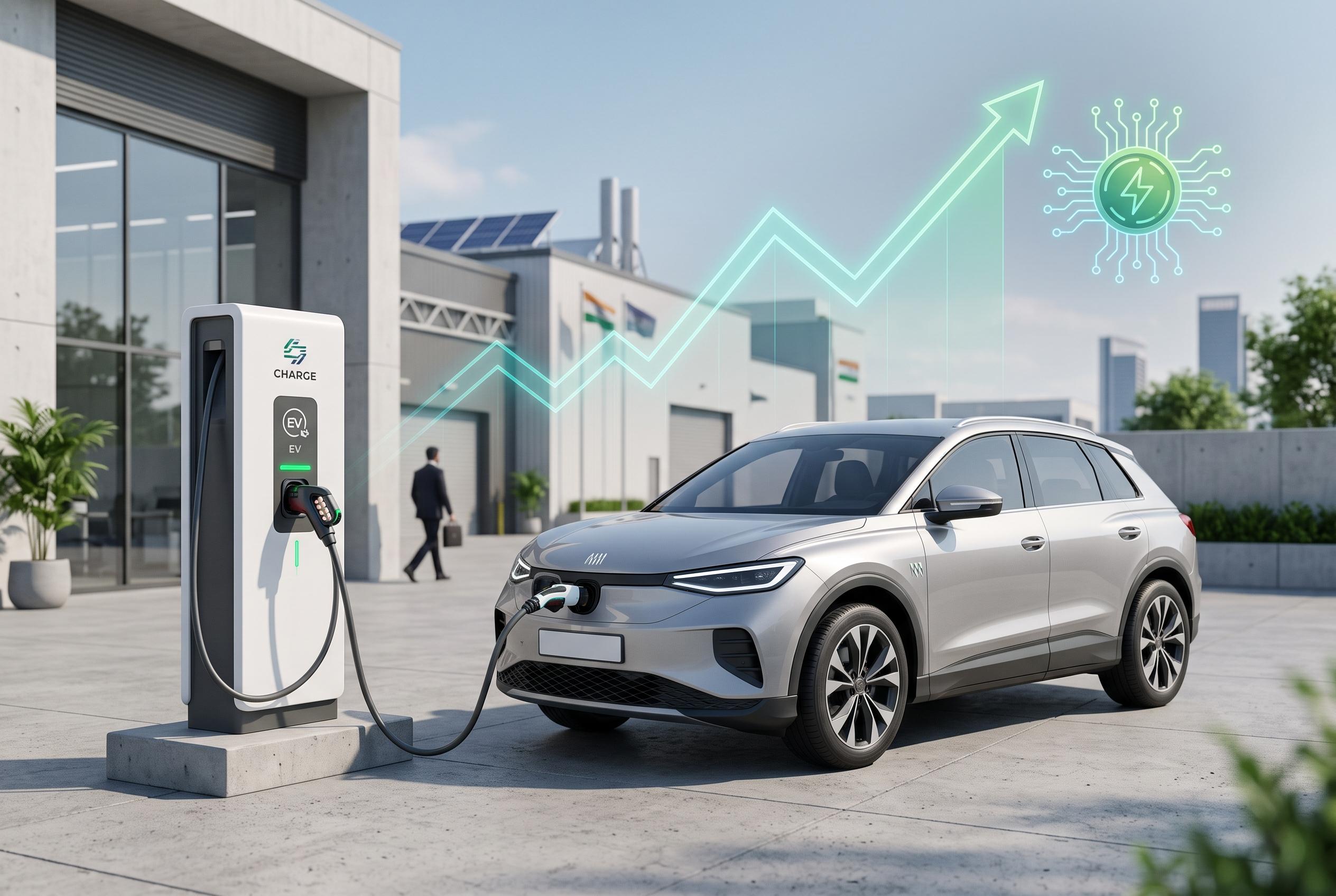

India’s EV sector has transitioned from niche to mainstream, driven by government incentives, local production, and increasing state competition, signalling a turning point in the country’s efforts to reduce emissions and build a domestic industry.
India’s electric vehicle market has moved from a niche experiment to a sizeable industrial and policy priority, with the government using subsidies, tax breaks and manufacturing incentives to speed adoption. The shift is part of a wider effort to cut oil imports, curb urban pollution and reduce transport emissions, which remain a meaningful slice of India’s greenhouse gas output.
The modern push began in 2015 with the National Electric Mobility Mission Plan and the FAME India scheme, which created the first serious framework for consumer incentives and charging infrastructure. According to Press Information Bureau updates, FAME Phase II, launched in April 2019 with a budget of ₹11,500 crore, supported more than 16 lakh EVs by the end of 2024, including 14.28 lakh two-wheelers and 1.64 lakh three-wheelers, while also helping to build 52,718 public charging stations, 16,561 of them fast chargers. The same scheme ran from 2015 to 2024 in two phases and was central to the market’s early expansion.
That support has translated into faster adoption. Government-linked figures cited in recent reports show EV penetration rising from 0.71% in FY 2019-20 to 7.50% in FY 2024-25, with two-wheelers now the dominant category. In the early years, the market was led mainly by e-rickshaws and shared mobility fleets, but the centre of gravity has shifted towards personal transport and commercial use as more models have become available and prices have come down.
The industrial base is also deepening. India is increasingly producing batteries, motors, drivetrains, power electronics and charging equipment domestically, while groups such as Tata Motors, Mahindra, TVS and Bajaj Auto are expanding their EV lines. At the same time, the country is trying to position itself as a manufacturing hub for global players, with companies from Japan, South Korea and Vietnam exploring opportunities. New policy tools, including PM E-DRIVE, the PLI-Auto scheme, the ACC battery programme and the passenger car manufacturing scheme, are designed to strengthen supply chains and reduce dependence on imported components.
State governments are competing for investment as well. Delhi, Maharashtra, Chandigarh, Karnataka, Tamil Nadu, Gujarat, Haryana and Uttar Pradesh have emerged as important markets and policy leaders, while the India Electric Mobility Index, launched by NITI Aayog in August 2025, was intended to compare states on electrification, charging readiness and innovation. The next phase of growth will depend on whether India can scale charging networks, keep battery costs in check and push domestic production far enough to support exports as well as local demand.
Disclaimer: This article is intended to inform and educate, not to recommend or endorse any financial product, investment or strategy. Please consider your own financial circumstances and seek professional advice where appropriate before making financial decisions.