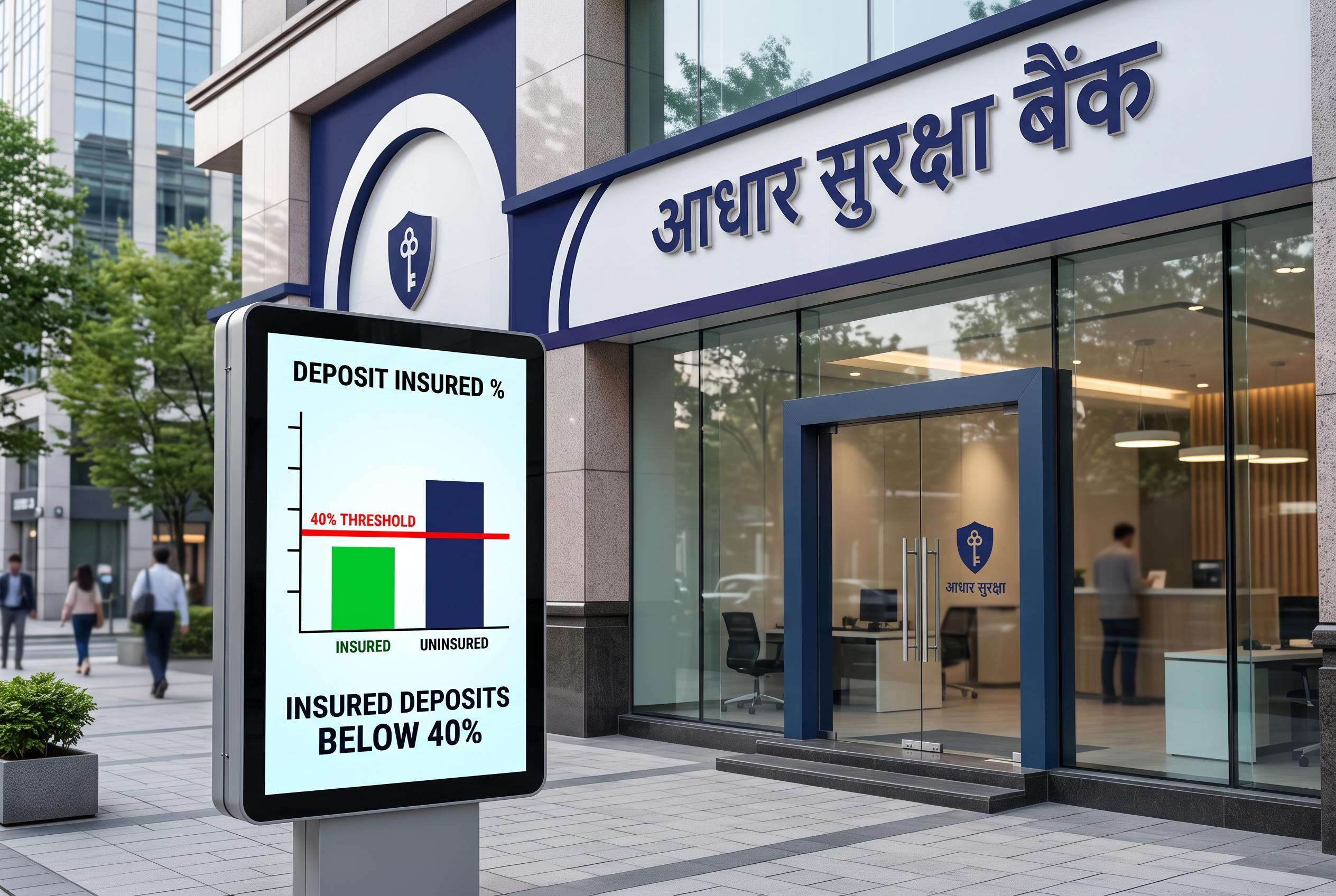

Analysis reveals that the insured portion of Indian bank deposits has dipped below 40% for the first time since the deposit insurance cover was increased, raising concerns about deposit safety amid rising large-balance accounts and payout delays.
Concerns about the adequacy of bank deposit protection are intensifying in India after a Businessline analysis of Deposit Insurance and Credit Guarantee Corporation data showed that the insured share of deposits by value slipped below 40% in fiscal 2026 for the first time since the cover limit was raised to ₹5 lakh in February 2020. Even so, the proportion of accounts that remained fully protected stayed above 97%, underlining the gap between the number of depositors covered and the amount of money actually insured.
The analysis showed that insured deposits accounted for 39.7% of assessable deposits in FY26, down from 41.5% a year earlier. The decline extends a longer pattern that began after the deposit insurance ceiling was lifted from ₹1 lakh to ₹5 lakh in 2020. Businessline said the main reason is the faster growth of large balances in a relatively small number of accounts, which has pushed up the overall deposit base more quickly than the insured portion.
Madan Sabnavis, chief economist at Bank of Baroda, told Businessline that the higher denominator is being driven by bulk deposits, which tend to be large and short-term. He said any review of the insurance limit should take into account the size of retail balances. Another banking expert quoted in the report said the average retail deposit is ₹1.43 lakh, suggesting it could be several years before policymakers consider another increase in the ceiling.
While coverage by account remains broad, pressure on the insurance system is also showing up in unsettled claims. Businessline reported that deposit insurance claims admitted but not yet paid rose to ₹997 crore in FY26, the highest level on record, compared with ₹181 crore in FY23. Vivek Iyer, partner at Grant Thornton Bharat, told Businessline that the backlog is being driven mainly by delays in distressed cooperative banks, scheduled commercial banks and incomplete depositor records. Separate reporting by Indian Cooperative said DICGC paid ₹1,988 crore to depositors of 72 urban cooperative banks during FY26, highlighting the strain on the payout system as failures and liquidations continue to surface.
The broader debate over whether the ₹5 lakh protection limit is still adequate has been sharpened by recent stress in cooperative banks and by a new risk-based premium framework for deposit insurance that the Reserve Bank of India introduced from April 1, 2026. Under that system, safer banks pay lower premiums while riskier lenders pay more, a change officials say should better align insurance costs with risk. But the latest data suggest that, although most accounts are covered, a growing share of deposit value remains outside the safety net.
Disclaimer: This article is intended to inform and educate, not to recommend or endorse any financial product, investment or strategy. Please consider your own financial circumstances and seek professional advice where appropriate before making financial decisions.