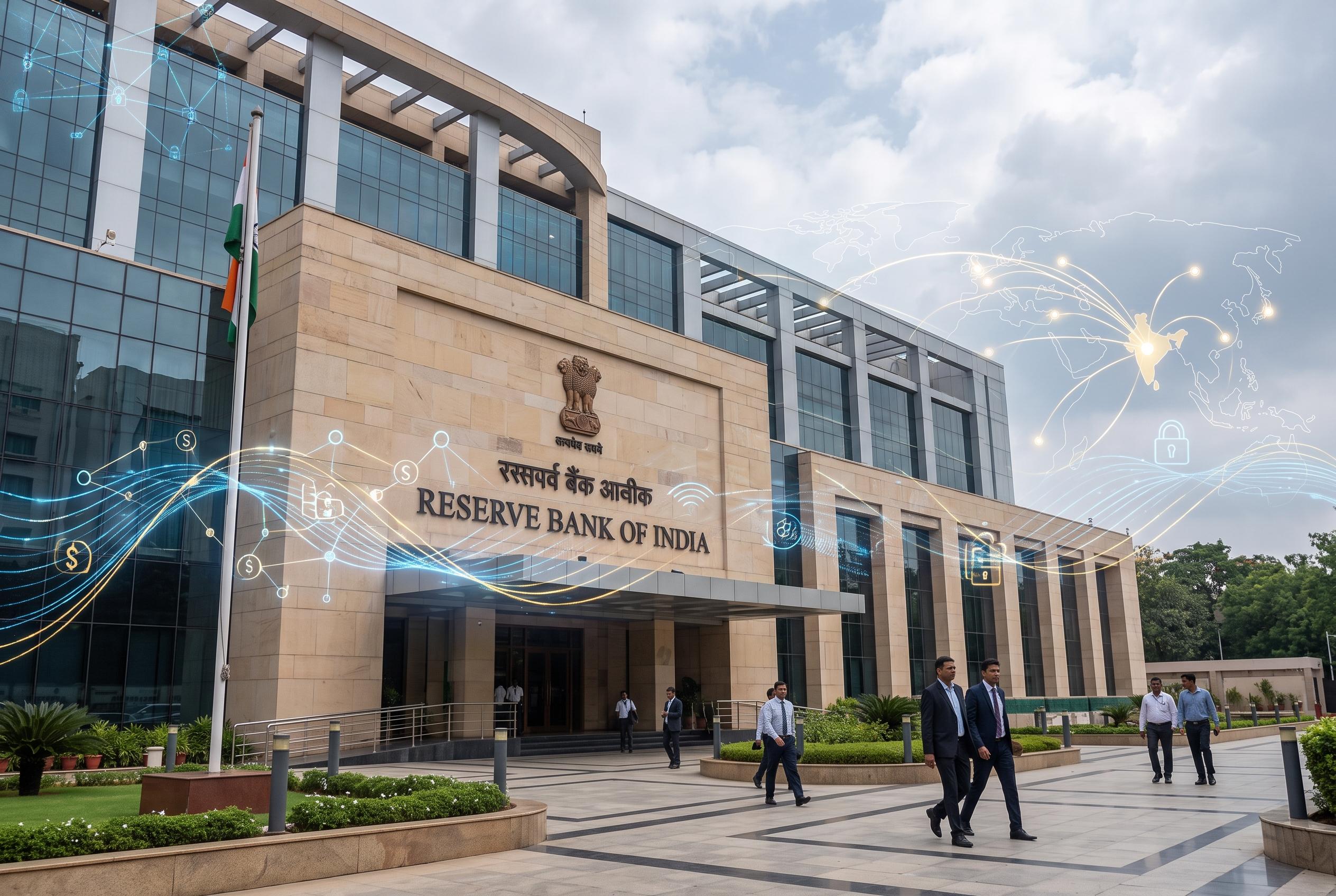

India adopts a tightly bounded approach to stablecoins, emphasising sovereignty and domestic payment integration amid global regulatory shifts.
Stablecoins are increasingly best understood not as speculative crypto tokens but as payment infrastructure: a fast, programmable way to move value across borders and between users. In her paper, Sanhita Chauriha argues that this distinction matters because the regulatory question is not how stablecoins are built, but what they do. That framing places them closer to payment rails than investment products and explains why, in India, they sit uneasily within a system built around central bank control, capital account limits and activity-based regulation.
India’s caution is largely structural, not ideological. The Reserve Bank of India has repeatedly stressed that money must preserve singleness, elasticity and integrity, and it sees privately issued stablecoins as a threat to all three. The central bank has also signalled that it prefers the digital rupee, or e₹, as the sovereign alternative. Around the world, by contrast, regulators are moving towards clearer rules: Reuters and industry reporting on the United States, the European Union and the United Kingdom show a shift towards treating stablecoins as regulated payment instruments rather than leaving them in a legal vacuum.
Chauriha’s paper says India’s existing statutes only partly cover the field. The Payment and Settlement Systems Act can reach payment-like uses, FEMA becomes relevant when stablecoins touch cross-border flows and the PMLA already imposes anti-money-laundering duties on exchanges and wallet providers. But none of these laws on its own creates a full prudential regime for issuance, reserves, redemption or systemic oversight. That fragmentation, the paper argues, would become unsustainable if stablecoins moved from the margins into wider retail or settlement use.
The paper’s preferred model is tightly bounded. Only fully backed INR-denominated stablecoins would be allowed for domestic use, with algorithmic or partially collateralised models excluded. Reserves would need to be held on a one-to-one basis in Indian bank deposits and short-dated government securities, with redemption at par and a close link to the e₹ as the settlement asset of last resort. Cross-border use would be restricted and ring-fenced, including through the GIFT International Financial Services Centre, while issuers would face dedicated licensing, governance, cyber-security and financial integrity standards.
That approach also reflects India’s broader policy posture. Reports on the RBI’s Financial Stability Report suggest the central bank is studying international developments such as the EU’s MiCA framework, the US GENIUS Act and the UK’s evolving rules, but is not moving towards liberalisation on foreign models. Chauriha’s conclusion is that stablecoins should not be ignored, but absorbed into an RBI-anchored structure that preserves monetary sovereignty, protects UPI’s domestic success and allows controlled innovation rather than unchecked parallel money.
Disclaimer: This article is intended to inform and educate, not to recommend or endorse any financial product, investment or strategy. Please consider your own financial circumstances and seek professional advice where appropriate before making financial decisions.