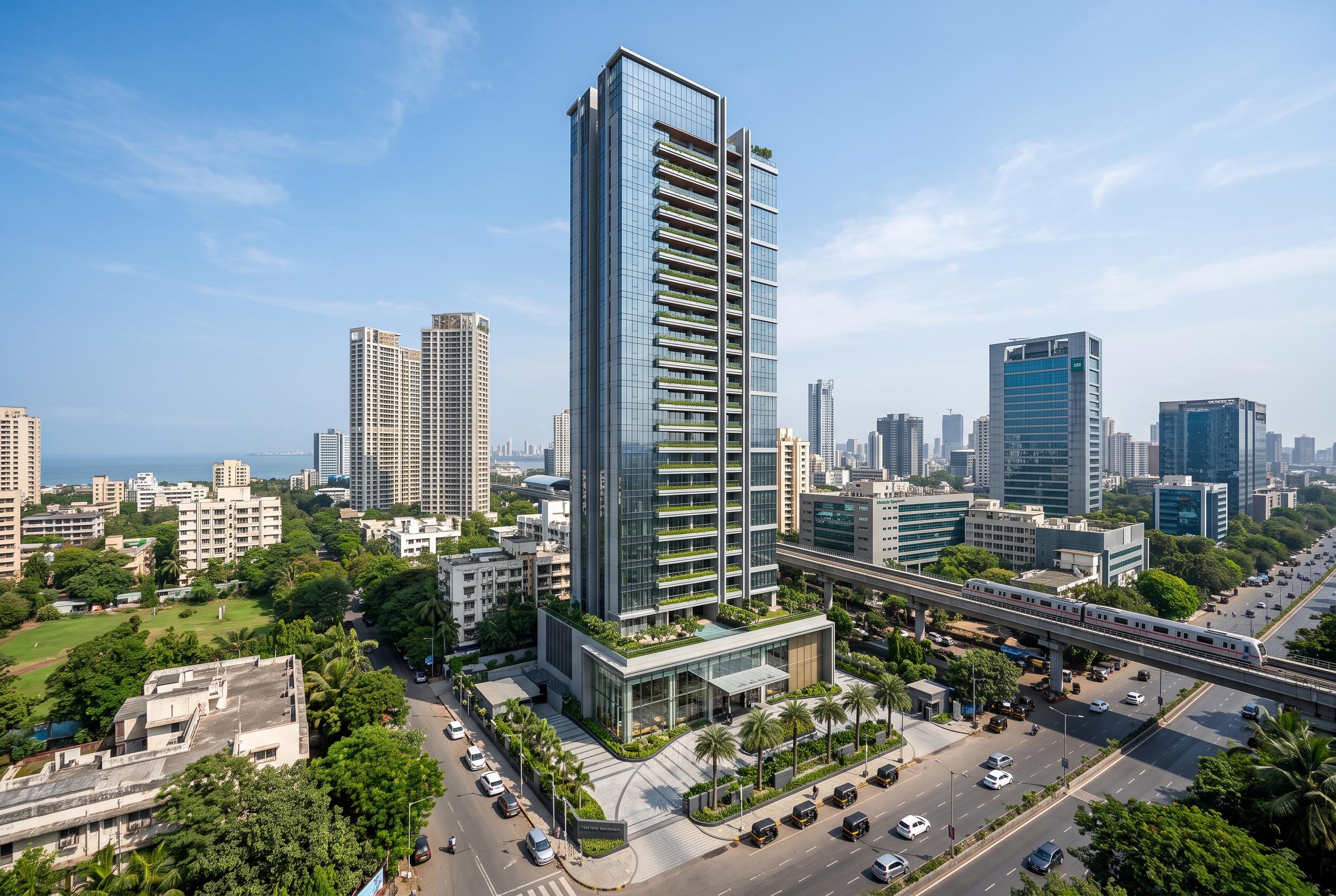

The Indian branded residences market is evolving beyond brand names to emphasise strategic site choice, operational models, and post-handover planning, as the sector prepares for the second Branded Residences Summit in Mumbai.
India’s branded residences market is moving beyond the simple appeal of a luxury name on a tower. As the second Branded Residences Summit prepares to return to Mumbai on October 7 and 8, organisers say the conversation has shifted towards site selection, capital discipline, operating models and what happens after handover. According to the summit’s website, TBRS 2026 will gather developers, operators, investors and advisers at JW Marriott Mumbai Sahar to focus on the commercial and legal questions that now shape the sector.
NOESIS Hotel Advisors says the market has grown into a pipeline worth about ₹1 lakh crore, or roughly $10.5 billion, across delivered and planned projects. Its map tracks 43 directly brand-licensed developments, including seven completed schemes, 19 under construction and 17 announced, with more expected this year. The advisory firm says the category is no longer confined to Mumbai and the National Capital Region, with activity spreading to cities and leisure destinations such as Goa, Alibaug, Karjat, Igatpuri, Kasauli, Coorg and Rishikesh. Business Standard reported in January that India’s branded residences market could expand by about 60% by 2027, reflecting the pace of new launches and commitments since 2021.
Nandivardhan Jain, founder and chief executive of NOESIS Hotel Advisors, said developers were increasingly asking how to choose the right brand for a project rather than whether a brand could help sales. He said the real challenge was aligning location, buyer profile, pricing and service promises with the financial model from the outset. Jain argued that the strongest projects are those where the brand, the product and the resident experience are designed to work together rather than treated as separate decisions.
That concern has also drawn more attention from institutional investors and organised funds, according to NOESIS. The firm says branded developments can offer stronger pricing, quicker absorption and more predictable cash flow when the project is well matched to its market. But it also notes that a recognised brand brings greater scrutiny of the developer, the design brief and the operating plan, which means the basics of demand, delivery and pricing still matter more than the logo on the façade.
The summit itself is being positioned as a more practical, project-by-project forum than in its first year. TBRS was launched in 2025 as India’s first dedicated branded residences platform, and the 2026 edition is set to expand into a two-day programme covering feasibility, underwriting, brand selection, legal structure, sales and operations. NOESIS says the event will also include a closed-door developers’ masterclass, the first Branded Residences Awards and the release of the third edition of its branded residences market report.
Speakers expected in Mumbai include senior executives from Accor, Banyan Group, Radisson Hotel Group, YOO, Pininfarina, ITC Hotels, IHCL, Hilton, IHG, Tribeca Developers, Whiteland Corporation and Gulshan Group, alongside leaders from Oberoi, Marriott International, Hyatt, Olive Hospitality, Sarovar and Mahindra Holidays. Daniel von Barloewen, senior vice president for Accor One Living and head of global mixed-use development, said he returned after describing India as a market to watch last year, adding that it was now one of the key markets to be in. NOESIS is urging developers to attend with teams from finance, sales, design, legal and projects, arguing that branded residences affect everything from apartment layouts and common areas to service charges and long-term contracts.
Disclaimer: This article is intended to inform and educate, not to recommend or endorse any financial product, investment or strategy. Please consider your own financial circumstances and seek professional advice where appropriate before making financial decisions.