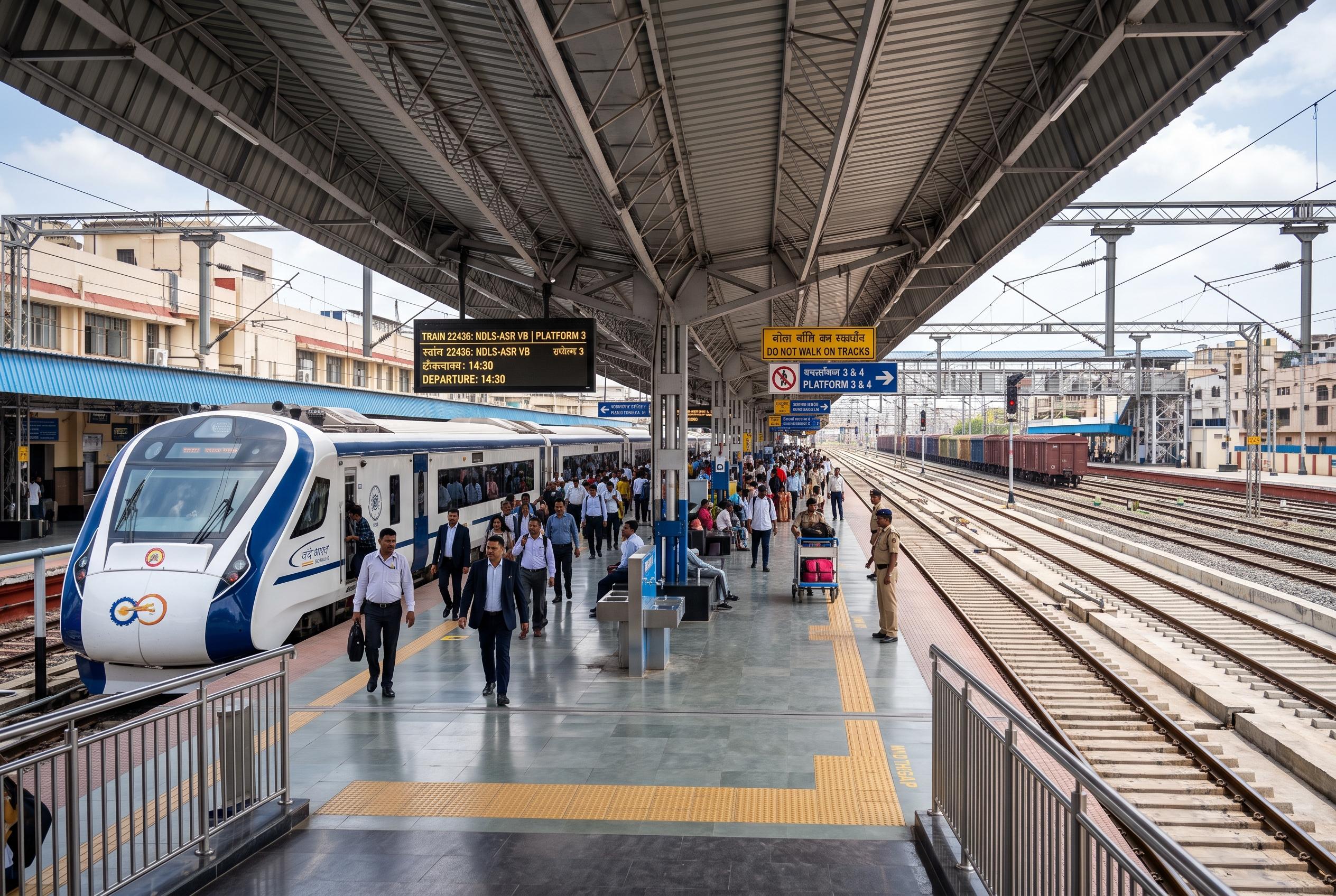

Indian Railways has repaid nearly ₹1.93 trillion over five years, with increased government support and expanded capital expenditure driving safety, expansion, and modernisation initiatives across the railway network.
Indian Railways has repaid ₹1.93 trillion in principal and interest over the past five financial years to its dedicated borrowing arm and the Ministry of Finance, with Union minister Ashwini Vaishnaw telling the Rajya Sabha on Friday that debt servicing has steadied despite the shock of Covid.
According to the written response, about ₹93,000 crore of that total has gone towards interest since 2021-22, while roughly ₹1 trillion has been used to pay down principal. The ministry also took a ₹79,000 crore special loan from the Finance Ministry during the pandemic.
Vaishnaw said the railway network has largely stayed out of the borrowing market in recent years, as debt levels swelled and the government leaned more heavily on capital spending to support the economy after the pandemic. He added that direct budgetary support has been channelled into infrastructure and rolling stock that were once funded through extra budgetary resources.
The shift comes as the Indian Railway Finance Corporation, the railways’ financing arm, has broadened its activity beyond the core transporter and into allied sectors. At the same time, the government has stepped up allocations to the railways: in the February Budget, Finance Minister Nirmala Sitharaman announced budgetary support of ₹2.78 trillion and total capital expenditure of ₹2.93 trillion for the ministry.
Vaishnaw has repeatedly pointed to the scale of that spending programme, saying in recent months that the railways had used nearly all of its FY26 capital budget and that safety, expansion and modernisation would remain central priorities. The ministry has also highlighted large state-wise project allocations and major corridor plans, underscoring how rail investment has become a key part of India’s wider infrastructure push.
Disclaimer: This article is intended to inform and educate, not to recommend or endorse any financial product, investment or strategy. Please consider your own financial circumstances and seek professional advice where appropriate before making financial decisions.