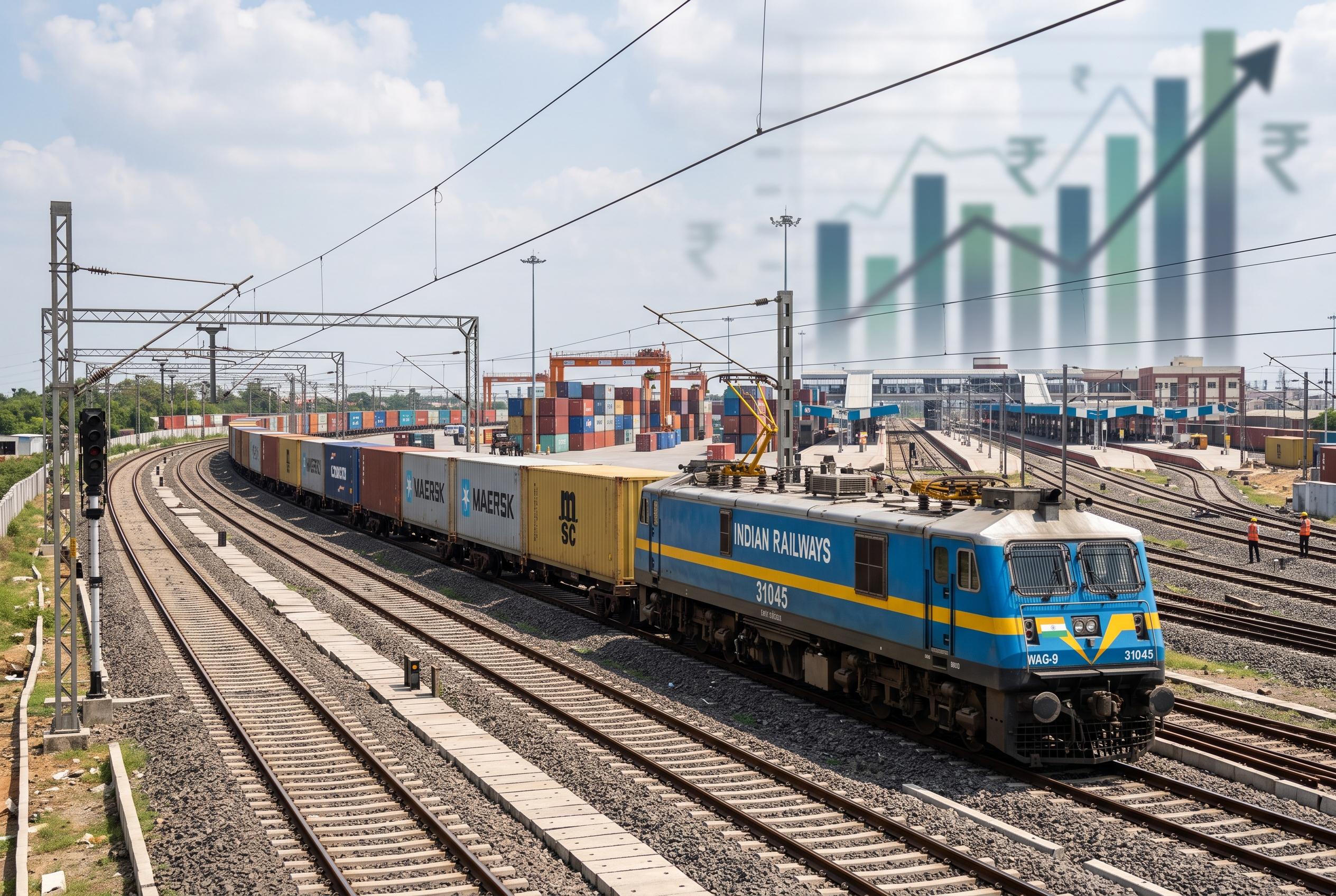

Indian Railways reports stable debt servicing over five years, driven by increased government support and record freight performance amid a massive infrastructure expansion and modernisation drive.
Indian Railways said its debt servicing has remained stable over the past five years, crediting higher government budgetary support and its use for infrastructure and rolling stock. In a statement, the railway said this marked a shift from earlier years when such spending relied more heavily on extra budgetary resources, with lease-related principal and interest payments rising steadily but staying manageable as public funding increased.
The figures it released show total debt servicing, including principal repayment and interest, climbing from ₹28,702 crore in 2021-22 to ₹46,538 crore in 2025-26. The railway’s dedicated financing arm, Indian Railway Finance Corporation, continues to fund rolling stock and infrastructure and also lends to linked sectors such as power, mining, fuel, warehousing, telecom, hotels and catering.
The comments came alongside fresh disclosures in Parliament from Railway Minister Ashwini Vaishnaw, who said 514 infrastructure projects were sanctioned as of April 1, 2026, covering new lines, gauge conversion and doubling works across about 40,000 km at an estimated cost of ₹8.31 lakh crore. He said more than ₹3.05 lakh crore had already been spent by March 31, 2026, commissioning 12,583 km of track.
Vaishnaw also told lawmakers that Indian Railways had used about 39% of its ₹2.93 lakh crore budget grant for 2026-27 by the end of July, with ₹1,14,973 crore spent. Business Standard reported earlier that capital spending in 2025-26 had been running ahead of the previous year, with outlays concentrated on safety, capacity expansion, modernisation and passenger amenities.
The stronger spending profile has been accompanied by record freight performance. Indian Railways said freight loading rose from 1,098 million tonnes in 2014-15 to 1,670 million tonnes in 2025-26, while The Economic Times and The Indian Express reported that the latest figure marked a 3.25% annual increase, driven by traffic in fertiliser, steel, iron ore, cement and related goods.
Disclaimer: This article is intended to inform and educate, not to recommend or endorse any financial product, investment or strategy. Please consider your own financial circumstances and seek professional advice where appropriate before making financial decisions.