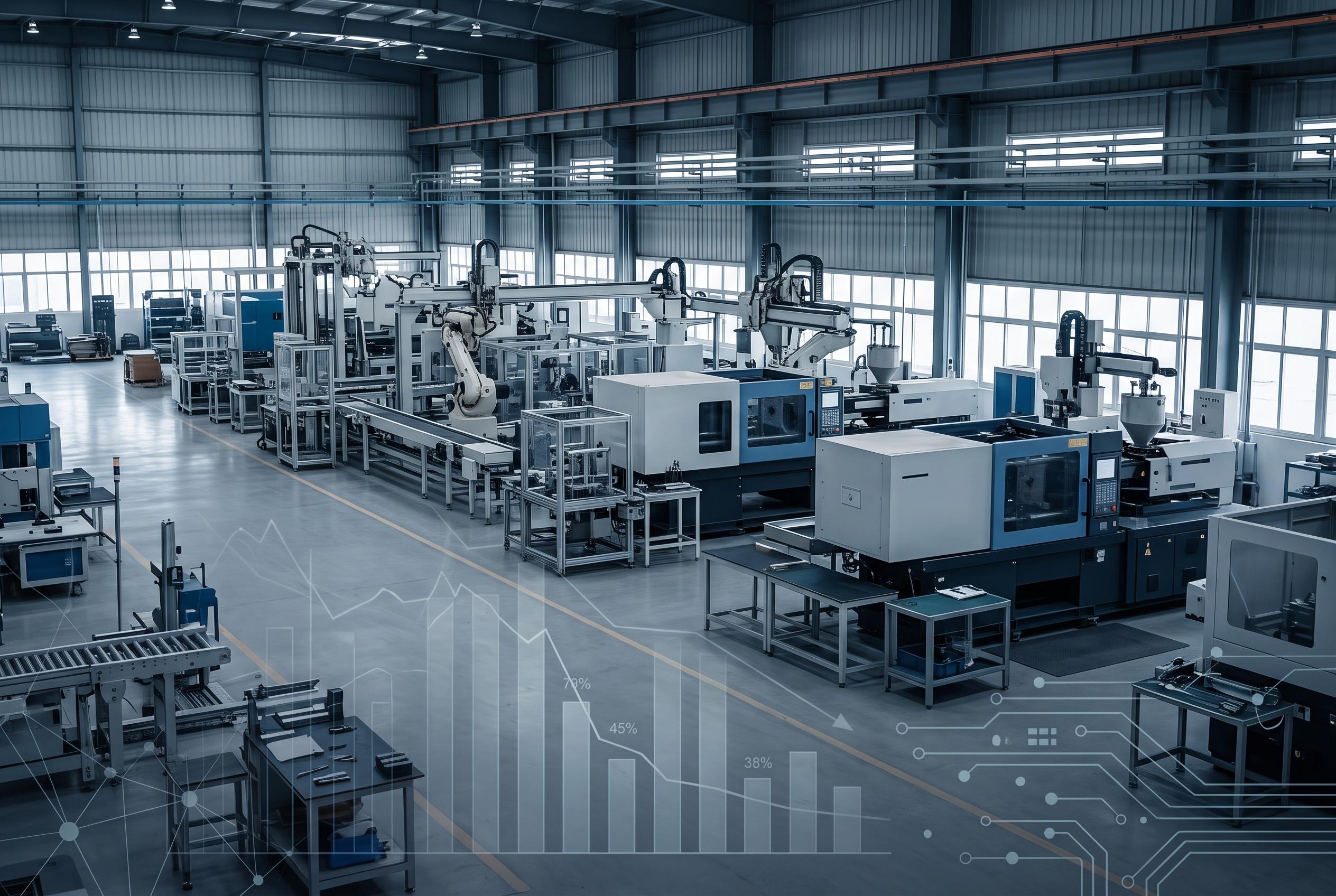

India’s manufacturing and services sectors continue to expand at a sluggish pace due to structural challenges, raising concerns over employment, wages, and long-term growth prospects amid weakening demand and competitive pressures.
India’s factory and services expansion is still being held back by weak demand, and the latest readings suggest the problem is as much structural as cyclical. HSBC’s services survey showed business activity continuing to grow in July, but at 53.4, the slowest pace since August 2021. New orders also lost momentum, with firms citing tougher competition, softer demand and delayed orders. Although employment ticked up, the vast majority of companies kept payrolls unchanged, underscoring how fragile the recovery remains.
The manufacturing side has shown a similar pattern. HSBC data for June put the manufacturing purchasing managers’ index at 54.2, down from 55.0 in May and marking the slowest expansion in three months. Business Standard reported that softer demand and intense competition weakened output, new orders, export orders and hiring, even as the sector stayed above the 50-point level that separates growth from contraction. Earlier in March, the manufacturing PMI slipped to 53.9, its weakest reading in nearly four years, as geopolitical uncertainty and cost pressures weighed on fresh orders and production.
For economists and industry watchers, the more troubling issue is not simply slower growth but what it means for jobs and incomes in a country with a huge workforce. India’s manufacturing share of gross domestic product remains well below the level usually seen in economies that have used industry to absorb labour on a large scale. Labour-intensive branches such as textiles, apparel, leather, footwear and wood products continue to underperform, while even basic metals and capital goods have faced periodic slowdowns. High logistics costs, weak research spending, limited access to affordable credit for small firms and supply-chain bottlenecks are all hurting competitiveness.
Former chief economic adviser Arvind Subramanian has argued that low private-sector wage growth is also feeding the demand problem by limiting household spending power. The concern is visible in the banking system as well. The Reserve Bank of India’s interest coverage ratio data, as cited in the lead article, showed manufacturing companies’ ratio falling to 7.6 in the December quarter, reflecting weaker earnings and tighter debt-servicing capacity. A slowdown in manufacturing also tends to reduce credit demand and strain small-business loan books, while India’s information technology sector is also said to be cooling because of weaker demand from the United States and Europe. The broader lesson, according to the report, is that India needs stronger industrial and banking policy if it wants faster growth, better jobs and a more balanced economic base.
Disclaimer: This article is intended to inform and educate, not to recommend or endorse any financial product, investment or strategy. Please consider your own financial circumstances and seek professional advice where appropriate before making financial decisions.