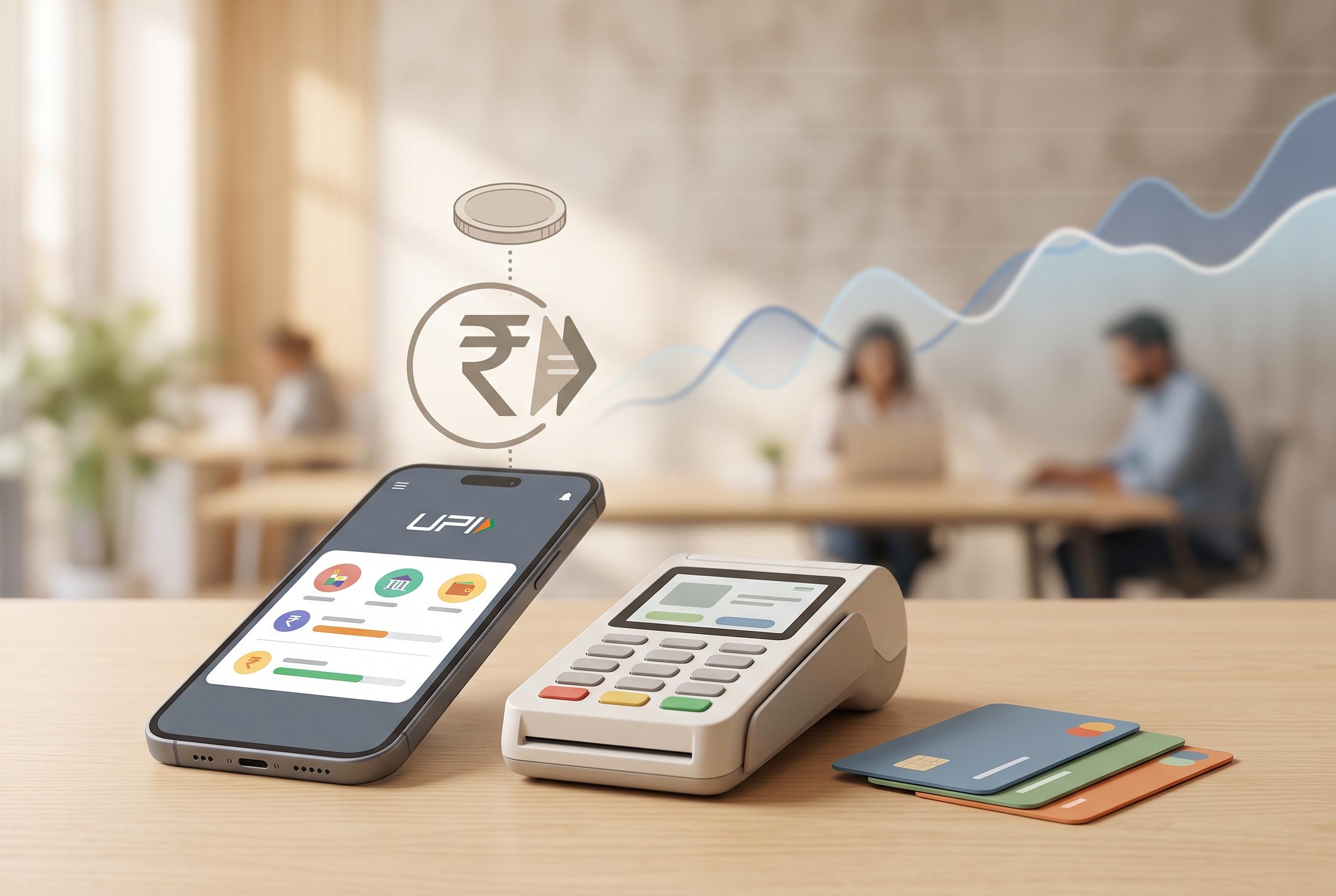

India’s government is exploring the possibility of reinstating merchant discount rates for large UPI transactions, a move that could reshape the country’s free digital payment system and impact its trade negotiations with the US.
India’s government is weighing a return of merchant fees on some UPI payments, a significant shift for a digital rail that has been free for users and most businesses for years. According to reports from Livemint and Moneycontrol, the proposed merchant discount rate would apply only to larger sellers and only above a threshold of ₹2,000, with the rate expected to stay below 0.5%. The policy debate centres on how to fund the infrastructure that has made UPI the backbone of everyday digital payments without burdening small traders or ordinary customers.
The change would mark a break from the zero-fee framework that has supported UPI since 2020. Industry reporting suggests officials are considering different cut-offs for large merchants, including turnover-based thresholds, while keeping peer-to-peer transfers and small-ticket payments exempt. That approach is intended to preserve the system’s mass appeal while acknowledging that banks and payment companies still incur processing costs even when merchants pay nothing.
Supporters of the move argue that the present model is not financially sustainable. In an interview with Livemint, Upasana Taku of One MobiKwik Systems said the zero-MDR regime leaves banks and payment firms absorbing the expense of handling transactions while larger businesses benefit from the subsidy. Paytm, in its own explanation of MDR, says the fee is ordinarily paid by merchants to banks and payment providers, not by consumers, which is why officials are trying to draw a line between large merchants and everyday users.
The timing has also drawn attention because India is in trade talks with the United States. Bardhan argues in The Indian Express that UPI’s pricing rules should be understood as a domestic policy question rather than a bargaining chip in external negotiations. He notes that the US Trade Representative’s 2026 report takes issue with several aspects of India’s payments market, including market access for American firms and data localisation, but does not specifically target the zero-MDR rule.
For now, the key question is whether any new charge will be narrowly confined and clearly written into law. Bardhan contends that small merchants and consumers should remain protected by statute, with any fee kept low, transparent and earmarked for the system’s upkeep. The wider concern is that a policy designed to sustain UPI could, if poorly drafted, end up shifting costs onto the users who made the platform a success in the first place.
Disclaimer: This article is intended to inform and educate, not to recommend or endorse any financial product, investment or strategy. Please consider your own financial circumstances and seek professional advice where appropriate before making financial decisions.