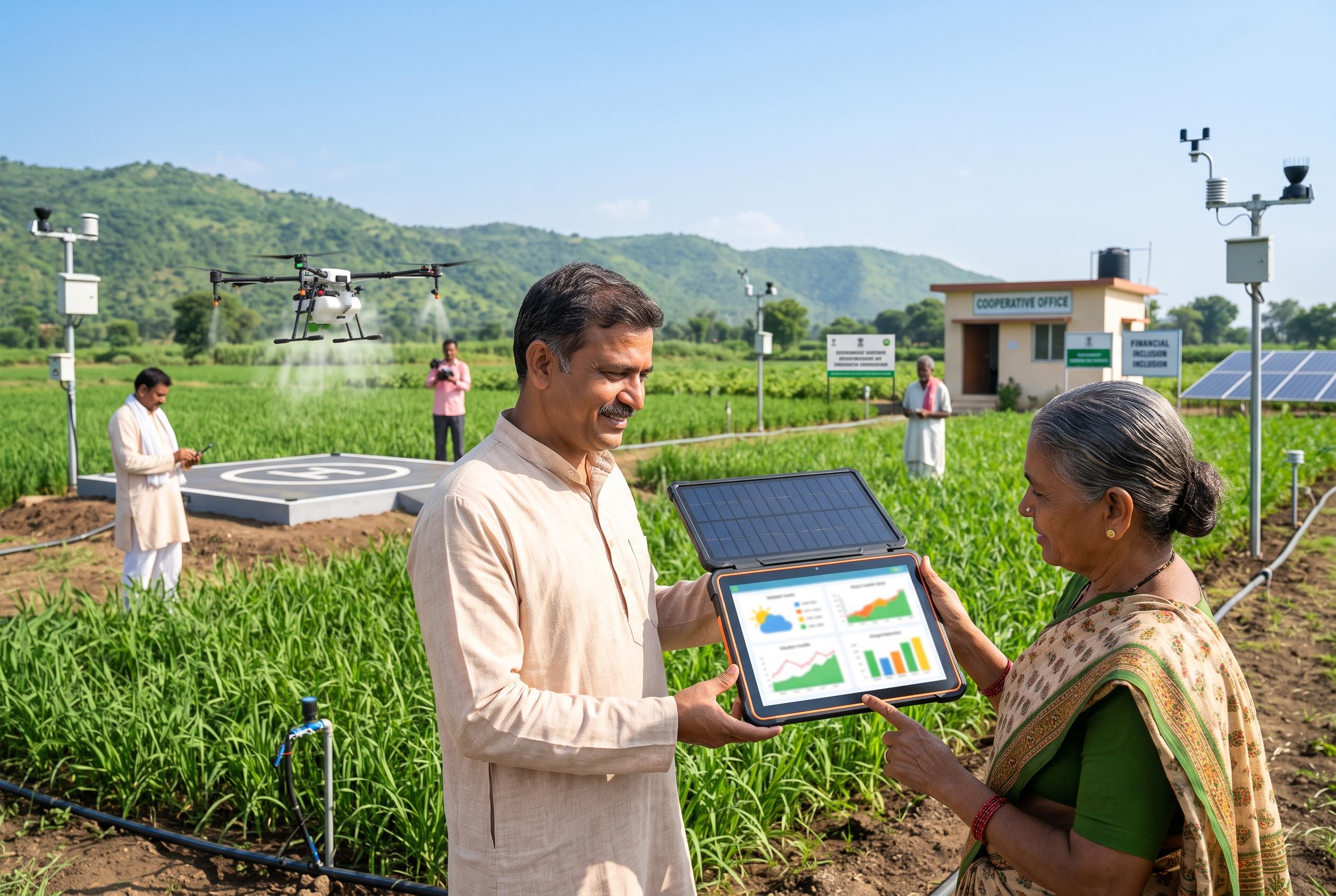

With a focus on practical applications and inclusive technology, India is fast-tracking AI integration in farming, backed by government funding and industry shifts amid challenges in data quality and infrastructure.
Artificial intelligence is moving from pilot projects to practical use in Indian agriculture, with tools that analyse satellite images, weather patterns and soil conditions to help farmers decide when to sow, irrigate and tackle pests. The wider significance is not just agronomic. According to the lead article, the technology is also beginning to influence input makers, machinery companies and other parts of the farm supply chain by sharpening demand forecasts and improving operational efficiency.
That shift is gathering pace as AI becomes easier for farmers to use. Conversational interfaces and multilingual platforms are lowering the technical barrier for smallholders, who have often been left out of more complex digital farming systems. The aim is to make advice on equipment, inputs and market conditions more accessible, while nudging adoption of precision agriculture, where farmers try to maximise yields and minimise waste.
The policy backdrop is also becoming more supportive. Livemint reported that the Indian government is considering a major expansion of the Digital Agriculture Mission, with a proposed allocation of ₹7,500 crore for FY27 to FY30 to support crop monitoring, yield forecasting and early warning systems. Separately, the Food and Agriculture Organization said its AI4Agri Summit in Mumbai focused on how institutional capital could accelerate Agri-AI, with NABARD chairman Shaji Krishnan stressing the need for verifiable data and FAO’s India representative, Takayuki Hagiwara, urging inclusive tools that work for women farmers and pastoralists as well as larger producers.
Even so, the sector’s promise remains tied to basic plumbing: data quality, governance and last-mile access. The Economic Times has argued that AI will struggle to move beyond demonstration projects without continuously updated agricultural data and stronger oversight. Next IAS and Forvis Mazars both noted that India’s fragmented landholdings, variable climate and low productivity make AI attractive, but only if it is paired with reliable digital infrastructure and farmer-friendly advisory systems.
For investors, the opportunity is best viewed as a broad transformation rather than a single-theme trade. Fertiliser and chemical groups may benefit from better inventory planning, while equipment makers are embedding sensors, GPS and drone capabilities into their products. But the risks are equally clear: supply chain bottlenecks for semiconductors and sensors, data-security concerns and the danger of over-automation if farmers lose the ability to intervene manually when systems fail. The winners are likely to be companies that turn AI into measurable savings, steadier demand and more dependable service, rather than treating it as a branding exercise.
Disclaimer: This article is intended to inform and educate, not to recommend or endorse any financial product, investment or strategy. Please consider your own financial circumstances and seek professional advice where appropriate before making financial decisions.