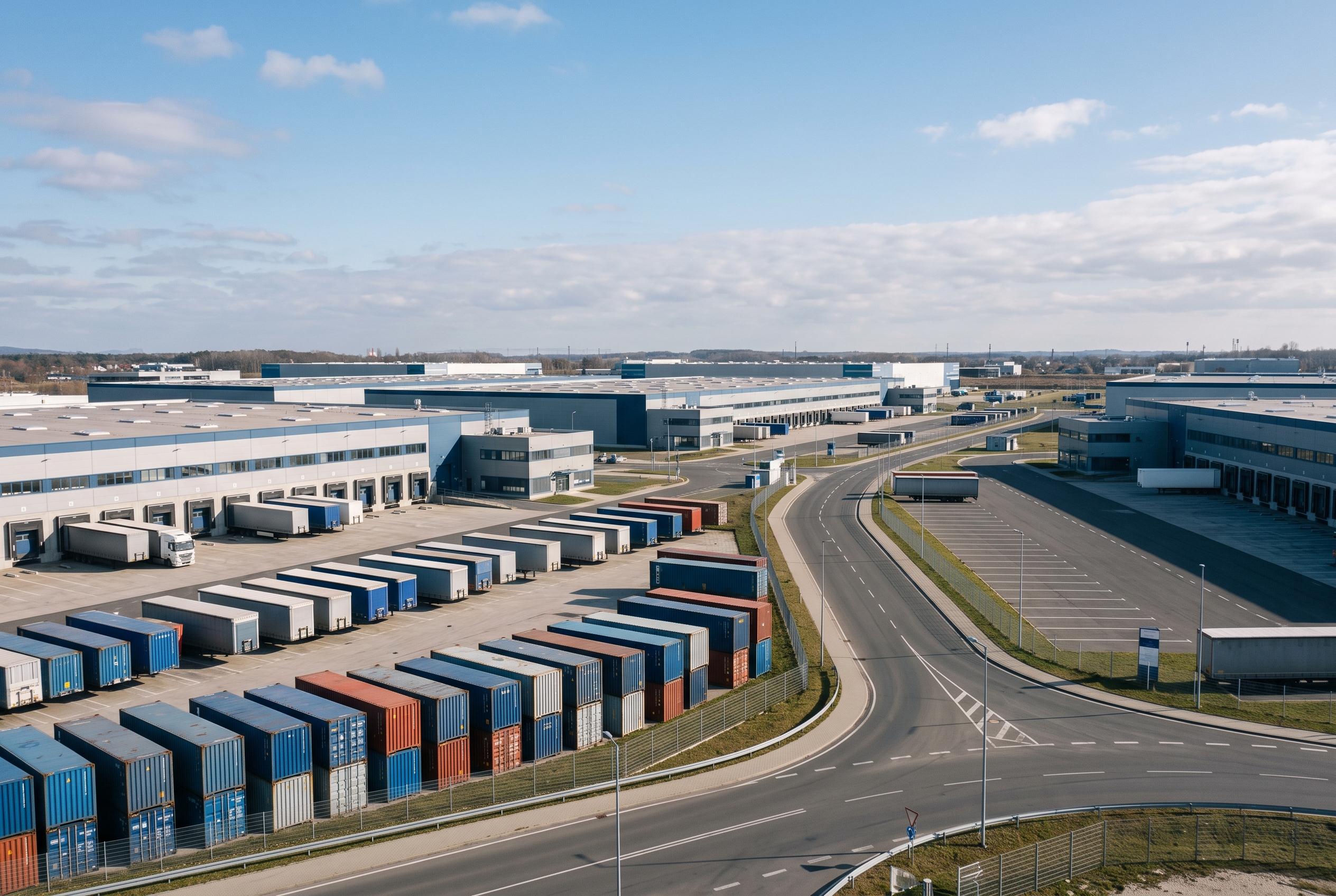

Gateway Distriparks reports stable market share despite industry-wide volume decline caused by geopolitical disruptions. The company signals cautious optimism with plans for capacity expansion and infrastructure enhancements, aiming for double-digit growth once geopolitical tensions ease.
Gateway Distriparks said its market share remained steady in the June quarter even as volumes softened across the inland container depot business because of disruption linked to the West Asia crisis, with management arguing that the weakness was industry-wide rather than company-specific. Prem Kishan Dass Gupta, chairman and managing director, said the group still expects to finish the financial year with double-digit volume growth once geopolitical conditions ease, although he acknowledged that the timing depends on factors outside the company’s control.
The company’s expansion plan is built around new capacity at Ankleshwar and Indore, two locations it believes can help offset the current slowdown. Management said Ankleshwar should begin handling export-import cargo by the end of September, while Indore is now planned for 2028 after the land parcel there was expanded to 26.4 acres. The group also said it has roughly 475 acres of land in prime locations, much of it freehold, which it views as a strategic asset rather than something it is rushing to monetise.
Gateway Distriparks also pointed to infrastructure gains that it believes could support a recovery in rail volumes. It said the final link of Dedicated Freight Corridor connectivity to Jawaharlal Nehru Port Trust is complete, and that the company was among the first to run a double-stack train from the port to the north. Even so, Rajguru Behgal, the chief business officer, said the immediate benefits are still limited by weather disruptions, port restrictions and uneven cargo flows. The company added that Jawaharlal Nehru Port Trust currently accounts for about 5% of its rail-side volumes, leaving room for growth if cargo shifts over time.
On the financial side, Kartik Sundaram Aiyer, the chief financial officer, said accumulated MAT credit should keep the company’s cash tax rate at about 18.88% for seven to eight years, even though reported profit after tax fell 15% because of higher tax provisions. Management also said rail EBITDA has been pressured by lower double-stacking, more empty running, port imbalances, fuel costs and wage inflation, including a 35% increase in Haryana. In a separate update on Snowman Logistics, the group said warehousing prices have risen 5% to 7% on average and that the business continues to add capacity, while also remaining open to a sale of its CFS business only if the valuation is attractive enough.
Disclaimer: This article is intended to inform and educate, not to recommend or endorse any financial product, investment or strategy. Please consider your own financial circumstances and seek professional advice where appropriate before making financial decisions.