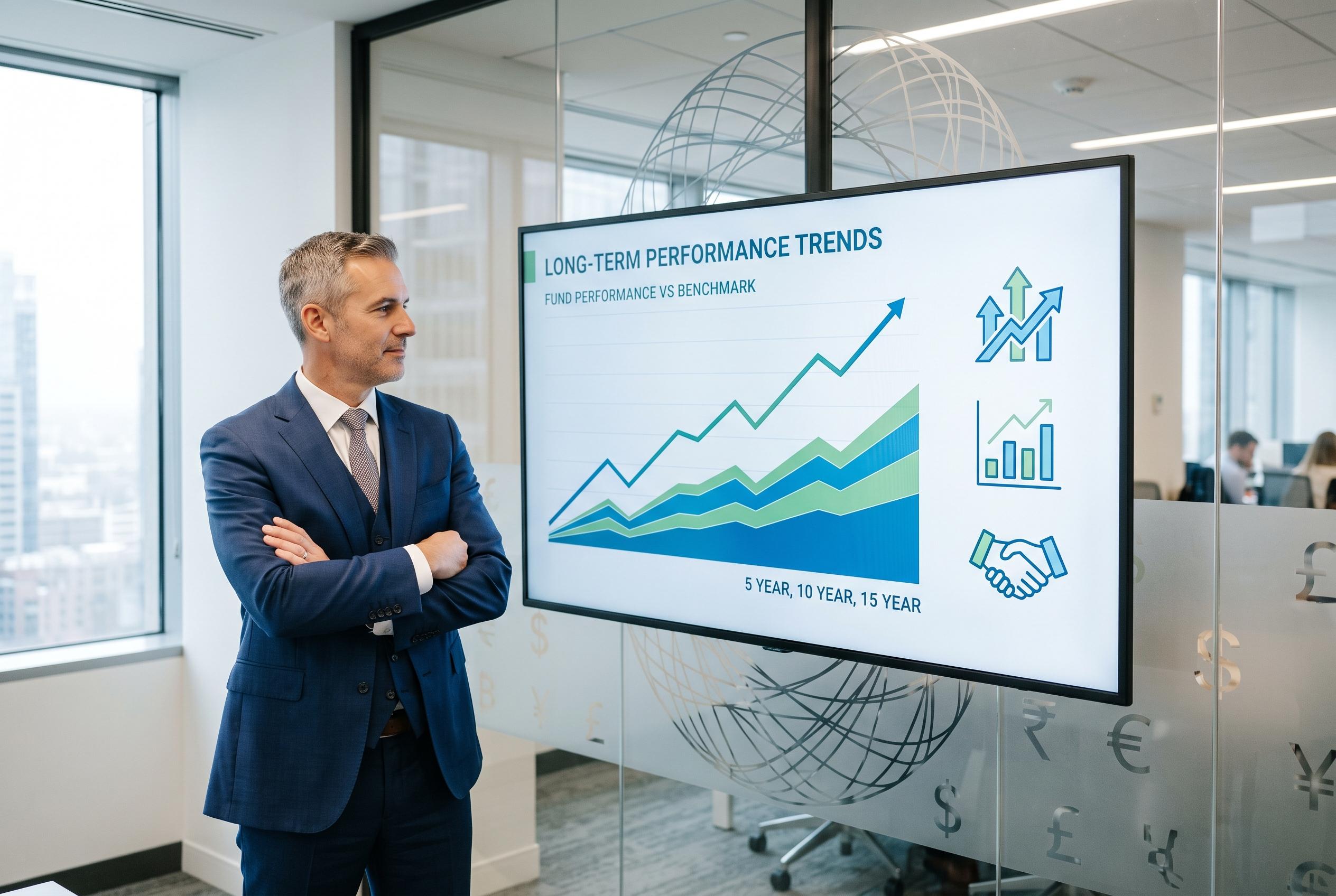

Freefincal’s latest Equity Mutual Fund Performance Screener aims to help investors identify genuinely consistent active managers, revealing that most funds struggle to beat benchmarks over the long term and reinforcing the case for passive investing.
Freefincal has released its latest Equity Mutual Fund Performance Screener, an update aimed at investors trying to separate genuinely consistent active managers from funds that merely look strong on recent trailing returns. The screener now covers more than 480 equity funds and, according to the site, is built to compare rolling returns, upside capture, downside protection and the Ulcer Index across multiple time periods and benchmarks. The update also says the file now has nearly 3,000 unique users and includes more than 70 additional equity funds, with all equity-oriented schemes that have at least 1 year of history now folded in.
The idea behind the tool is straightforward: instead of chasing the latest winners, investors can filter for funds that have beaten their benchmarks over many overlapping 1-year to 5-year periods while also holding up better when markets fall. Freefincal says the screener lets users judge reward and risk side by side, using rolling outperformance consistency for returns, upside consistency for rally periods and downside consistency for weak markets. That approach mirrors the wider caution often found in mutual fund guidance elsewhere, including Schwab’s reminder that ratings and rankings are only a starting point for research, not a recommendation.
Freefincal also stresses that the screener should be used only after an investor has defined the goal, horizon and asset allocation. The site recommends choosing fund categories first, then building a small, diversified portfolio rather than mixing funds on a whim. It advises investors to read offer documents carefully, avoid judging funds only by the latest burst of performance and remember that a fund’s past record may be less meaningful if its mandate has changed over time. The update also notes that the screener is intended to show how few active funds truly outpace indices over the long run, reinforcing the case for passive investing for many savers.
That caution matters because active fund selection remains a crowded and often misleading exercise. Kiplinger’s 2026 mutual fund guide, for example, shows how performance can swing sharply by region and style, with foreign stocks, small caps and gold-related funds all taking turns in the spotlight last year. Other fund-screening services, including Financial Express and CompareMutualFunds, likewise frame their lists as research tools rather than shortcuts to guaranteed returns. Freefincal’s latest update fits that broader pattern: a practical filter for investors who still want active funds, but only if they are prepared to sift carefully and accept that consistency is rare.
Disclaimer: This article is intended to inform and educate, not to recommend or endorse any financial product, investment or strategy. Please consider your own financial circumstances and seek professional advice where appropriate before making financial decisions.